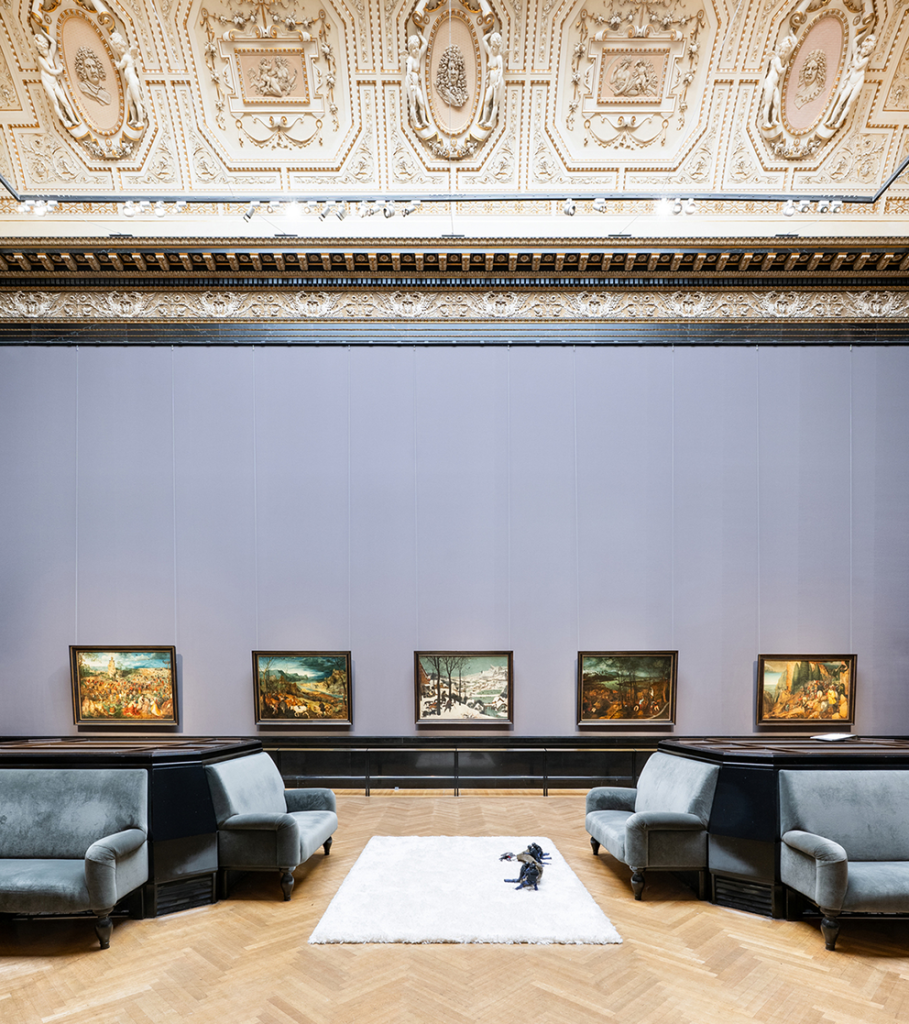
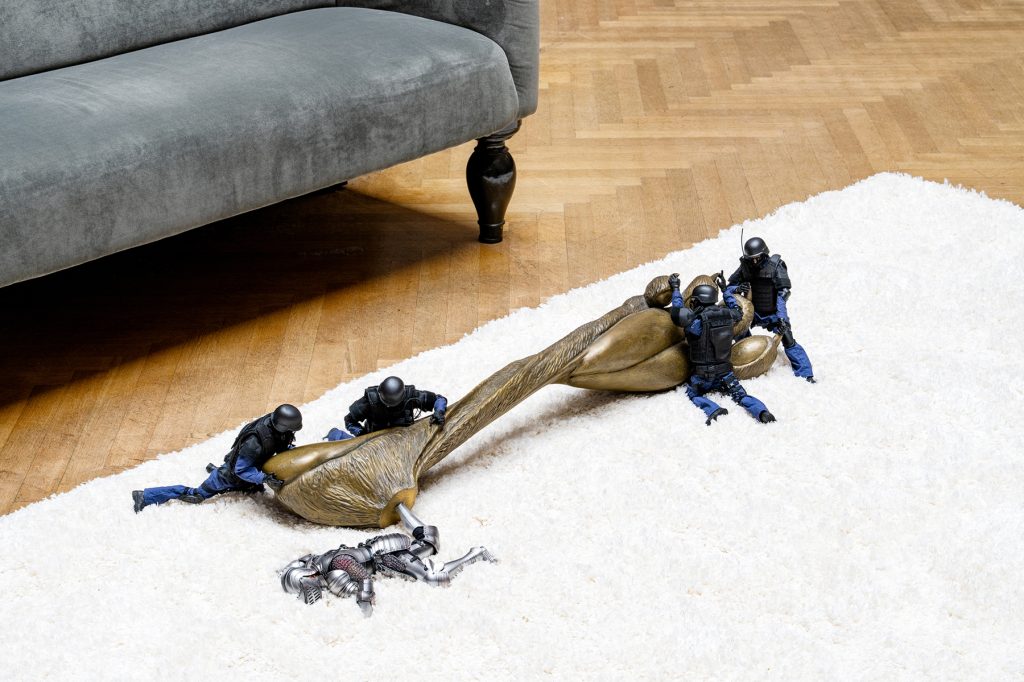
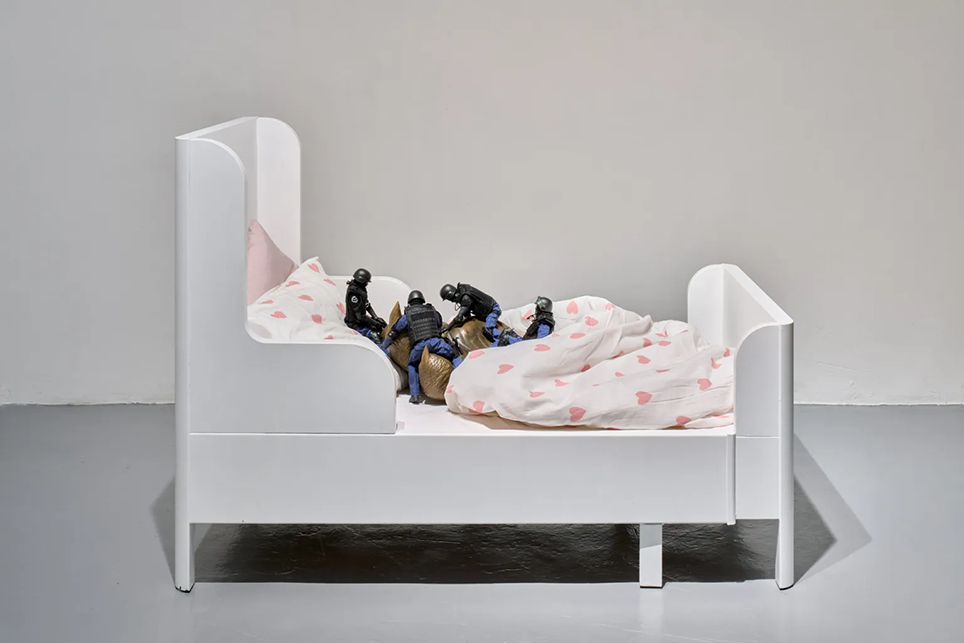
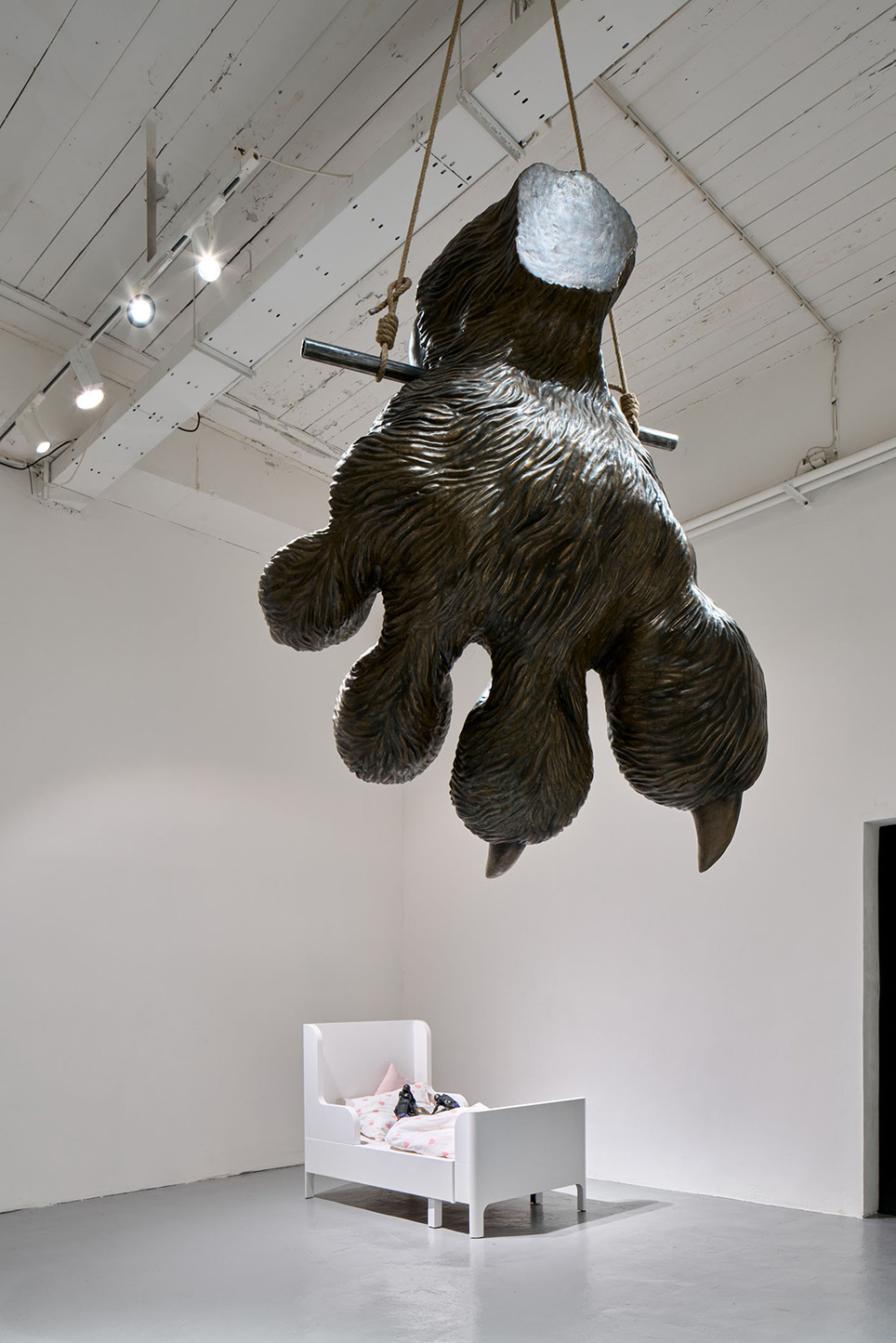
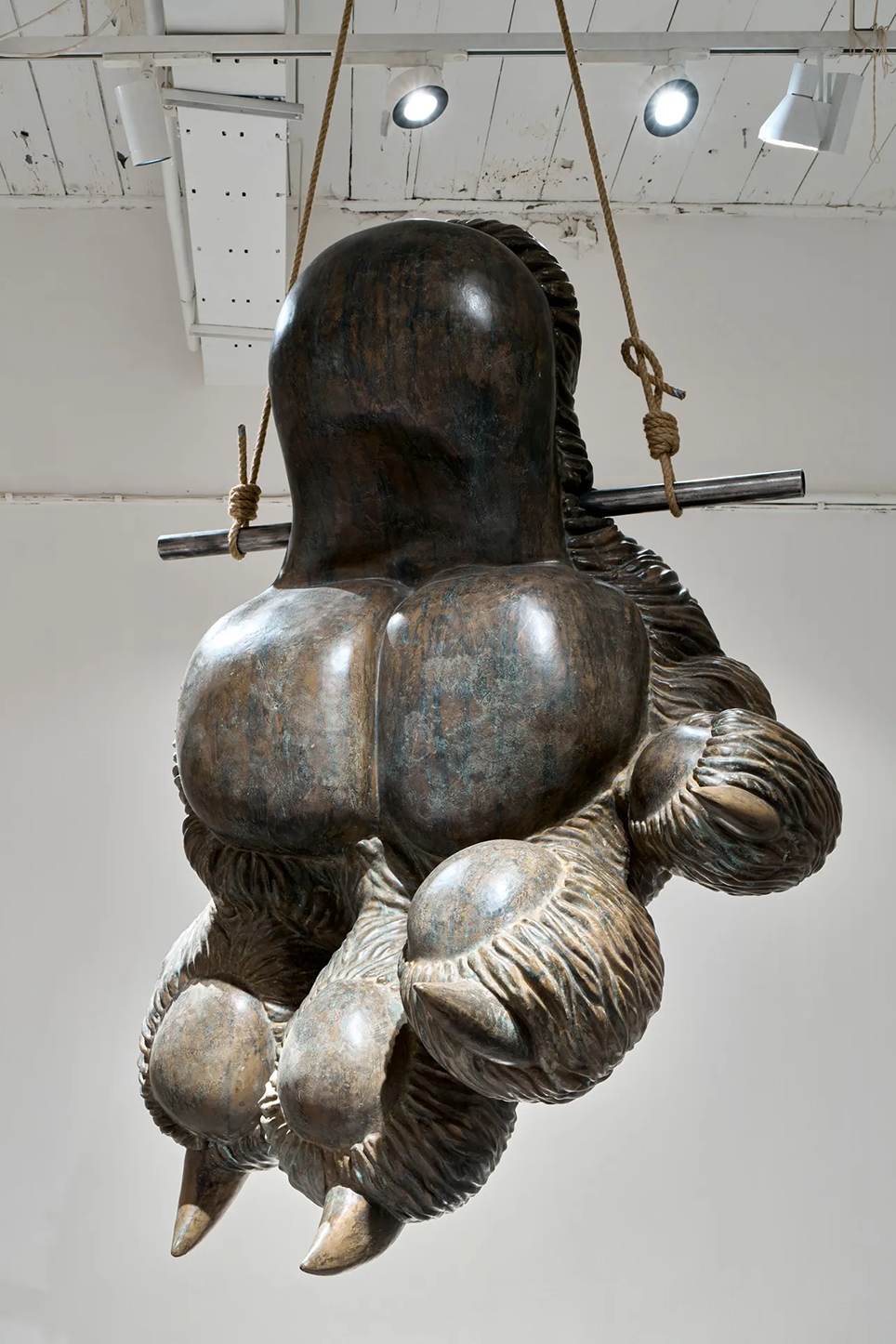
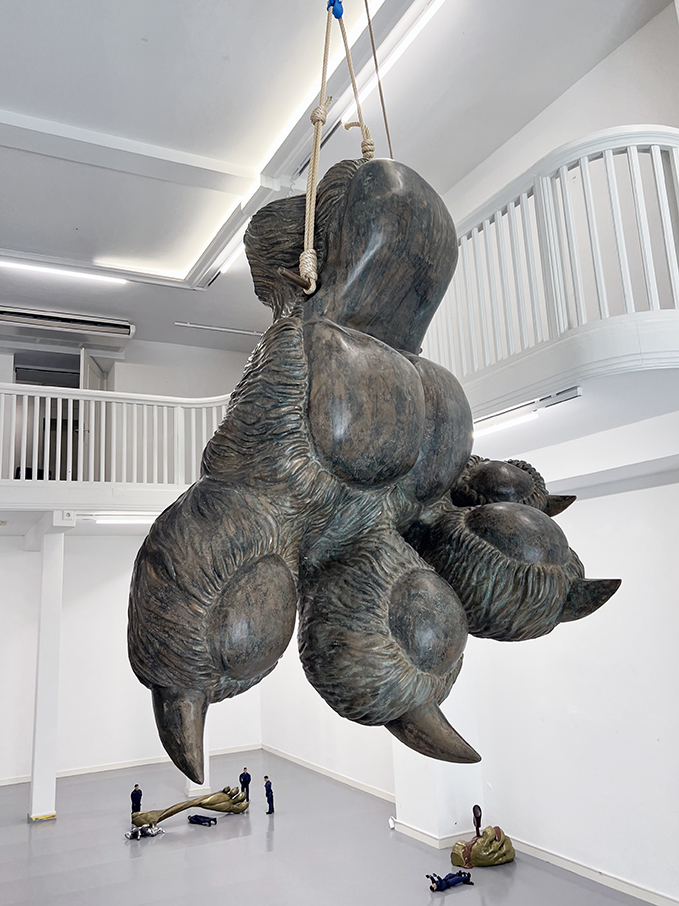
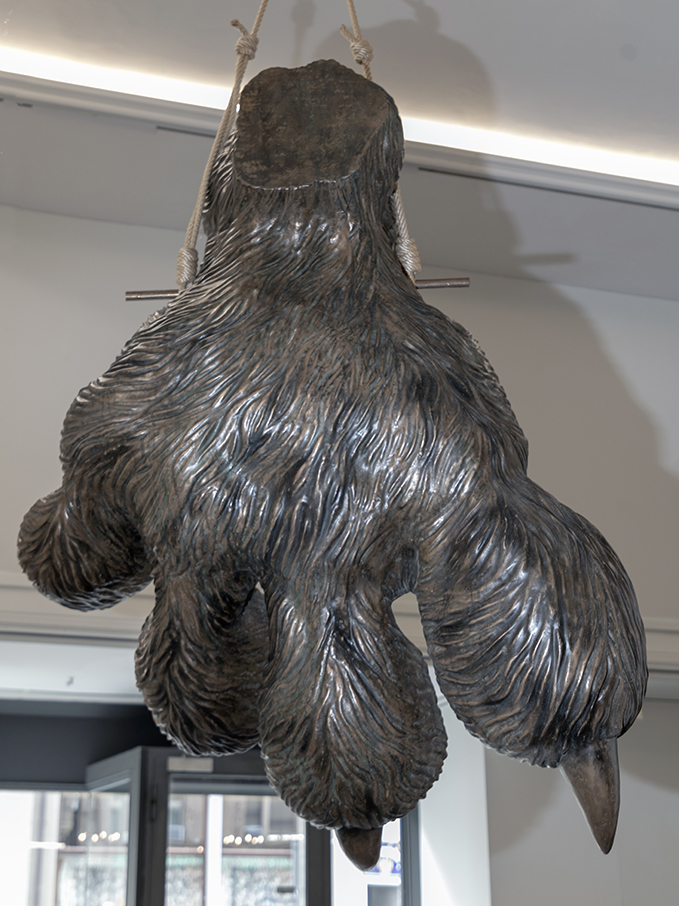
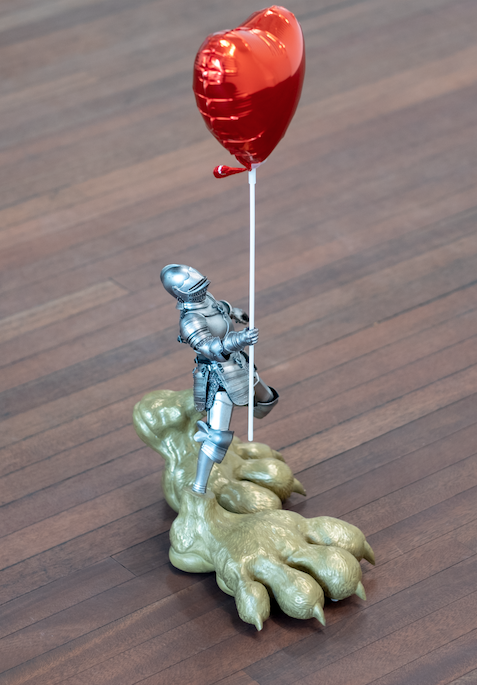
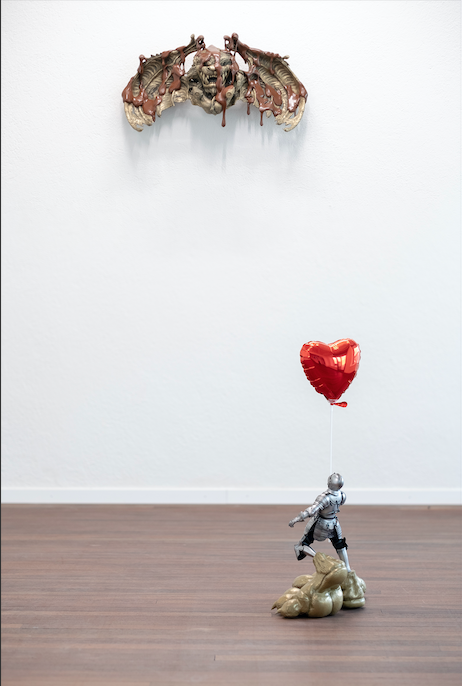
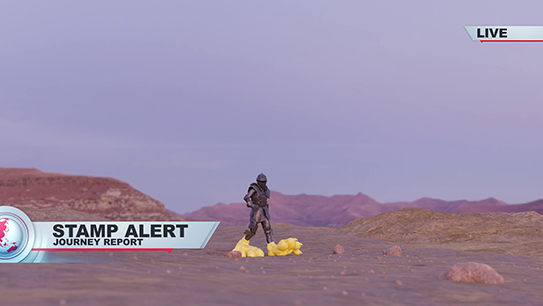
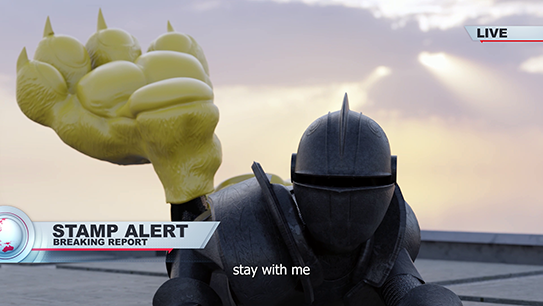
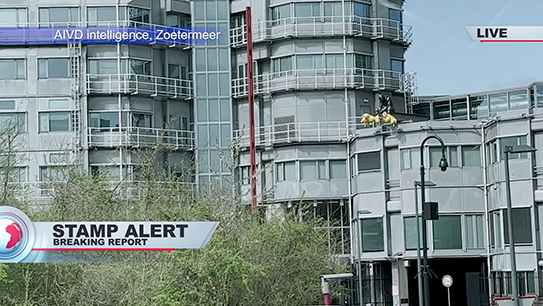
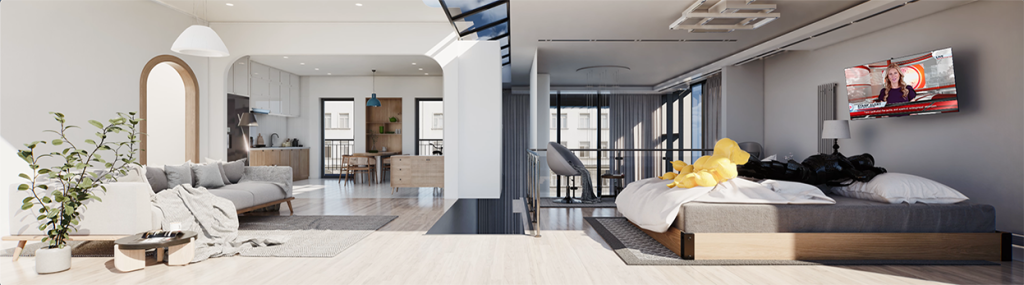
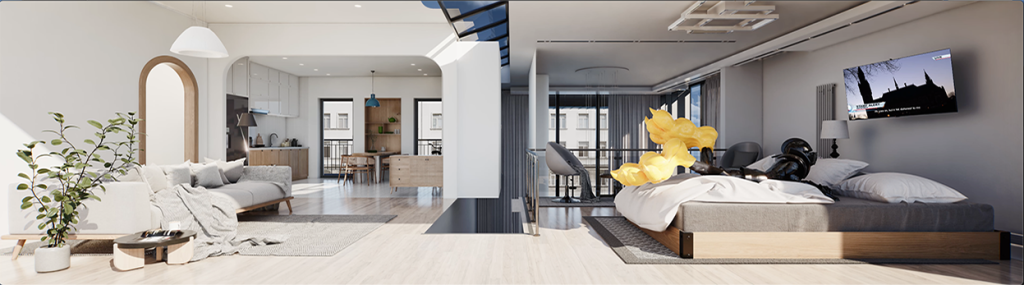
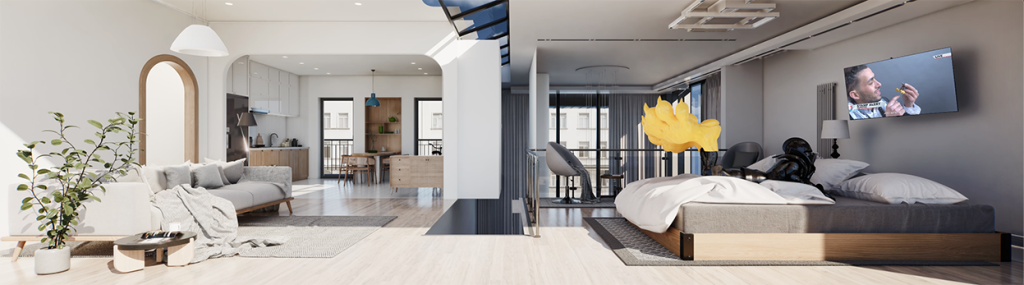
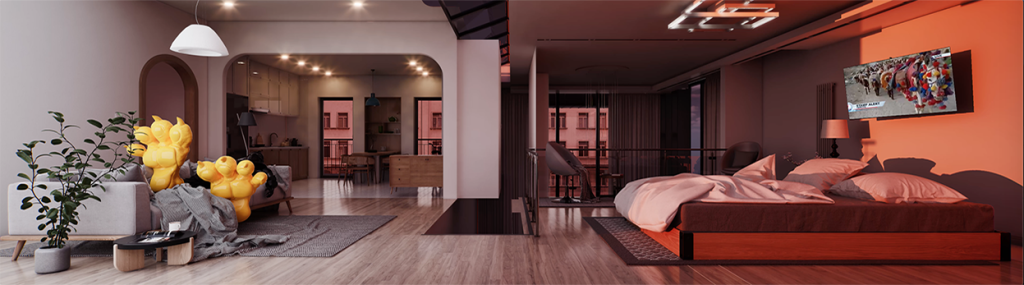
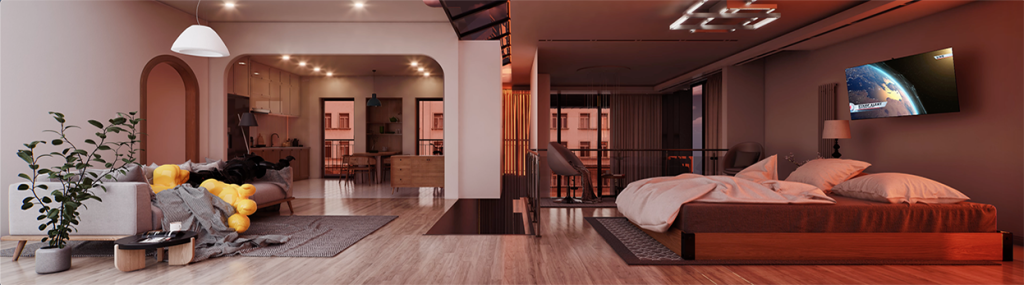
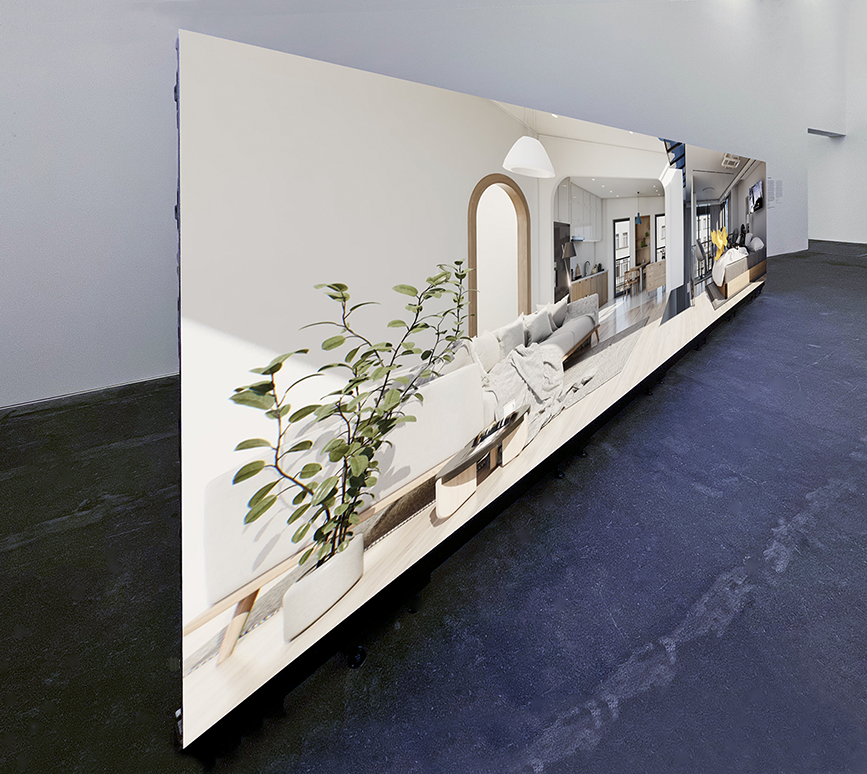
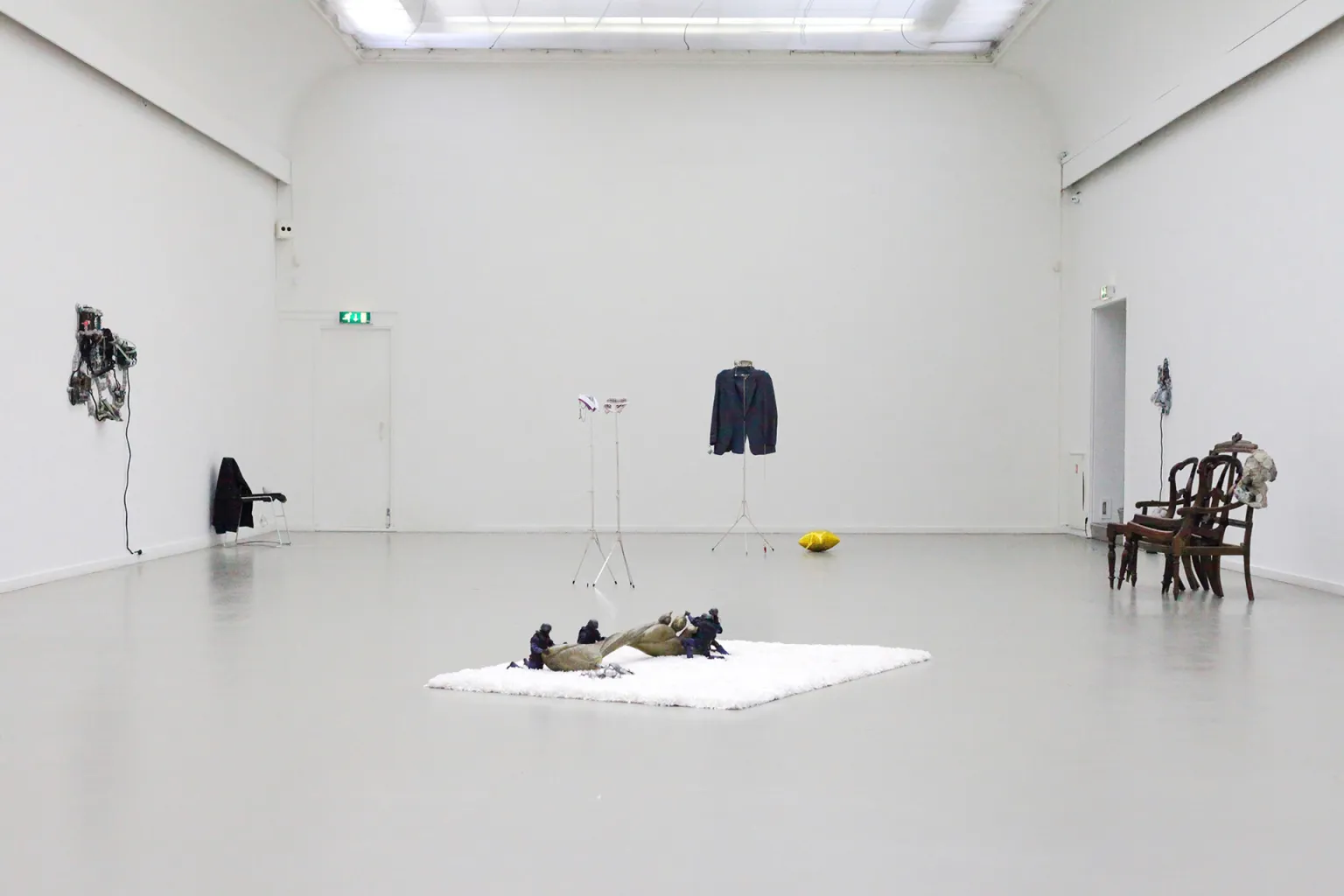
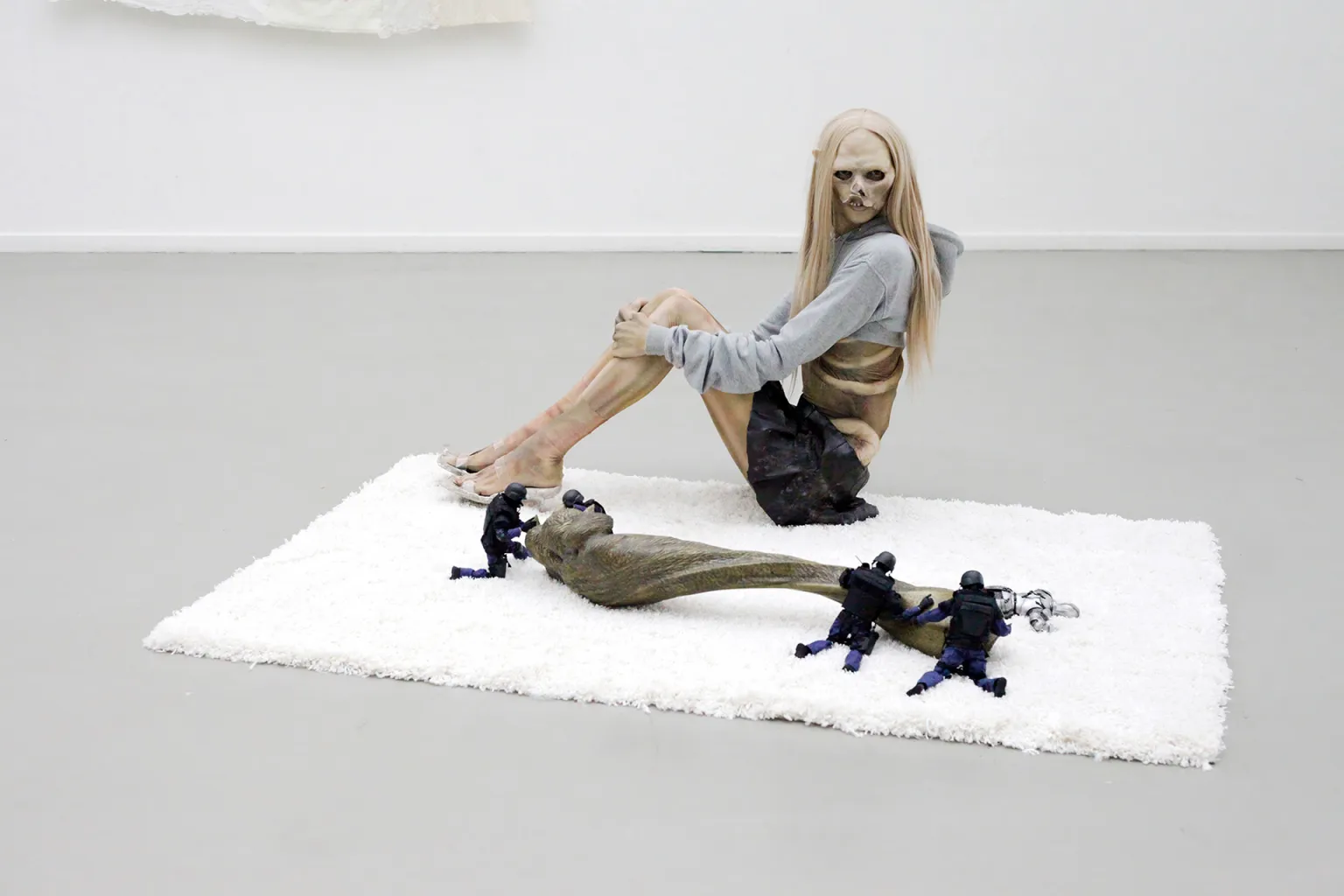
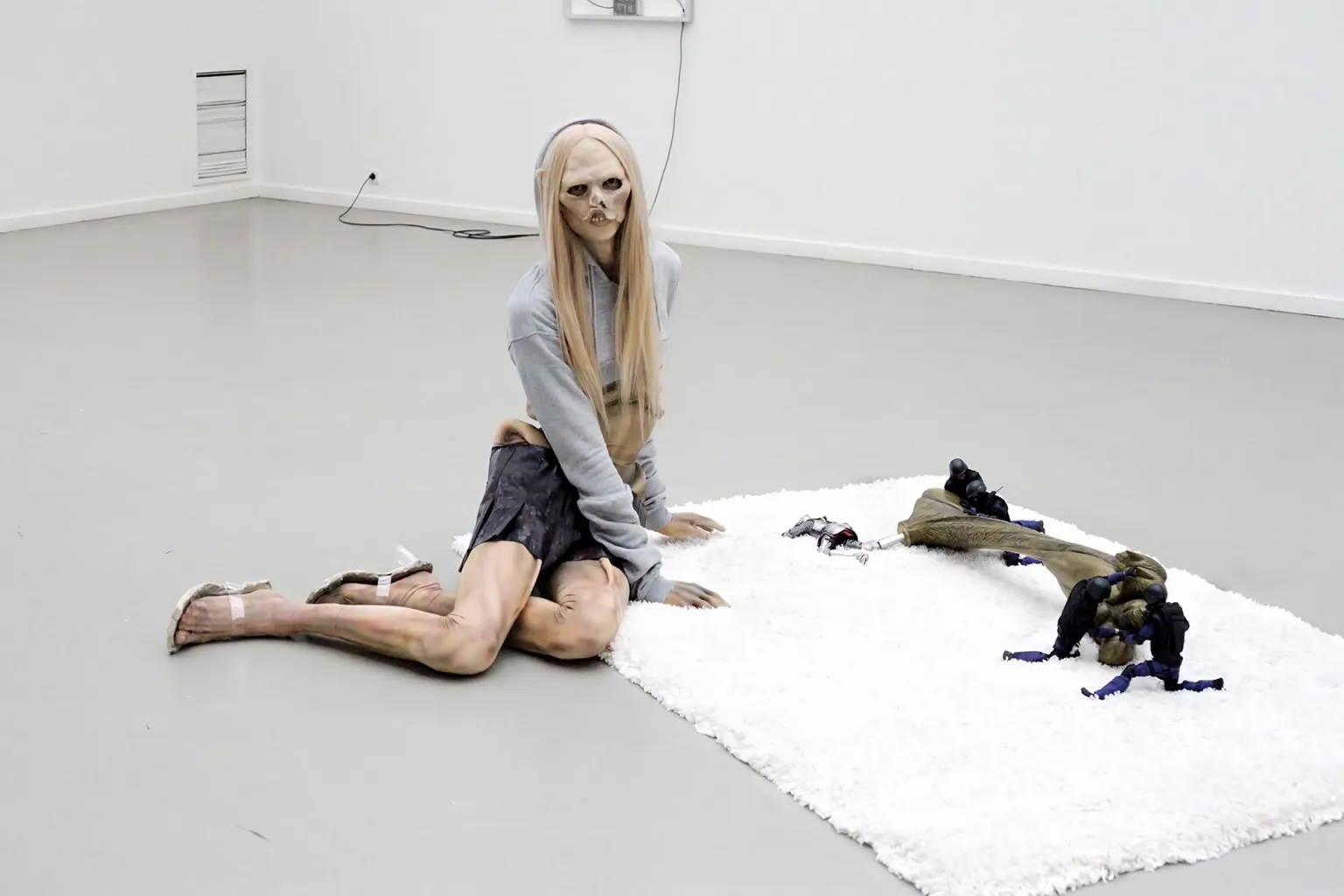
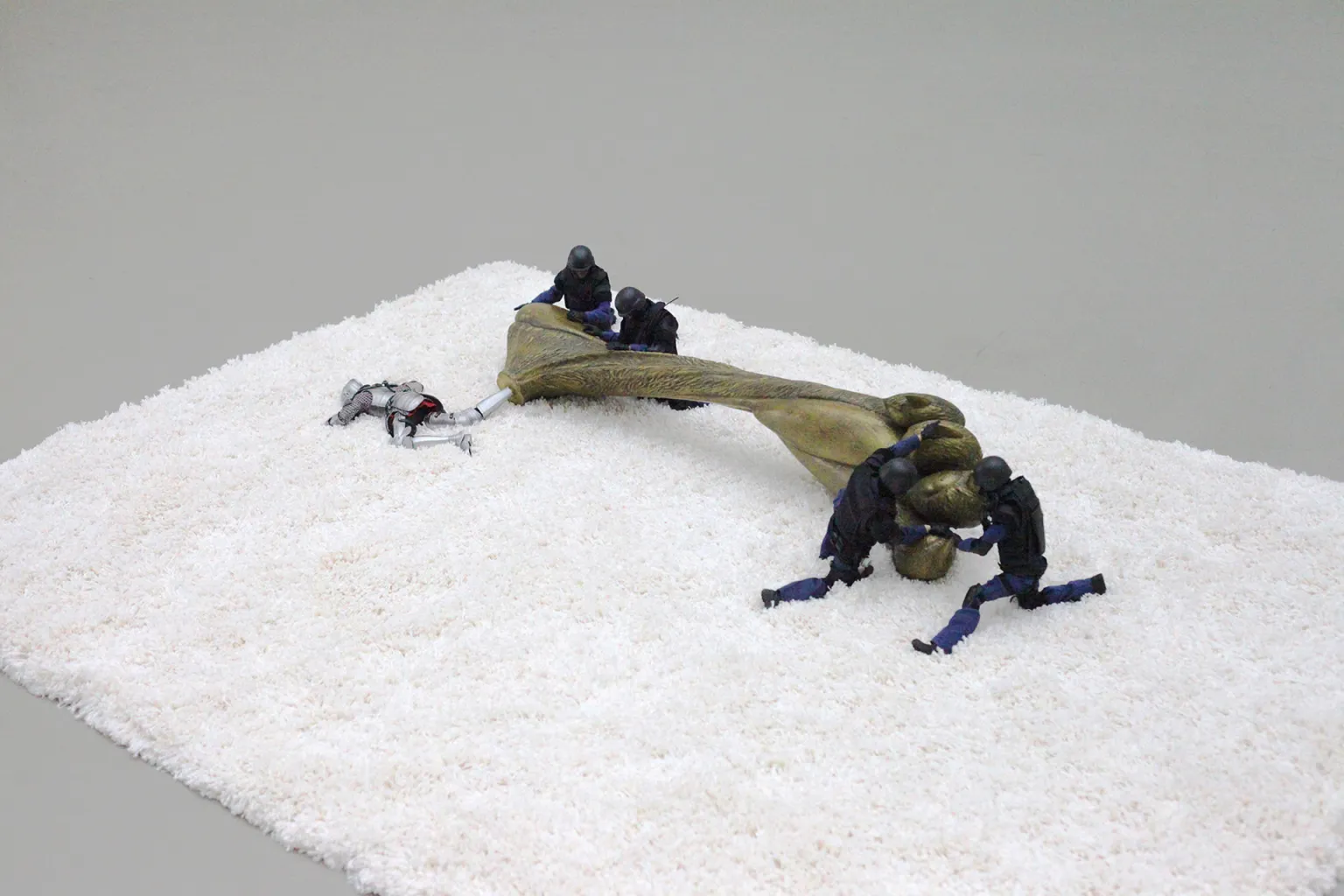
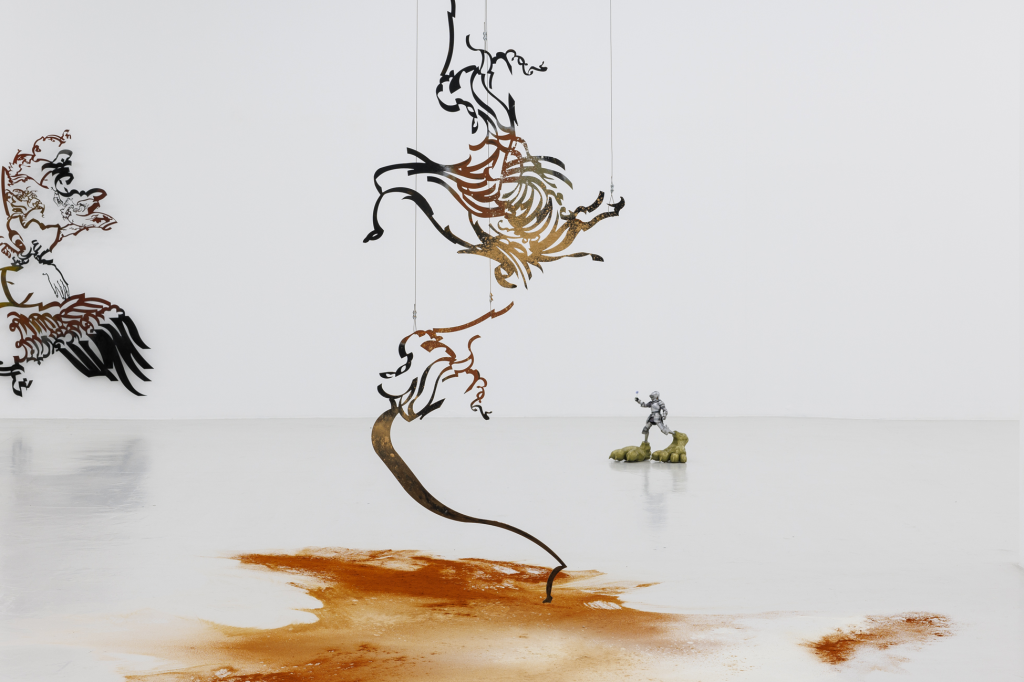
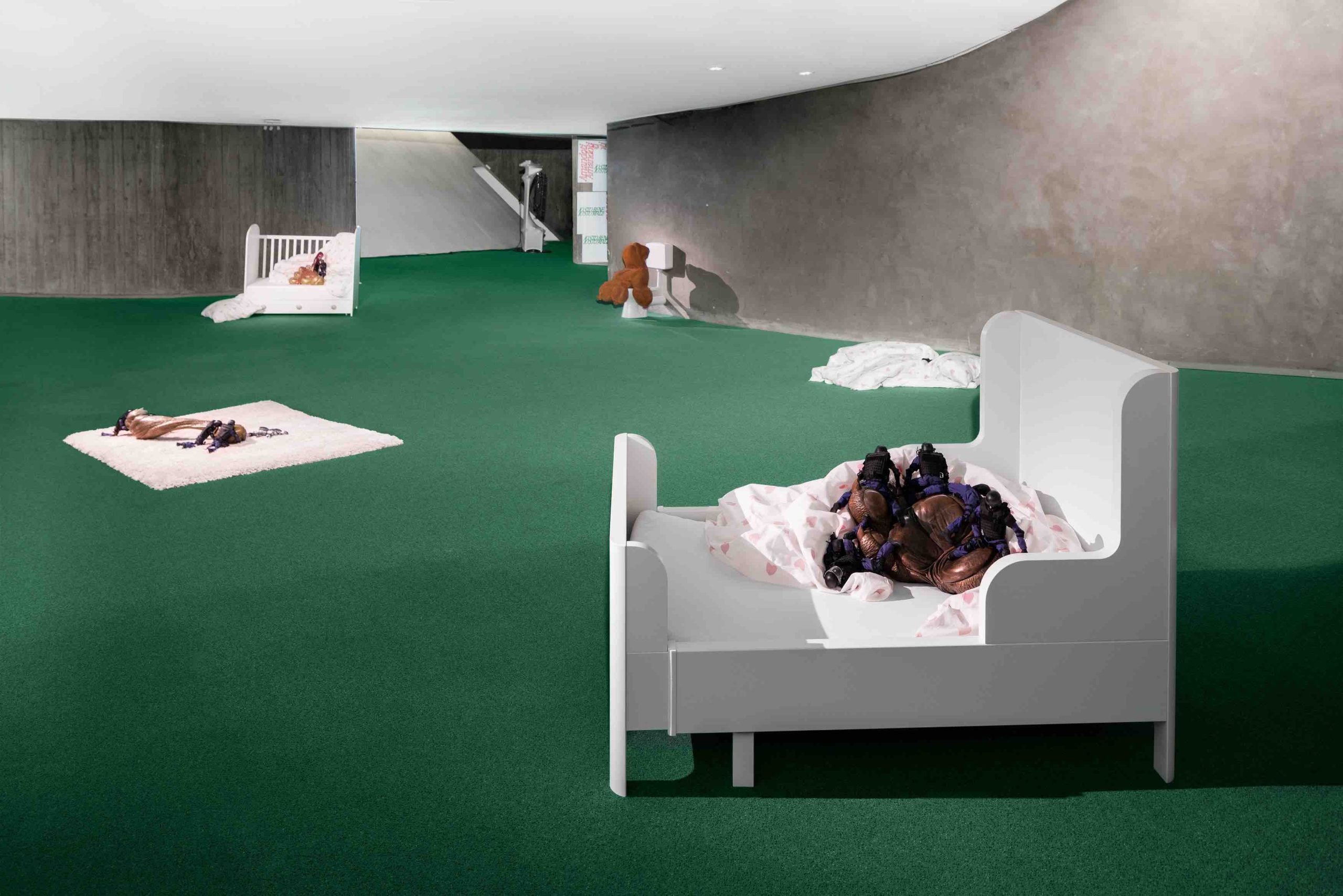
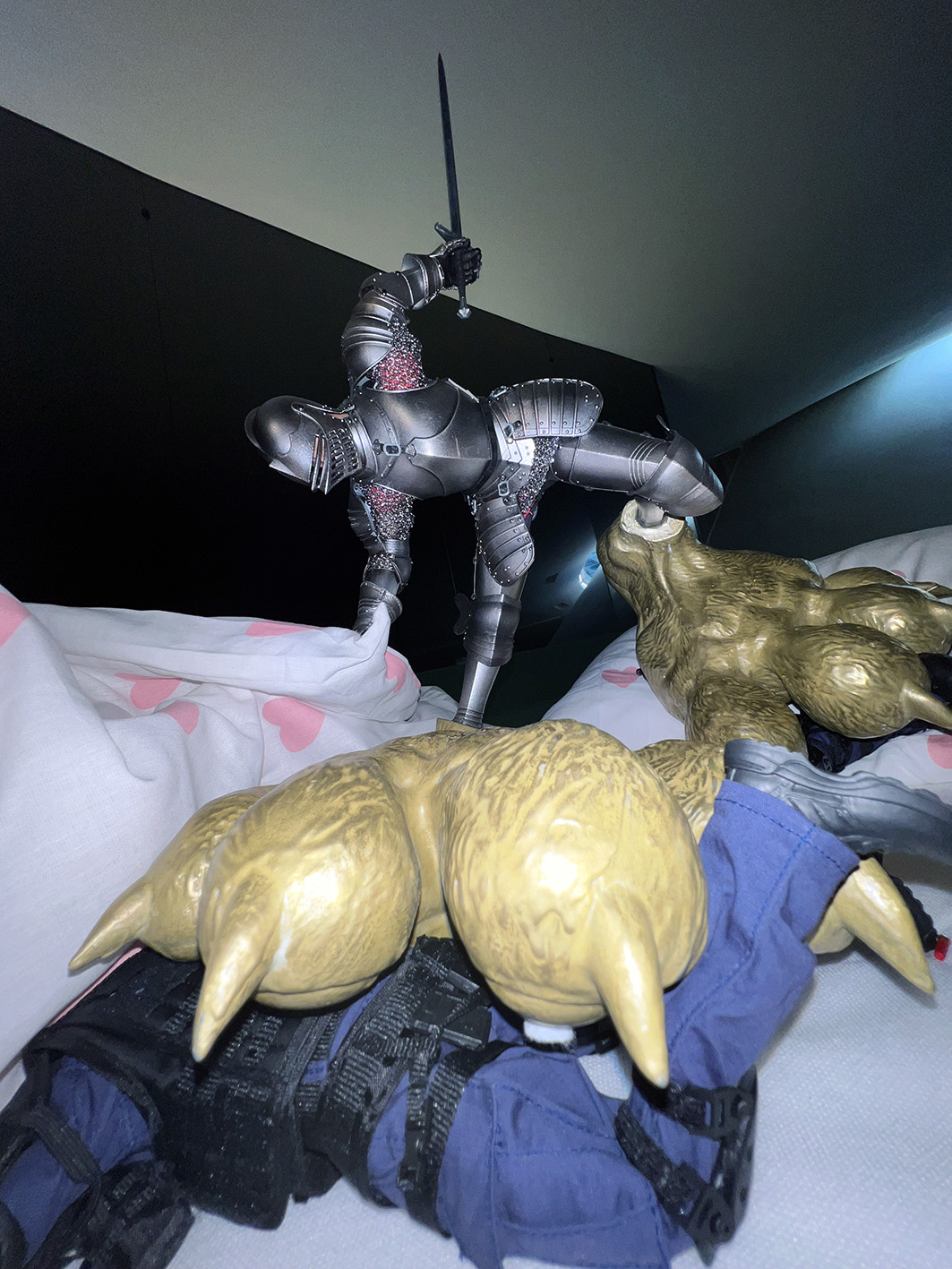
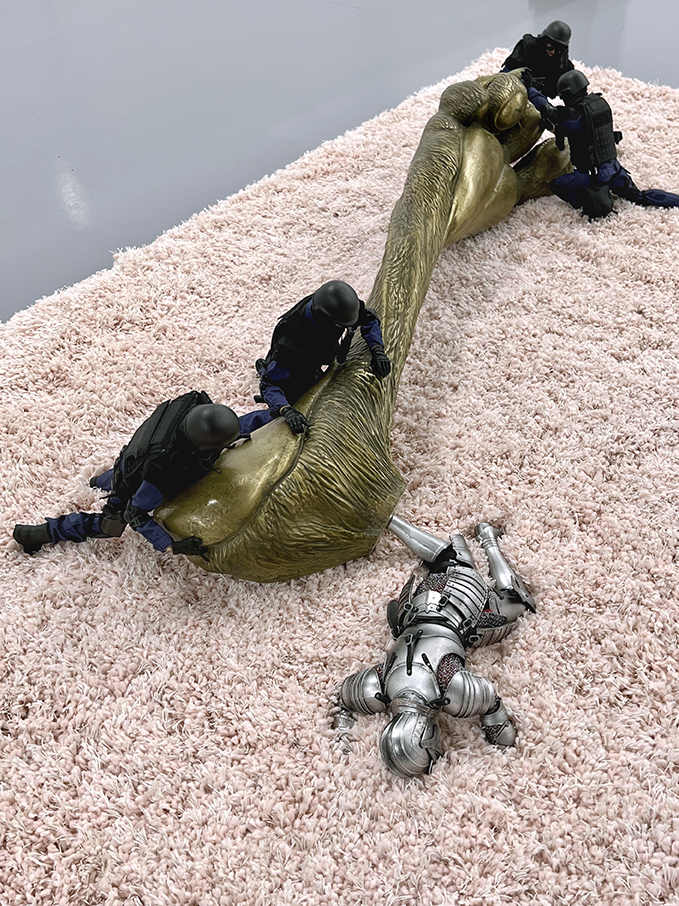
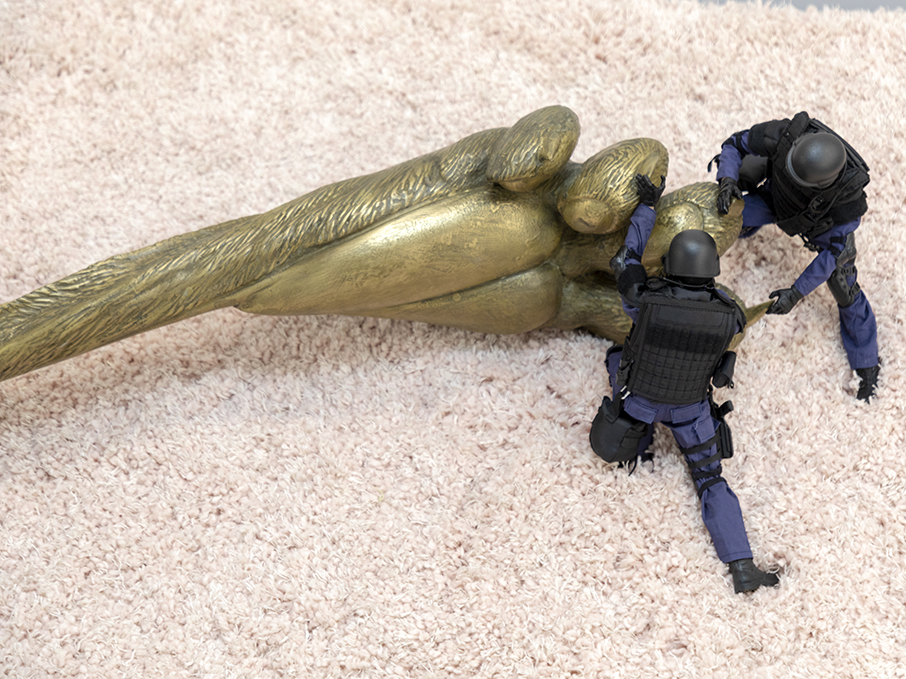
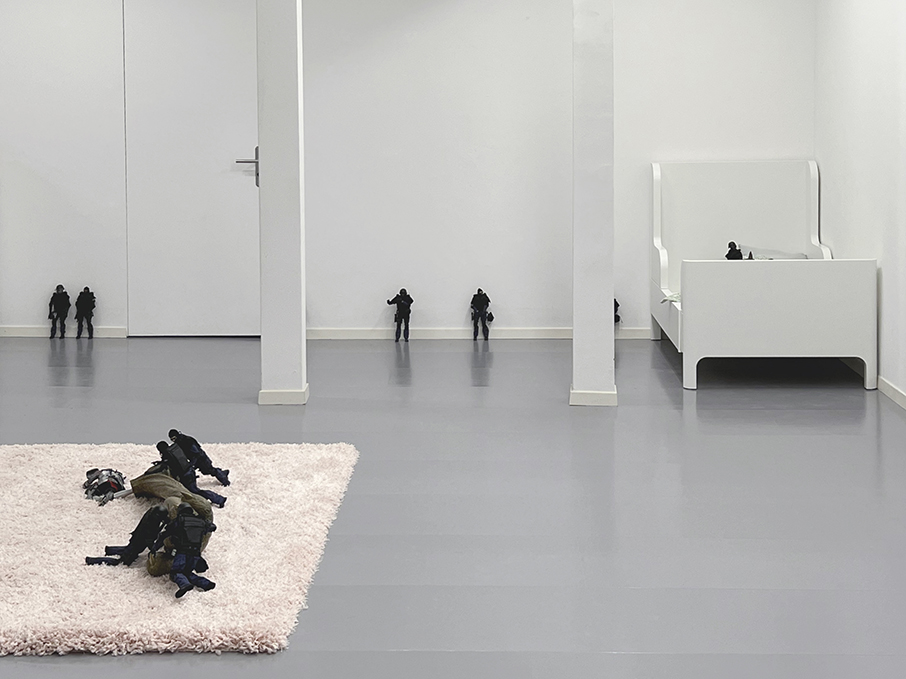
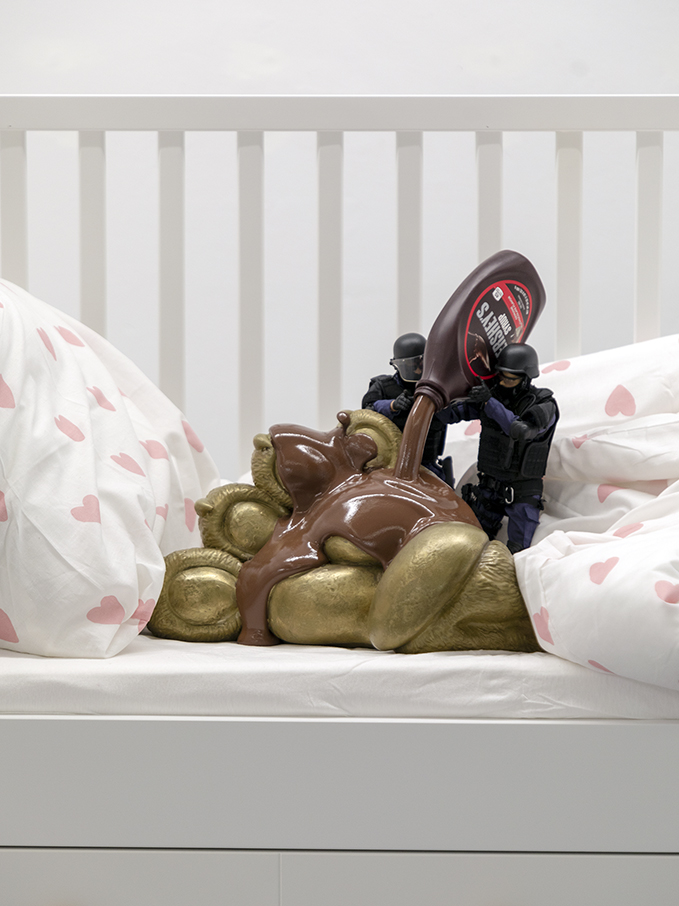
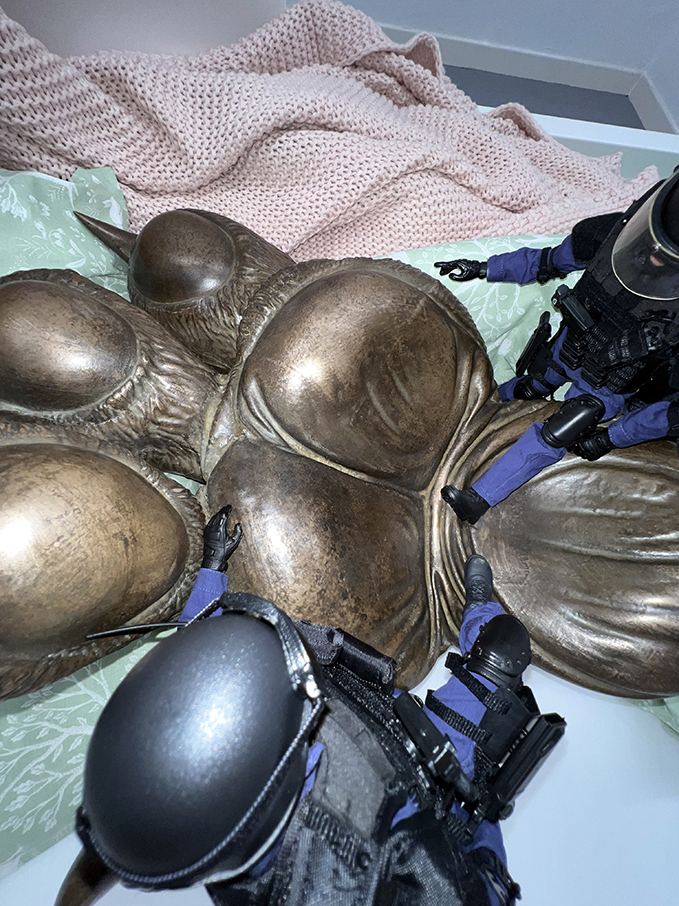
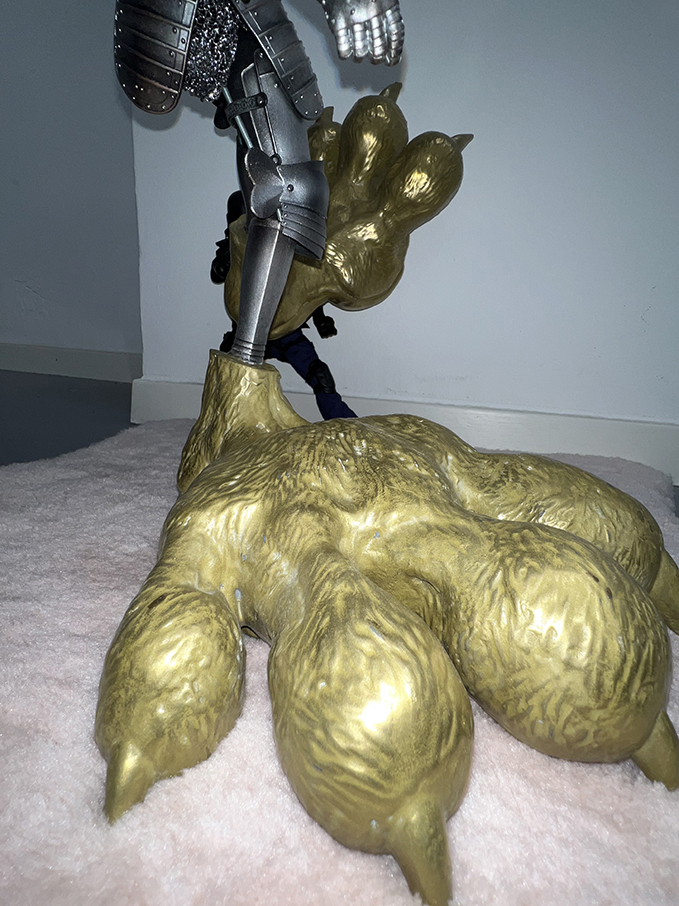
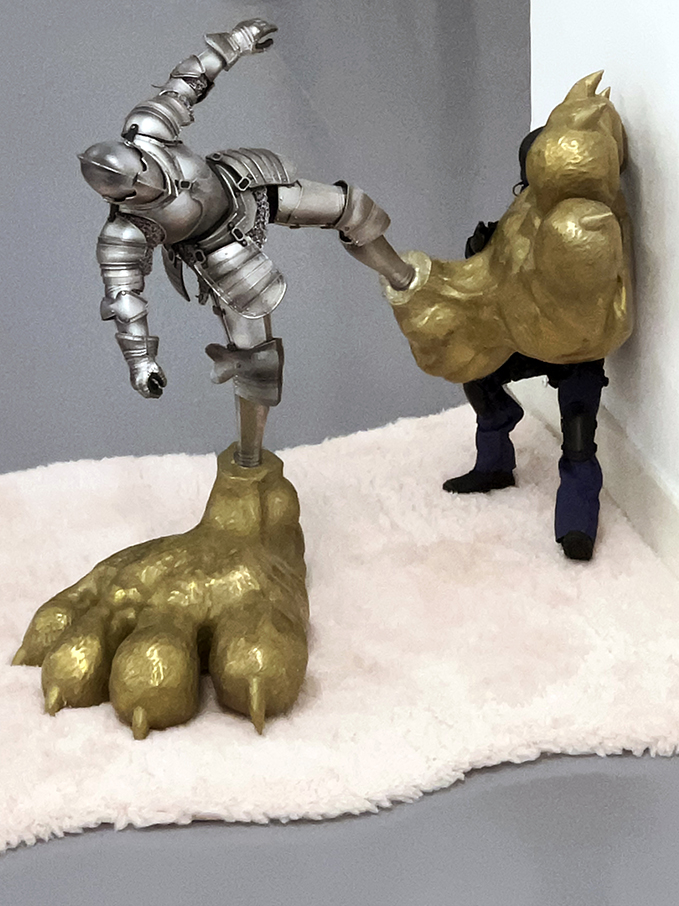
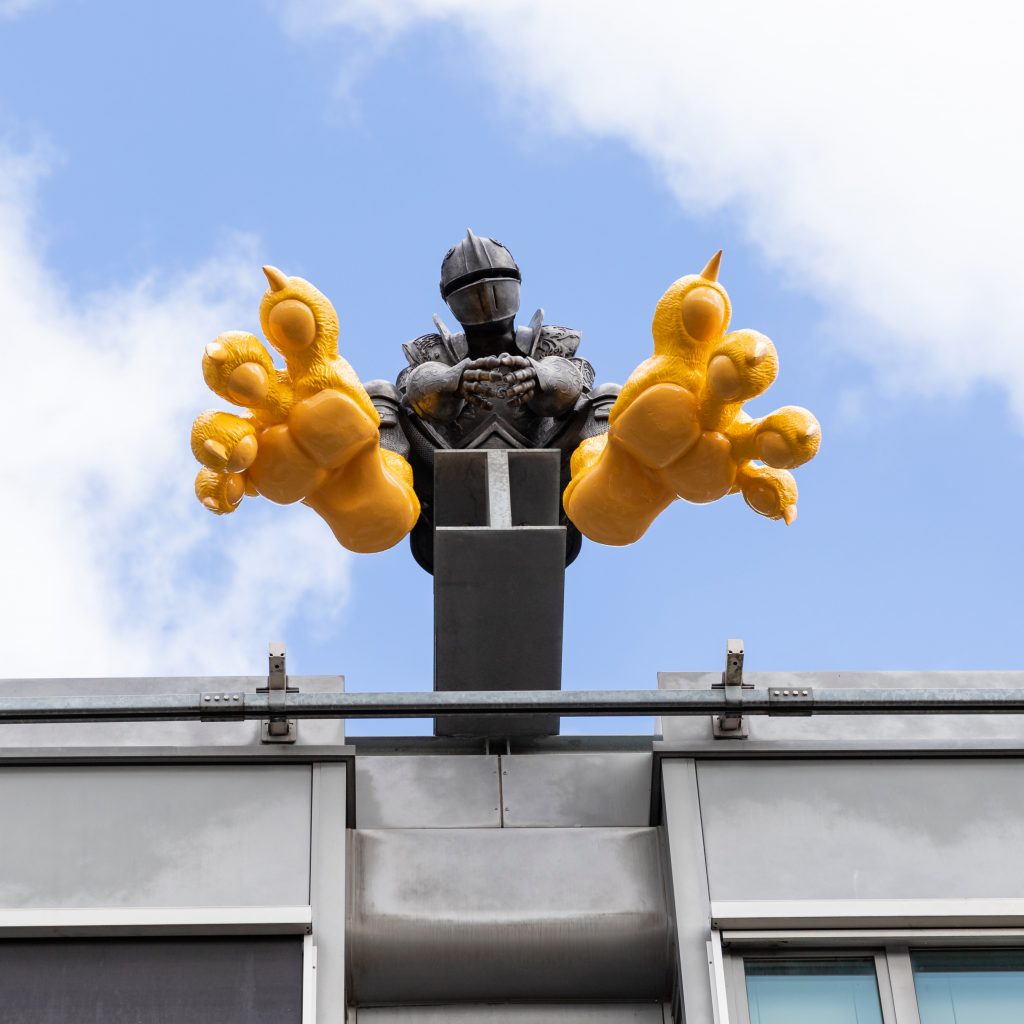
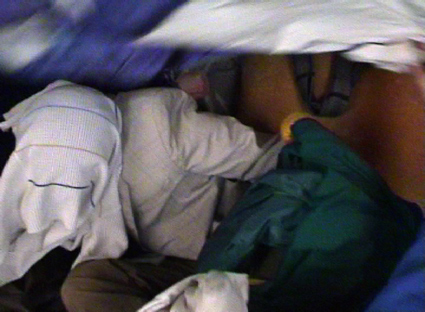
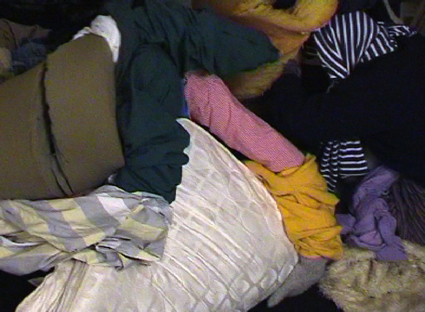
Title: The Great Turn at the Bruegel Room Artist: Anne de Vries Year: 2025 Dimensions: Variable Materials: Brass metal pulver, patina, resin core, semi-customized 1/6 action figures About: This art installation consists of a unique set of components to collect, install, and to be played with. Exhibition views:Particolare at Kunsthistorisches Museum Vienna Curator: Dasha Aksenova
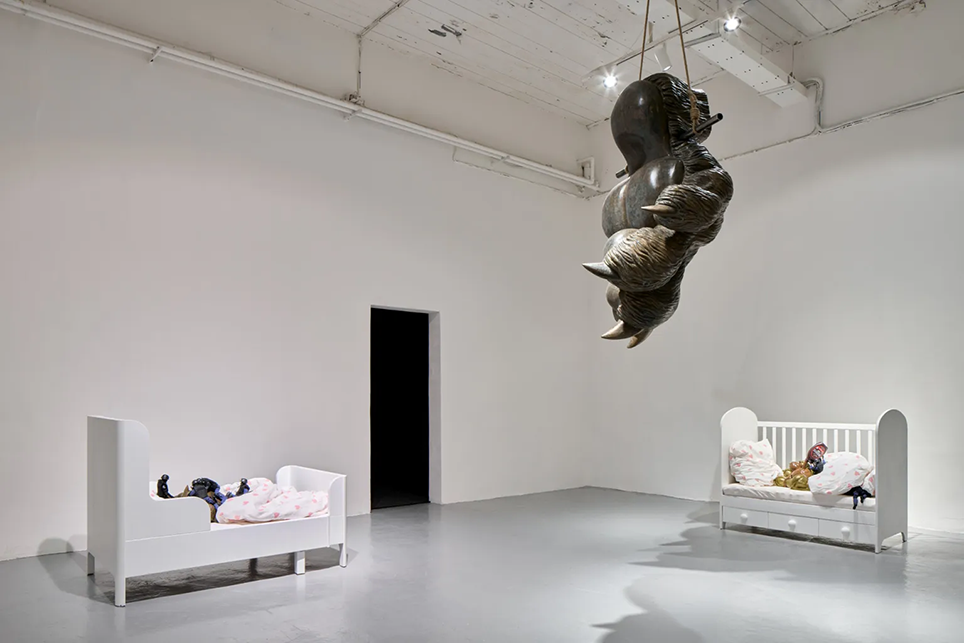
Title: ‘Bottom’s just another floor – Today’s Day Care‘ Artist: Anne de Vries Year: 2025 Dimensions: Variable Exhibition: ‘Bottom’s just another floor’ at Meet Factory, Prague Curators: Noemi Purkrábková and Jiří Sirůček
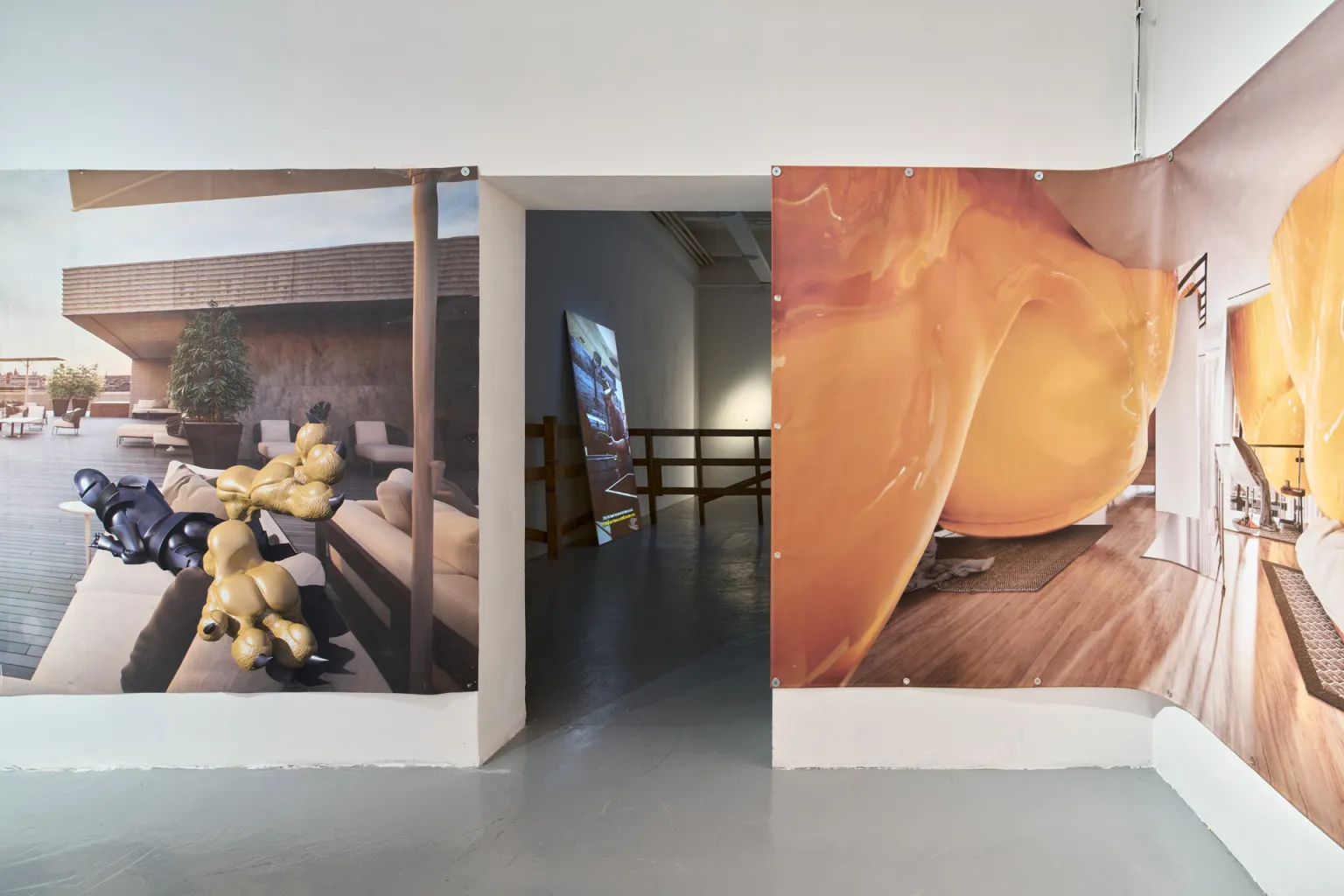
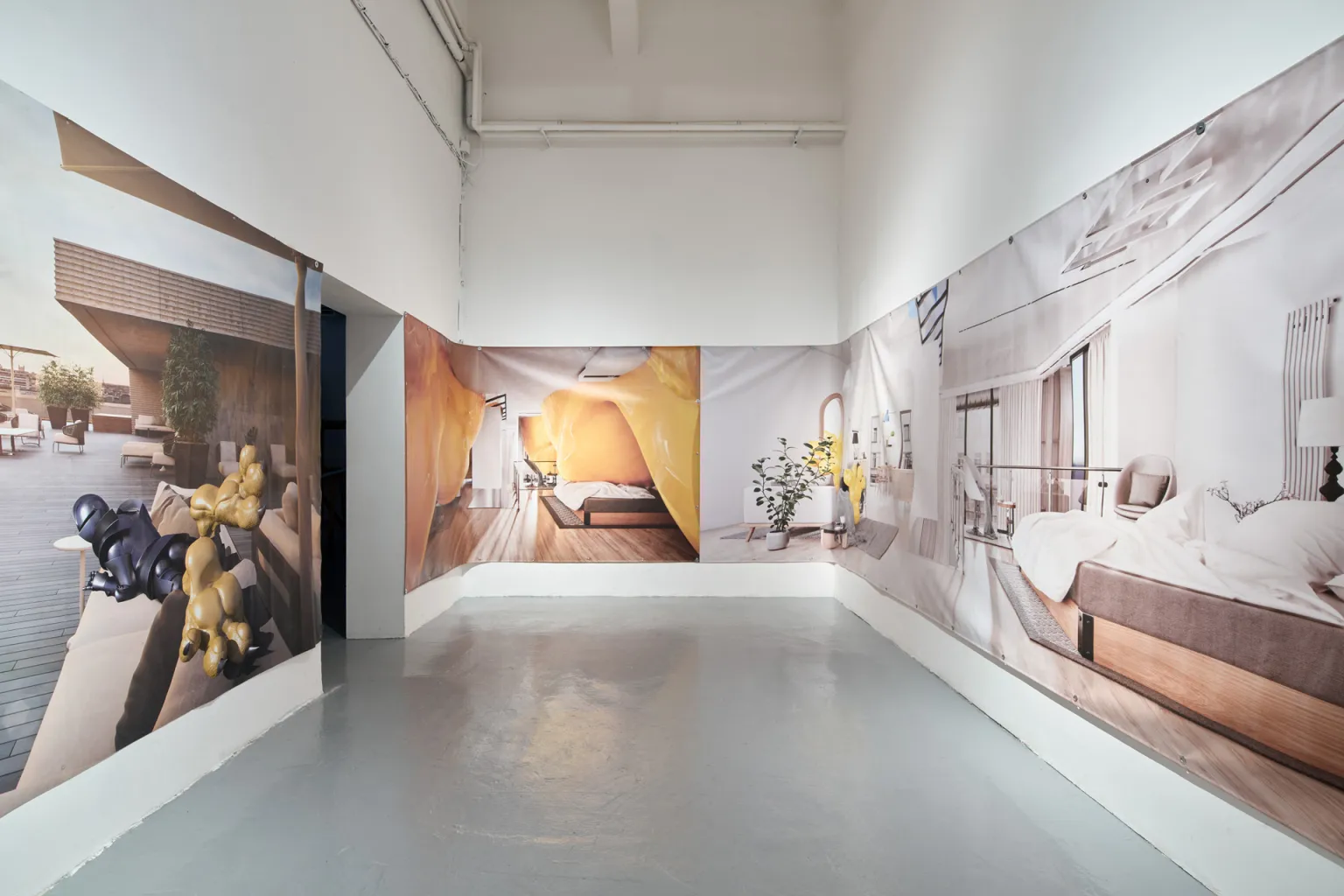
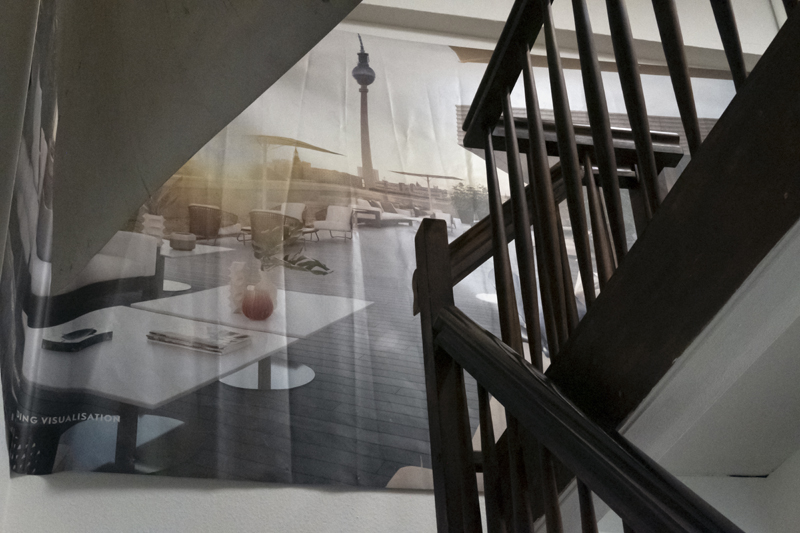
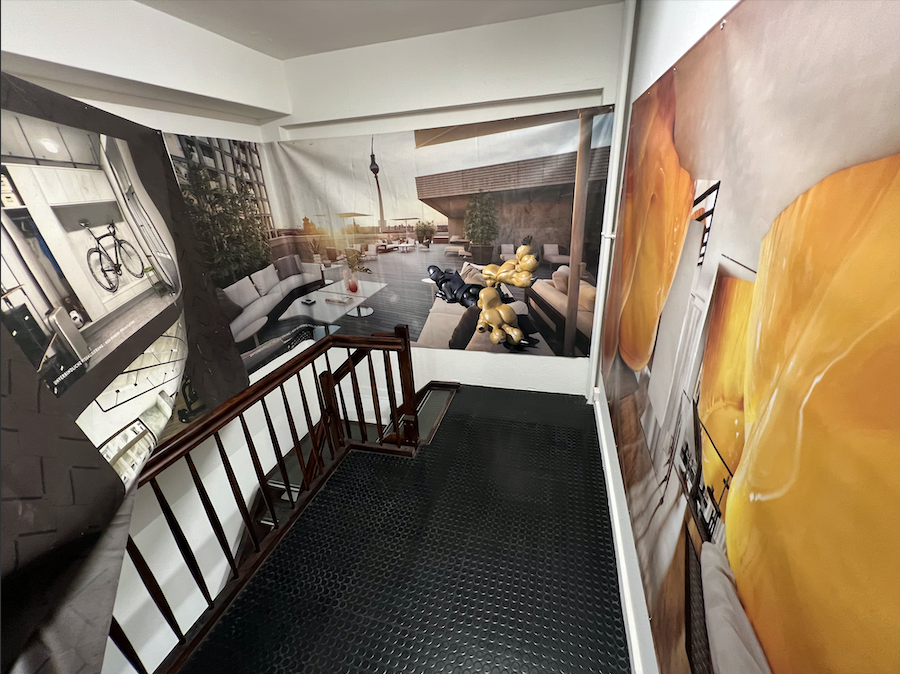
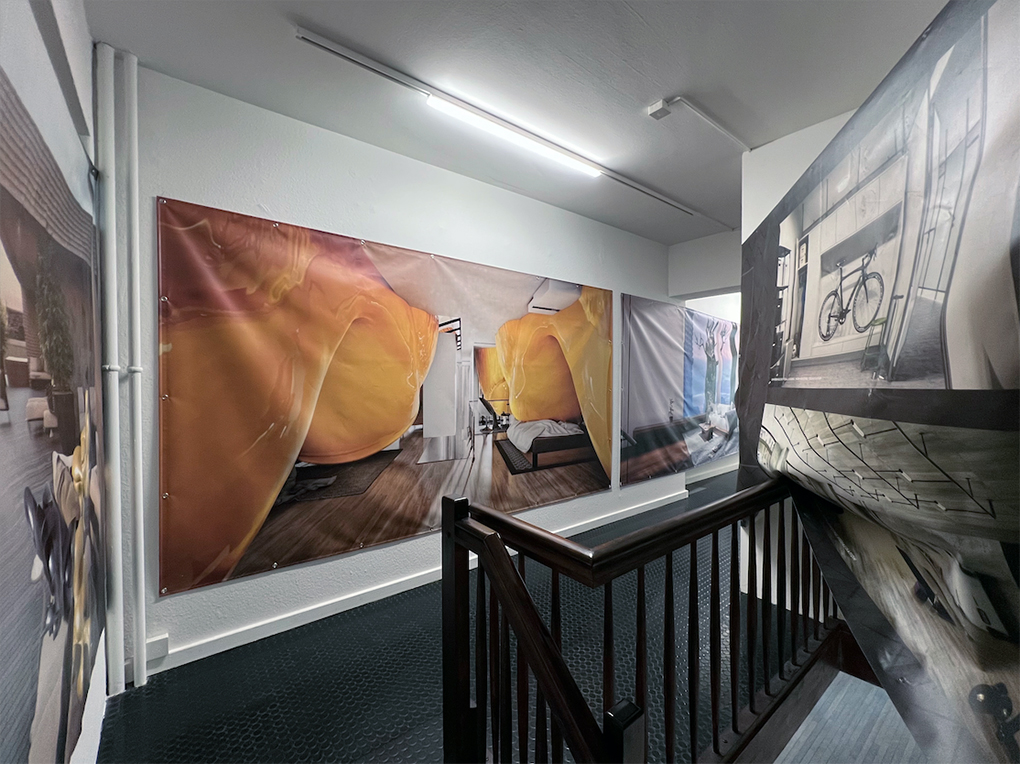
Title:Today’s Dream, Tomorrow’s Haunt Artist: Anne de Vries Year: 2025
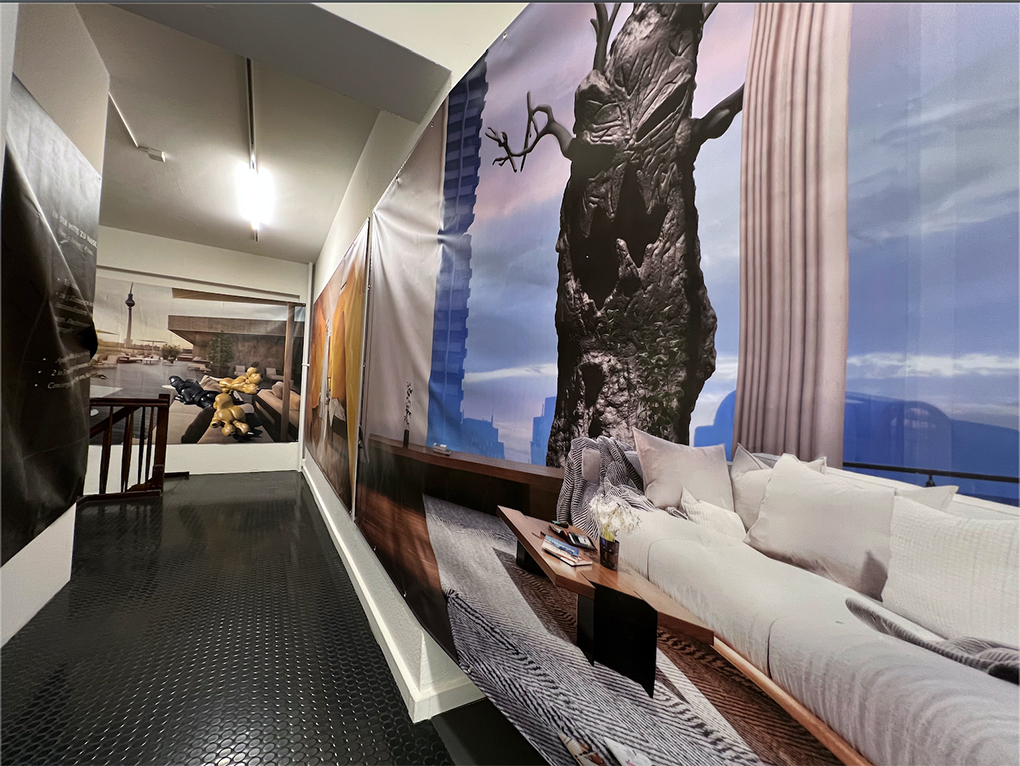
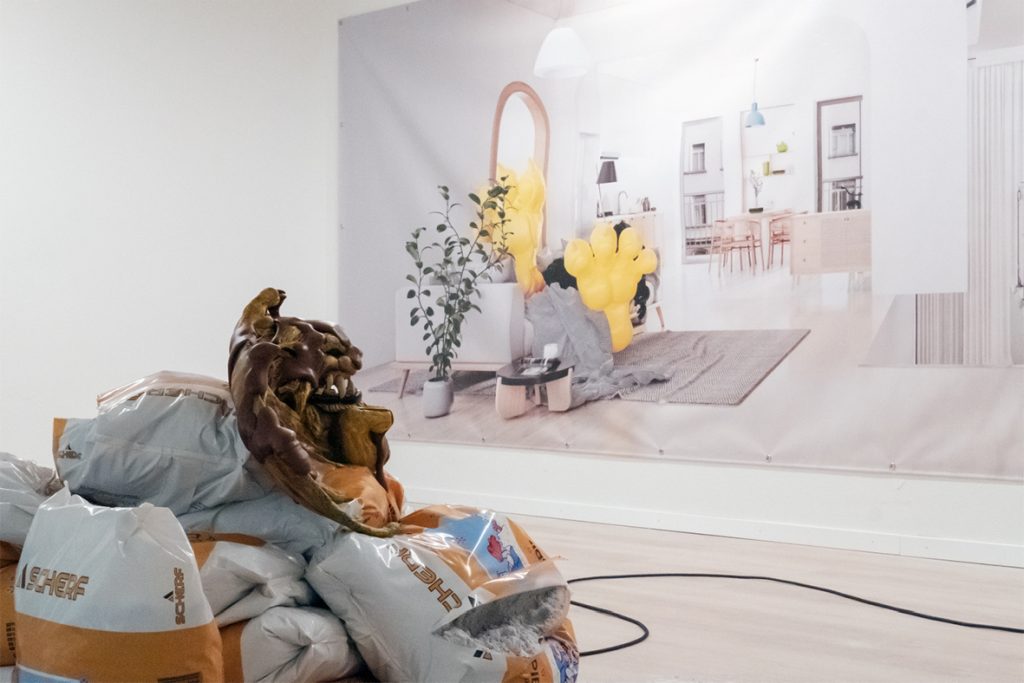
Dimensions: Variable, immersive Materials: CGI renders, UV prints on PVC
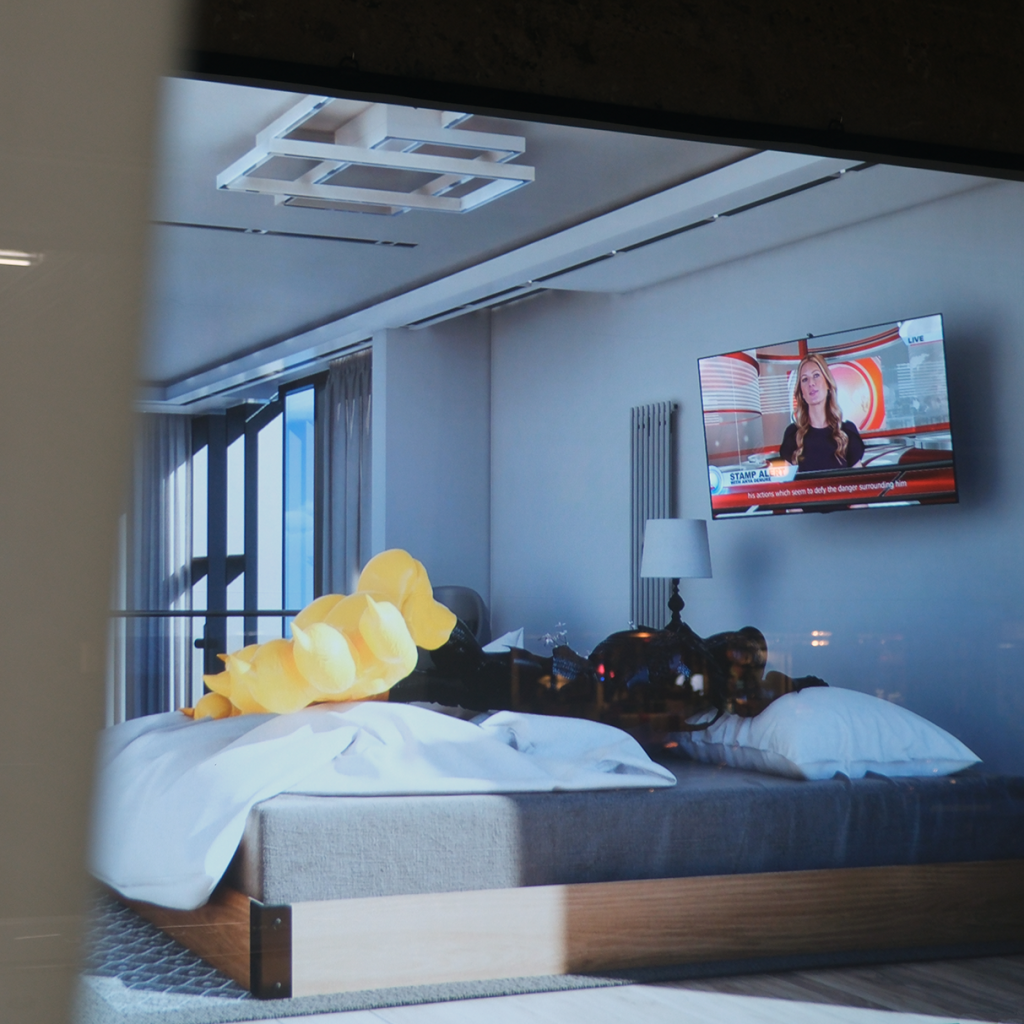
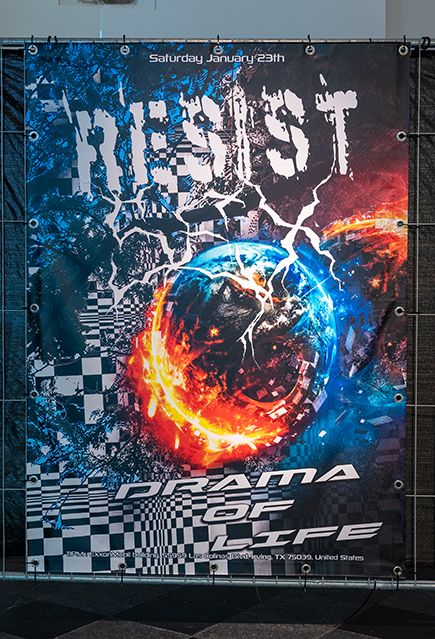
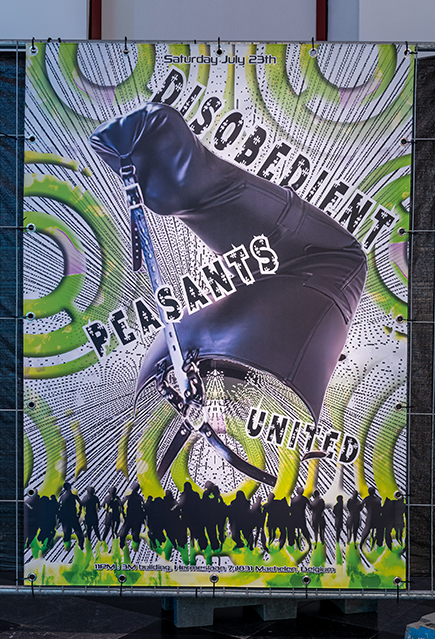
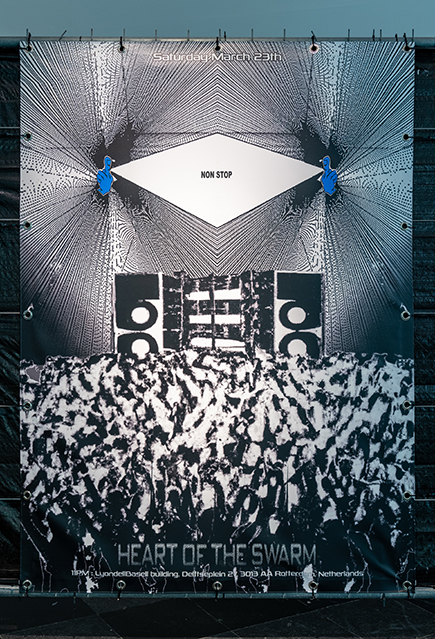
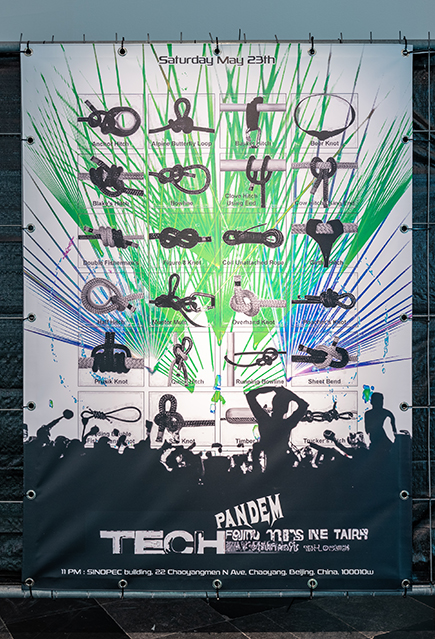
Description: By repurposing banners typically used as visualisations, around construction sites, the work builds on the illusions embedded in development imagery—visualizing projected architecture and lifestyles for a near future.
Credits: CGI renders produced in collaboration with Leonardo Reuvenkamp. Exhibition views from: Meet Factory Prague, and Blue Velvet Projects Zürich.
Title:Playtime Is Over Year: 2025 Artist: Anne de Vries Actors: Timon Grau, Julien-Jakob Kneer, Anna Uddenberg, Otto Uddenberg de Vries, Description: 22-minute video installation with sound Resolution: 3840 × 2160 pixels (4K)
Title:Little Heralds Amendments Artist: Anne de Vries Year: 2025 Materials: Brass pulver, Patina, Resin core, Customized 1/6 knight with aluminum armor, heart balloon. Dimensions: 35 x 45 x 30 cm About: This art installation consists of a unique set of components that can be collected, installed, and played with. Where:Blue Velvet, Zürich
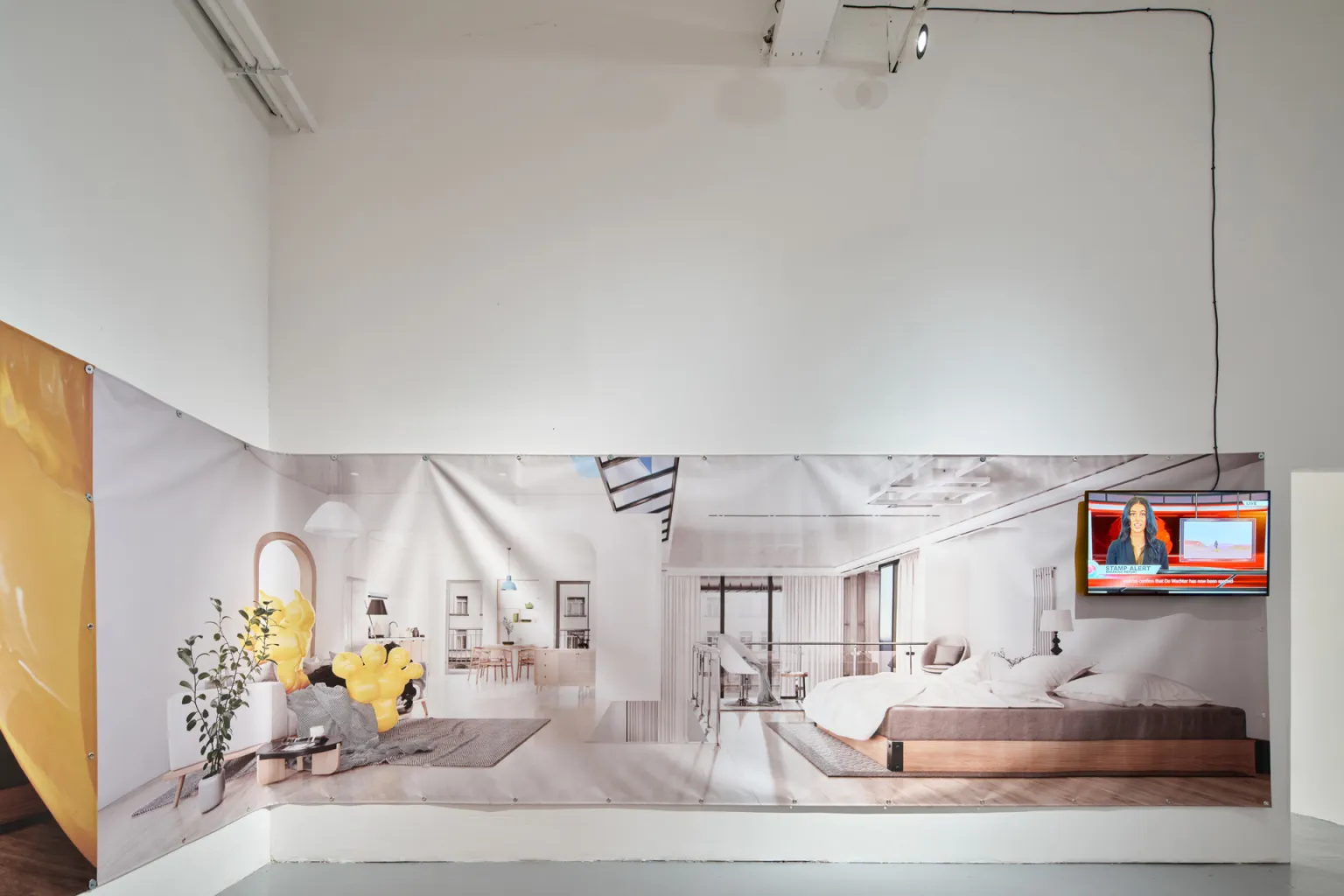
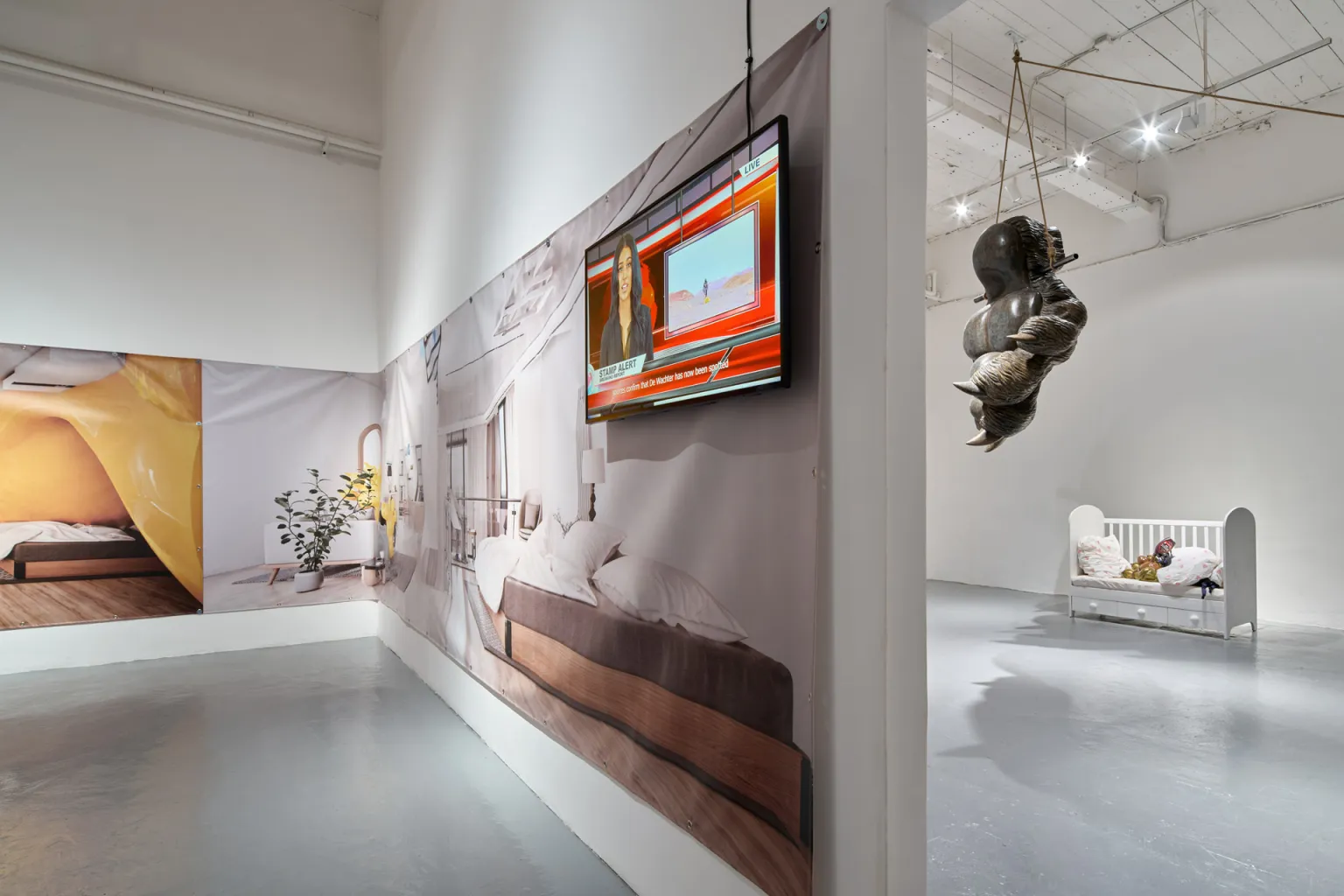
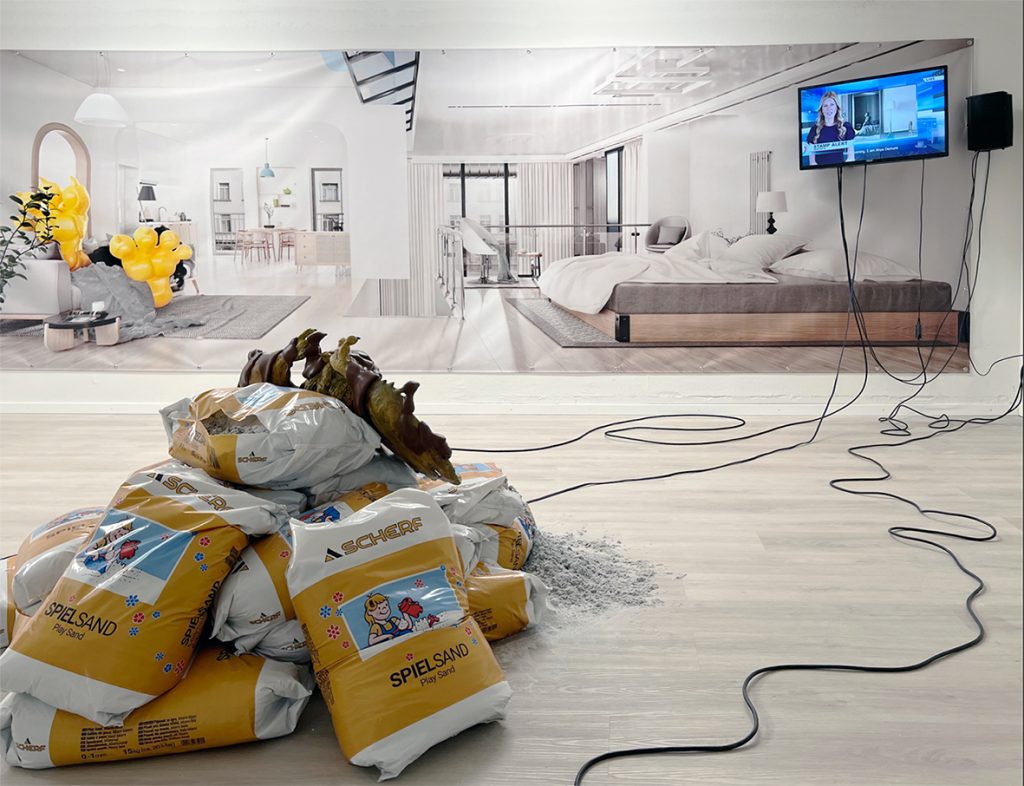
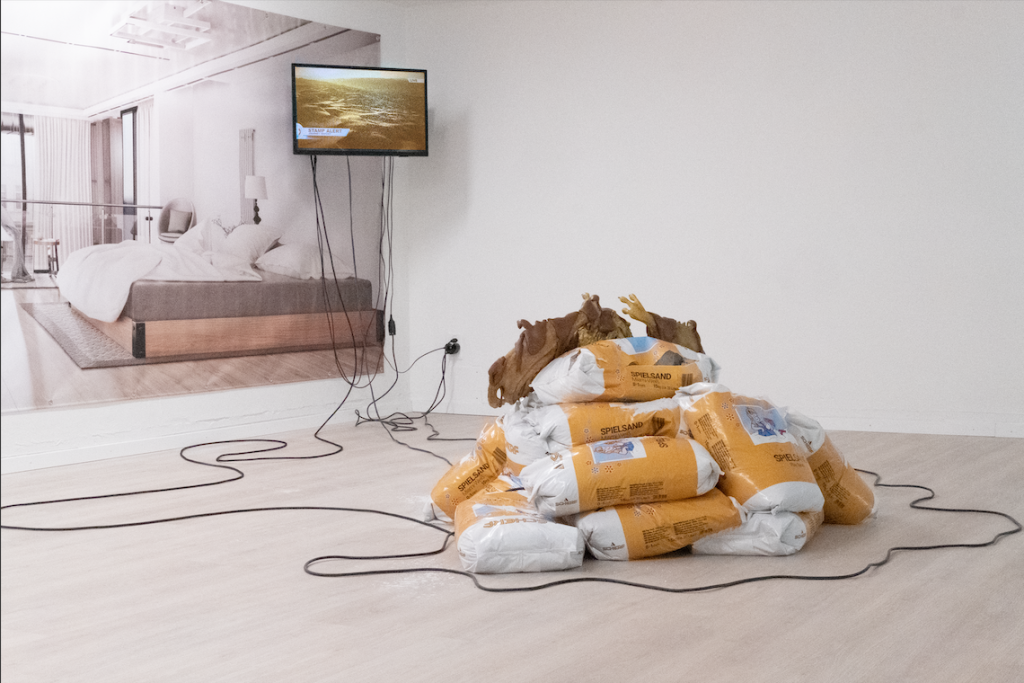
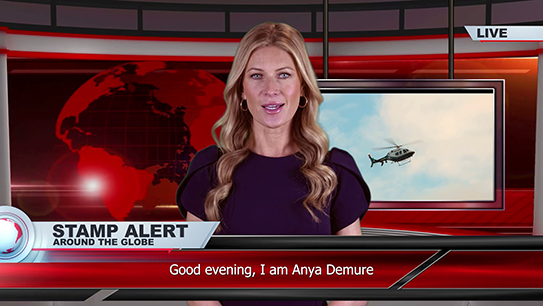
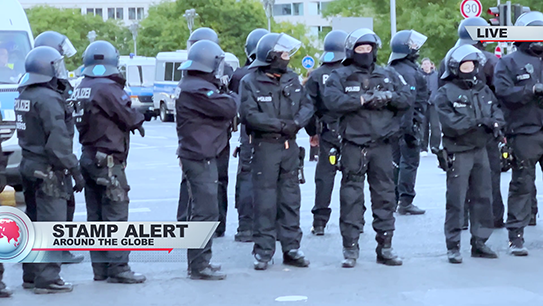
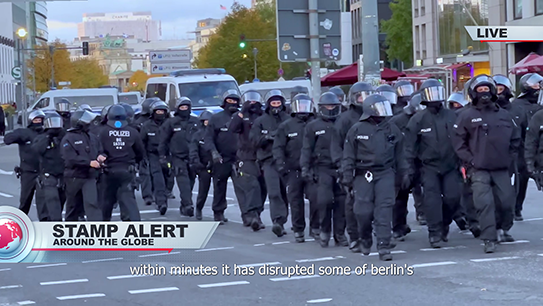
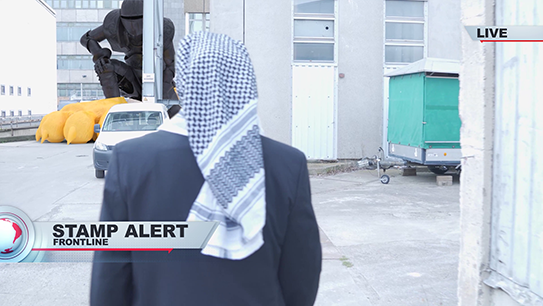
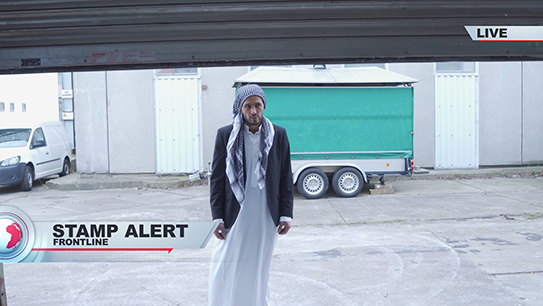
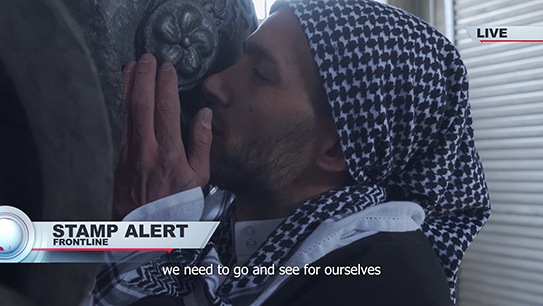
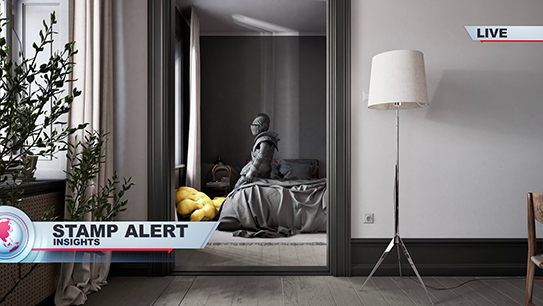
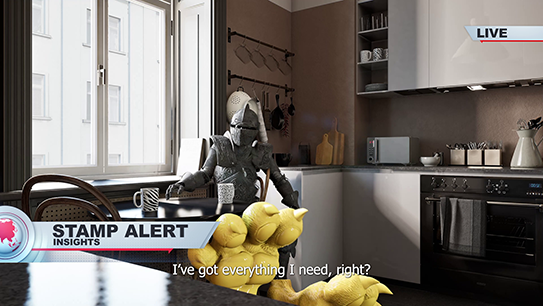
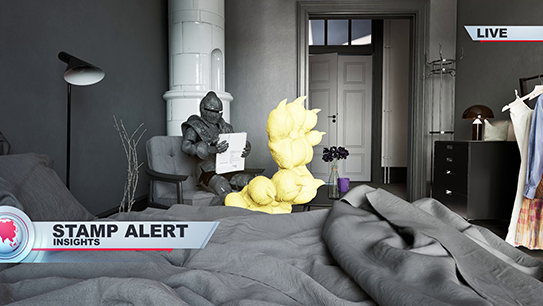
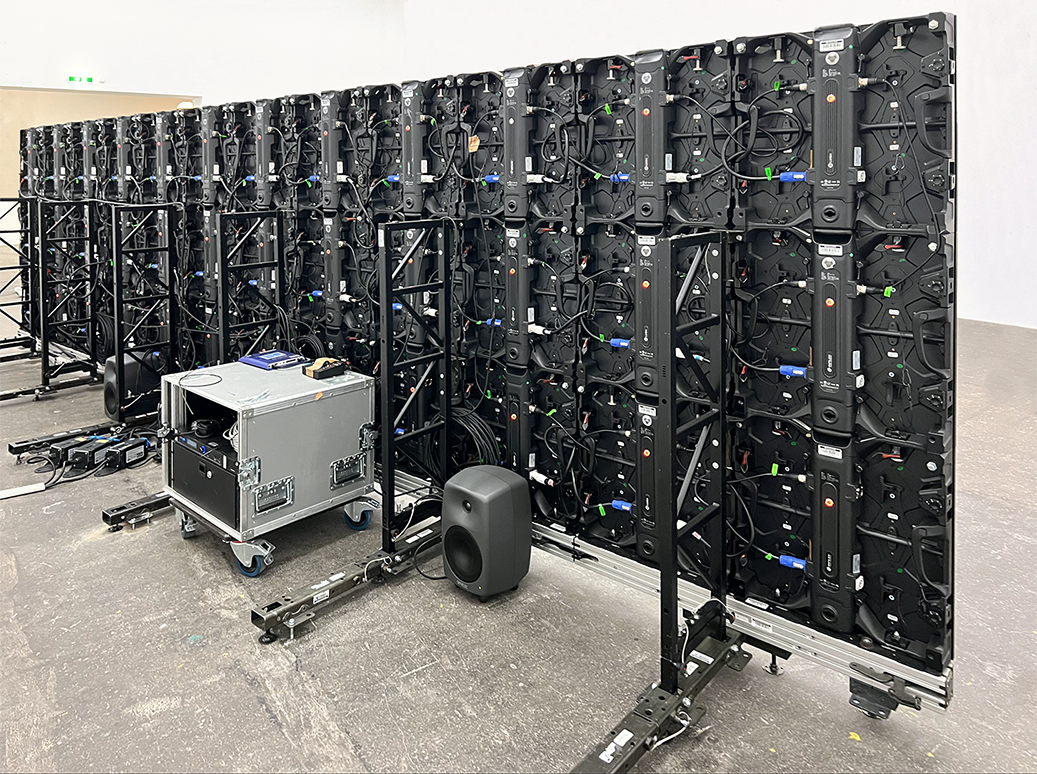
Title:STAMP ALERT – Connecting The Dots Year: 2025 Artist: Anne de Vries
Description: An immersive installation exploring themes of media and constructed realities through a combination of animatronics, video, and large-scale printed visuals.
Installation Components:
Video:
Duration: 22 minutes
Format: 4K with sound
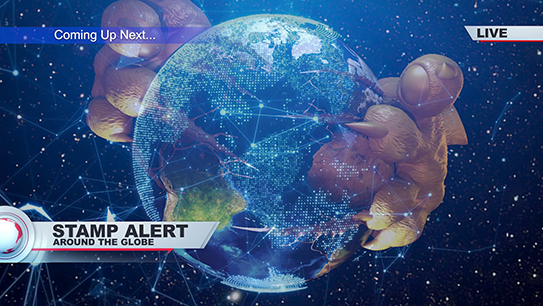
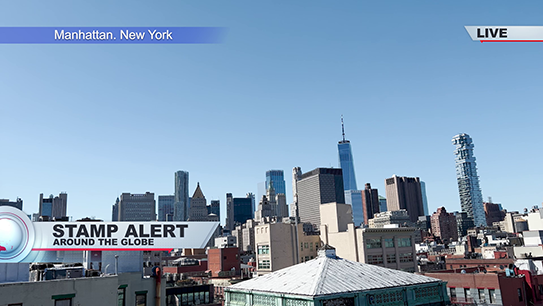
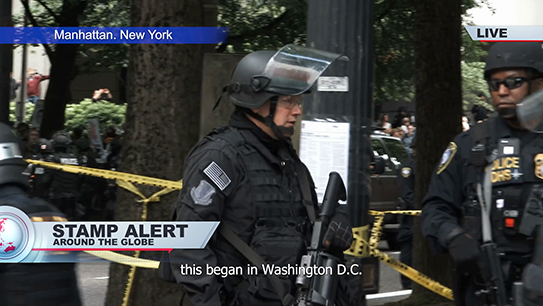
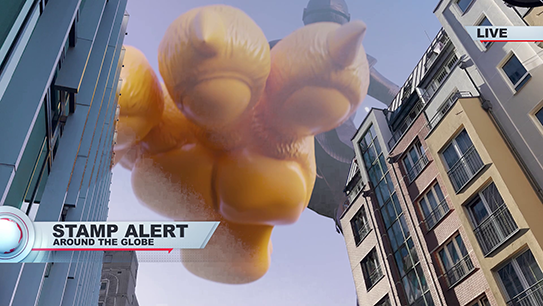
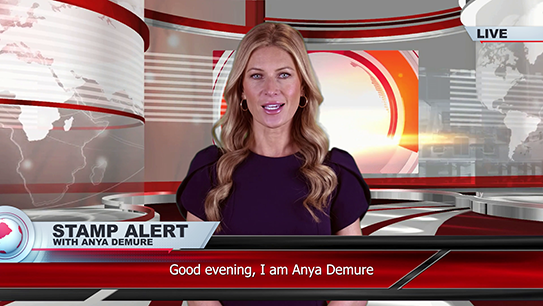
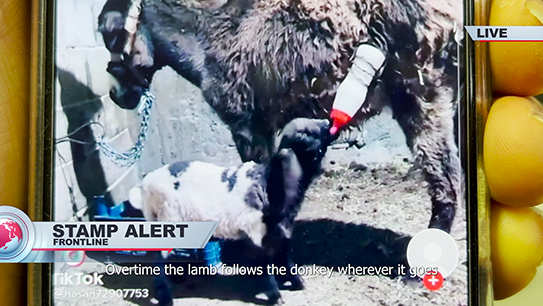
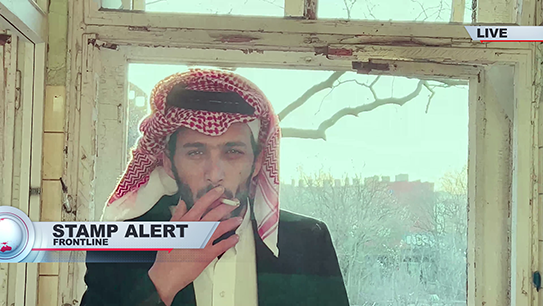
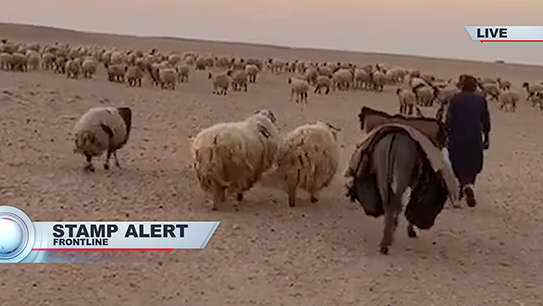
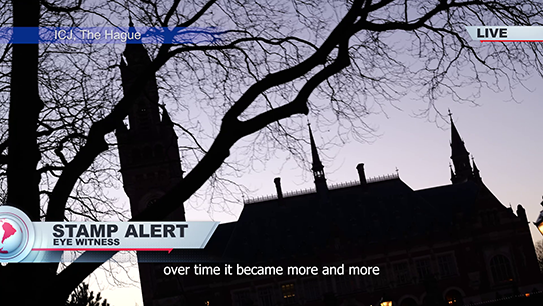
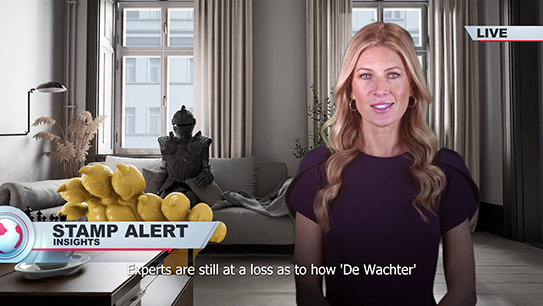
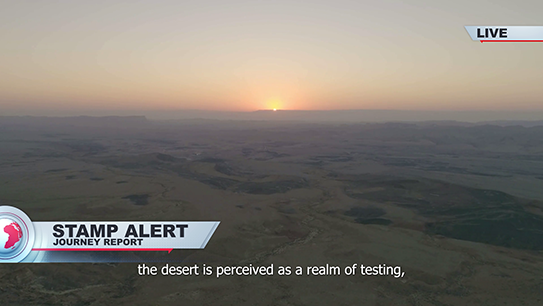
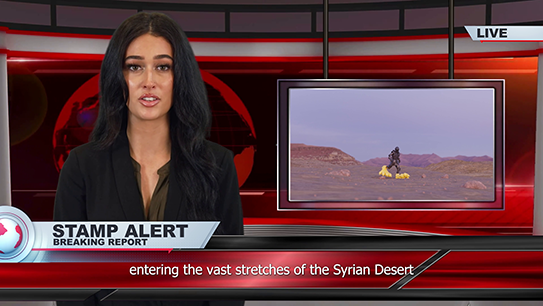
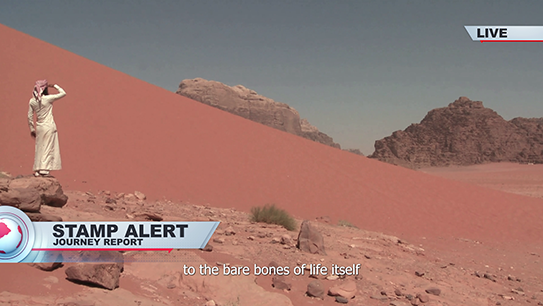
Description: A fictional news channel titled STAMP ALERT, streamed on an LCD screen and presented by Anya Demure. The video blends fact and fiction, creating a commentary on media narratives.
Contributors: Mansur Suri (main actor), Leonardo Reuvenkamp (3D animator)
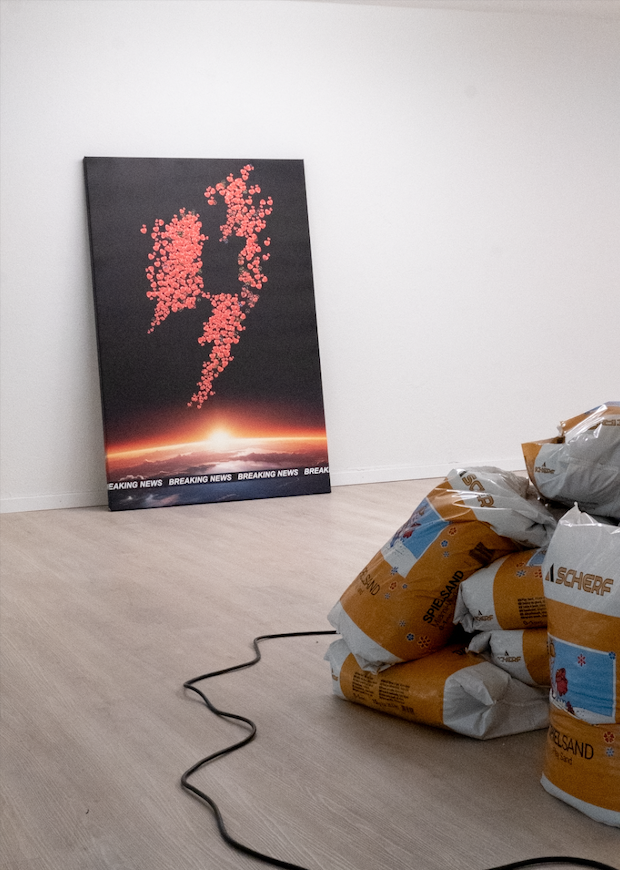
Banner PVC & Stretched Canvas:
Dimensions PVC: 580 cm x 200 cm
Dimensions Canvas: 150 cm x 100 cm
Material: UV print on PVC and UV print, and stretched Canvas, Gesso prime, 460gram, UV protection.
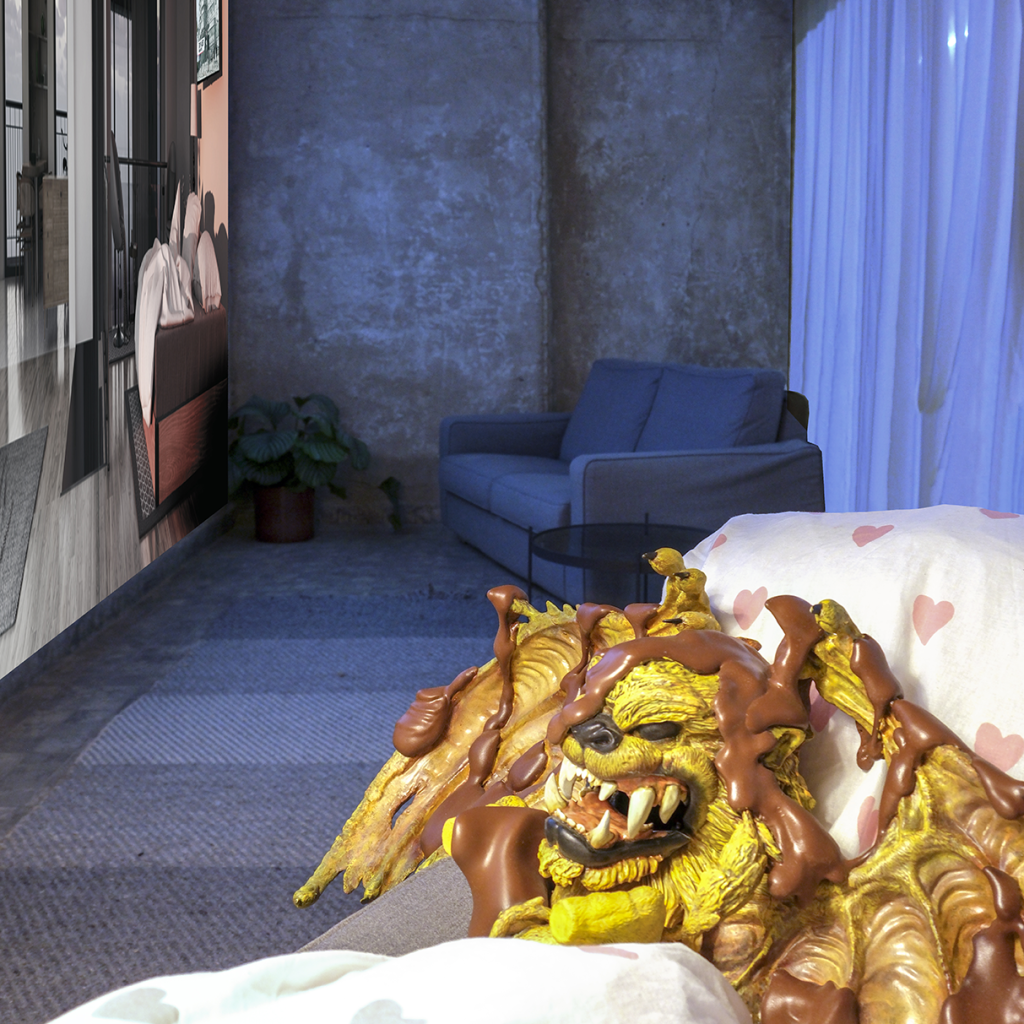
Description: A life-sized CGI-rendered virtual apartment, printed on PVC and reminiscent of architectural renders commonly seen on construction sites in urban environments.
Contributor: Leonardo Reuvenkamp
Animatronics:
Dimensions: 89 cm × 55 cm Materials: Resin, airbrush acrylic paint, lacquer, Raspberry Pi, Python, Sound (22 minutes).
Description: An animatronic robot named Vapula watches the STAMP ALERT news channel and provides commentary, adding an additional layer of context and narrative to the installation.
Title:STAMP ALERT – Cosmic Horde Report Year: 2024 Artist: Anne de Vries
In Collaboration With: Mansur Suri (main actor and narrator)
Medium: Video installation, 4K resolution, with audio Duration: 22-minute loop
Description: A fictional news channel hosted by Anya Demure, covering diverse global news stories that interweave the lives of the two central characters, Mansur and De Wachter, blending their individual journeys into a shared narrative.
Title:STAMP ALERT – Home Dweller’s Journey Year: 2024 Artist: Anne de Vries
In Collaboration With: Contributors: Mansur Suri (main actor), Leonardo Reuvenkamp (3D animator) Produced in Collaboration With: ODYSSEY, Cologne
Description: Life-sized video projection of a virtual apartment inhabited by the character De Wachter. The apartment also features the video STAMP ALERT, a fictional news program presented by Anya Demure.
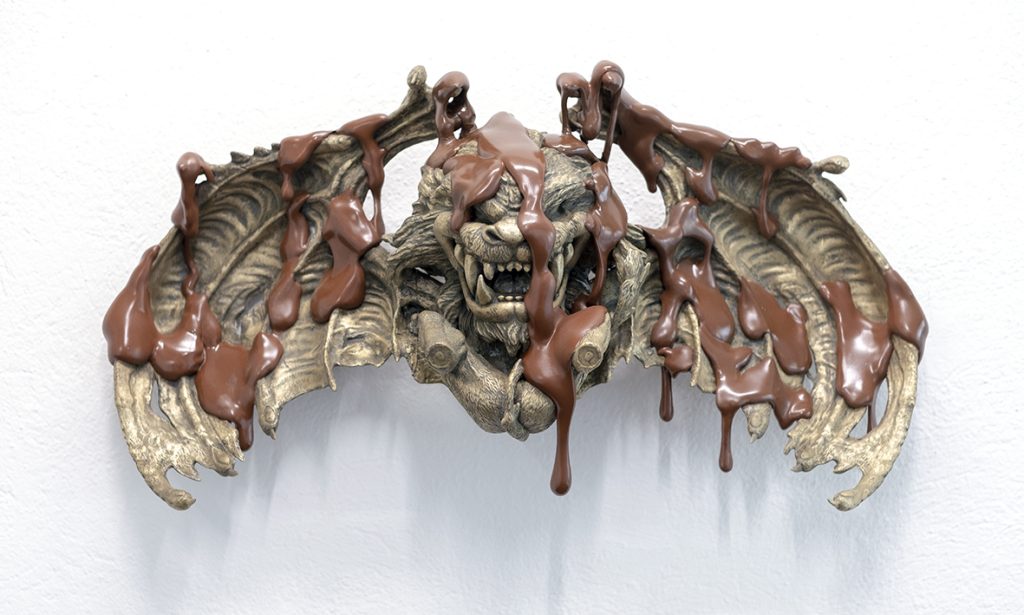
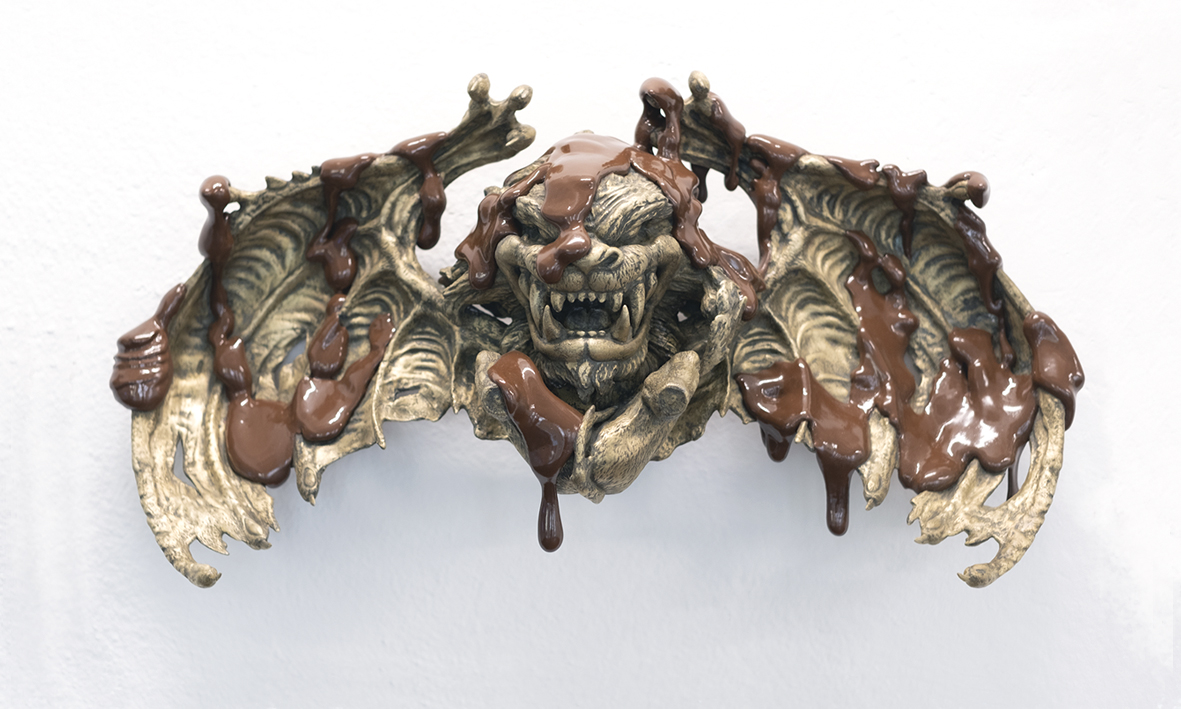
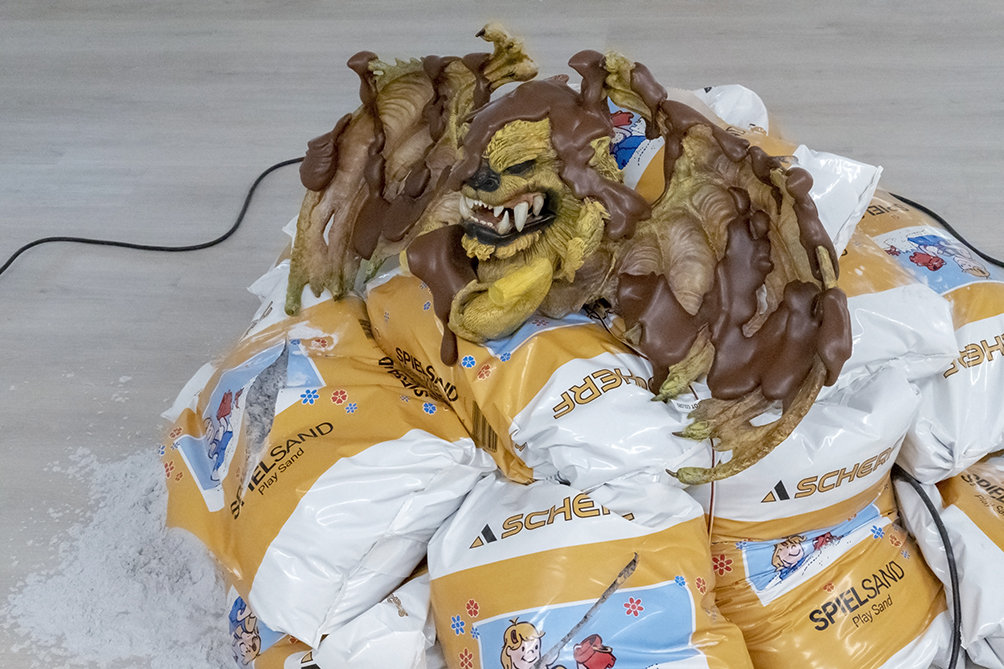
Title:Vapula’s Chocolate Fury Artist: Anne de Vries Year: 2024 Dimensions: 89 × 55 cm Materials: Resin; airbrush acrylic paint; lacquer About: Vapula’s Chocolate Fury is an animatronic sculpture delivering a monologue that offers commentary on the exhibition’s context and its connection to the character De Wachter, who has taken its paws from this Vapula.
Title: The Great Turn visited by Ötza Artist: Anne de Vries, Levi van Gelder Year: 2022 Dimensions: Variable Materials: Brass metal powder, patina, resin core, semi-customized 1/6 action figures About: This art installation consists of a unique set of components to collect, install, and to be played with. Exhibition views from:‘Still Making Art’ at Arti, Amsterdam
Title:Manifesto XXIII – Day Care Artist: Anne de Vries Year: 2023 About: This installation features infantile—but not innocent—scenes, including toy-like sculptures that can be played with. Location: The headquarters of the Parti Communiste Français, inside the ESPACE building designed by Oscar Niemeyer, Paris Curated by: Kaleidoscope.
Excretion is automatic, but how we do it is not. Parents are advised to teach their children how to use a toilet when they’re around 18-24 months, and diapers are substituted for toddler toilets. Scaled down for smaller limbs, they resemble the real thing but without the architectonic devices — doors, walls, dividers — that define their referent. For what is considered the most intimate of architectural spaces, privacy is earned not given. Like with most training techniques, these are performative objects, like stage sets, upon which the digestive rites of adulthood are mimed under the watchful gaze of parents.
Like children’s toilets, children’s toys are designed more for the buyer than the user. For example, when the toy company Hasbro released the first “G.I. Joe” in 1964, they coined the term “action figure” to appeal to gender-anxious mid-century American parents who didn’t want their boys playing with dolls. Since then, action figure has become the generic eponym for posable plastic toys marketed male — a wide range of products that shift with the times. Not long after the militaristic original hit shelves, cop-themed action figures emerged, including those released in conjunction with the 1970s crime drama show S.W.A.T., which chronicled the fictional adventures of a “Special Weapons And Tactics” team in California.
Violent delights marketed to children, whether action figures or video games, offer a projection screen for the adult world that makes them. For some, they’re the cause of all the blood and guts smeared across our grown-up world — a scapegoat for the AR-15s wielded by young adults (if not those by the men-in-blue who swat them down as they enter school). Others construe them as a cathartic device, or at least a palliative, for the violence that children perceive around them: a way to get your gusto for gore out of the system through play acting. Violence is presented as a socially-transmitted disease, and role-play as either predictive or prophylactic. Everyone eventually grows up, of course; some become cops themselves, while others become collectors. Today 1:6 scale action figures are tailored as much to children as adults — infantilized violence matured into a speculative market.
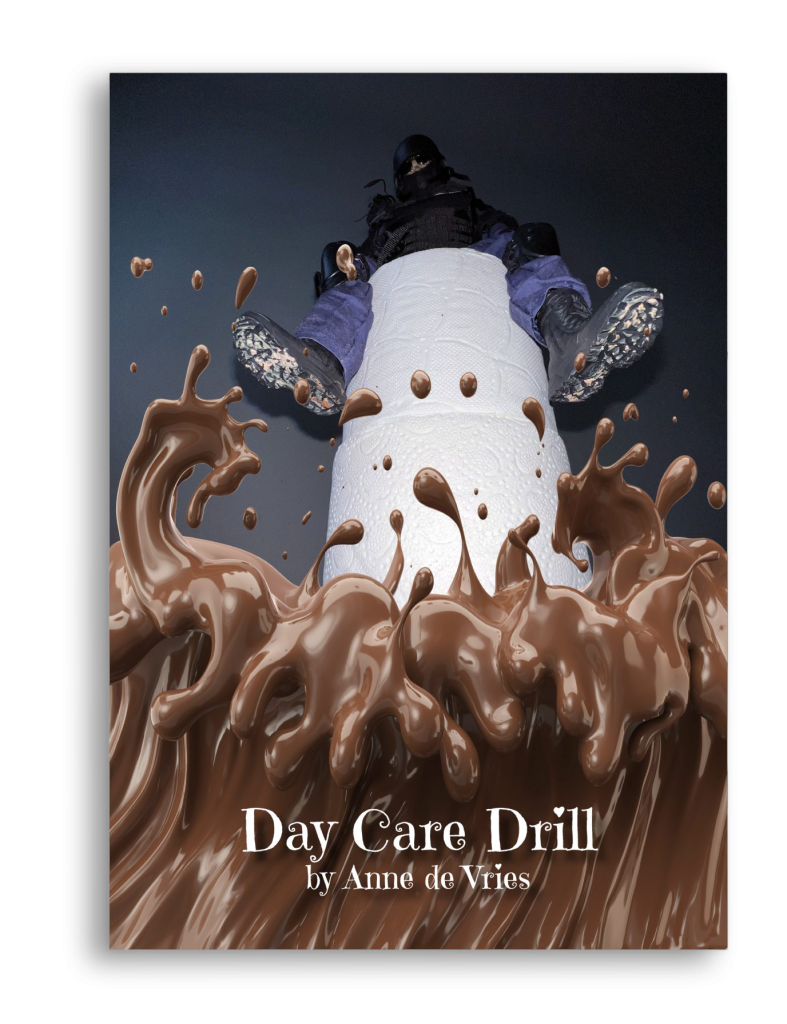
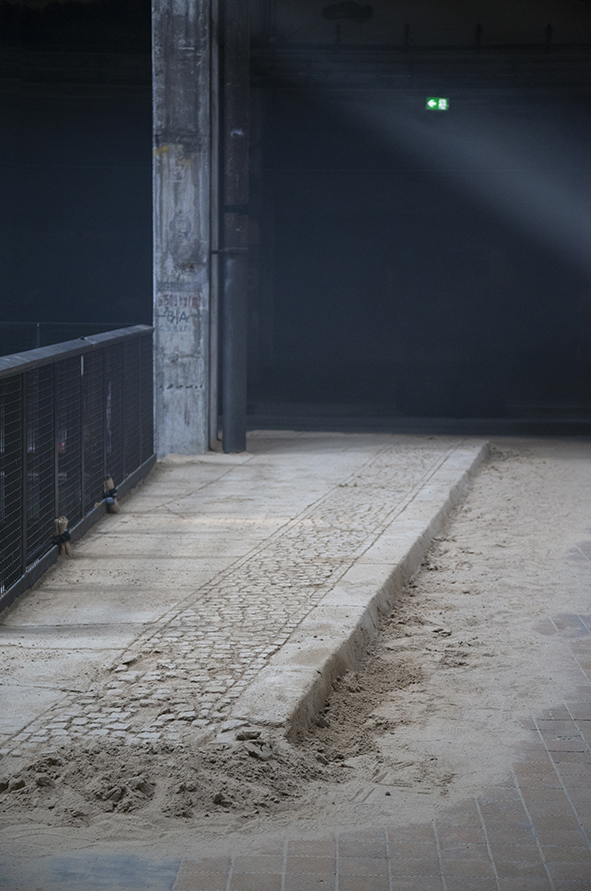
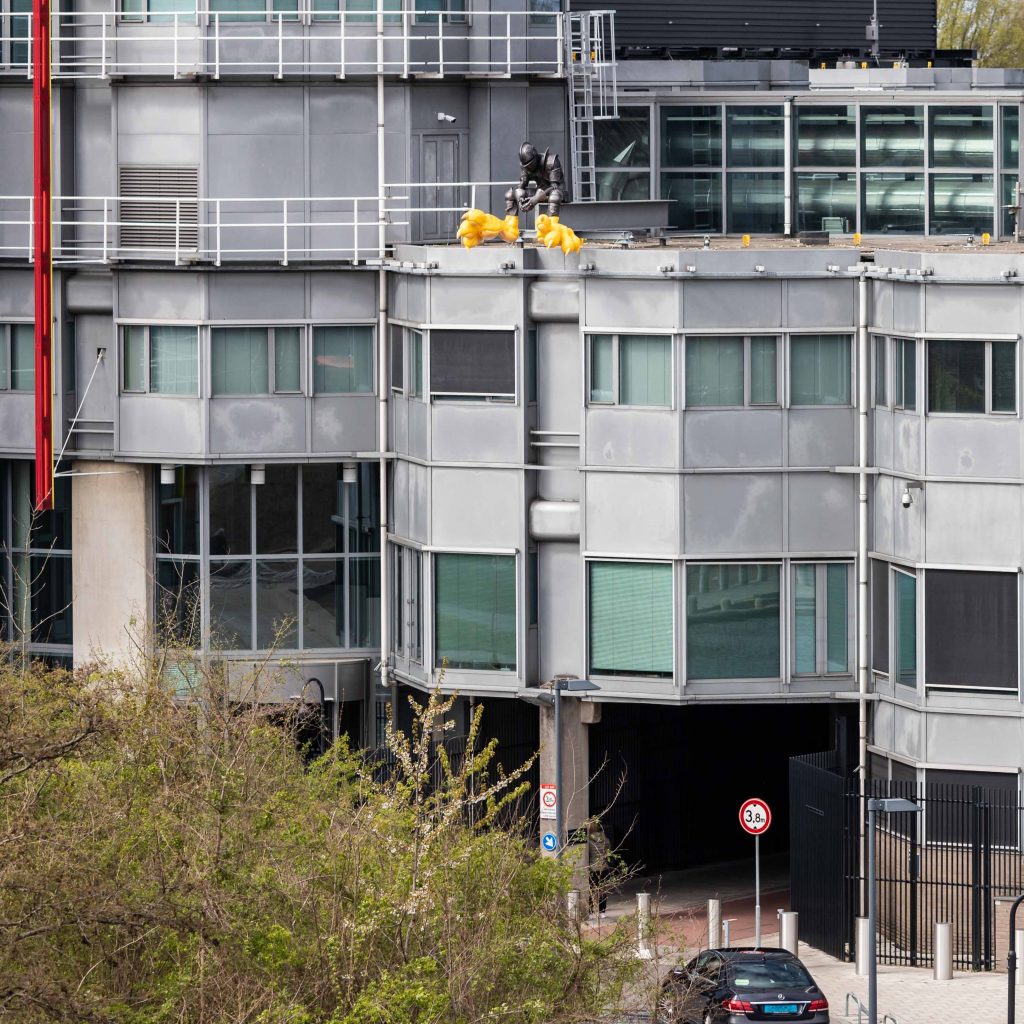
For DAY CARE DRILL, an exhibition at Blue Velvet Projects in Zürich, Anne de Vries brings his lion-in-knight’s-armor into a drama of toy policing. The exhibition constitutes the next chapter in the avatar’s twisted hero’s journey, which has unfolded across different spaces and pages throughout the last year. Previously the heraldic figure stomped its paws across landscapes of sand, first at Berlin’s Fragile Gallery and later at the former building of the famous Tresor club. Not long after, the knight became De Wachter: a public sculpture perched on the roof of the Dutch secret service in Zoetermeer. At Blue Velvet Project, the monument peers domestic and dresses in drag. It invades a children’s nursery inflected with sadistic intent — a fever dream of infantilized power and infant power structures. 1:6 scale SWAT figures are made sticky with chocolate syrup, posed on cradles, and deflated by the brass-patinated, engorged paws of de Vries’ heraldic lion in armor. DAY CARE DRILL interrogates childhood tropes as a proxy for adulthood, when role-play delaminates. Characters become identities, props appear structural, and when the performance is misperformed, it signifies something else: artificiality.
Title:The Great Turn Artist: Anne de Vries Year: 2022 Dimensions: Variable Materials: Brass metal powder, patina, resin core, semi-customized 1/6 action figures About: This art installation consists of a unique set of components to collect, install, and to be played with. Exhibition views from:Blue Velvet Projects, Zürich
Title:Safe Space – Choco Relief Artist: Anne de Vries Year: 2022 Dimensions: Variable Materials: Brass coating, patina, resin core, semi-customized 1/6 action figures About: This art installation consists of a unique set of high-quality components to collect, install, and to be played with.
Title:SAFE SPACE – Tickle Play Artist: Anne de Vries Year: 2022 Dimensions: Variable Materials: Bronze coating, patina, hard polylactic acid core, semi-customized 1/6 action figures About: This art installation consists of a unique set of components to collect, install, and to be played with. Exhibition views from:Blue Velvet Projects, Zürich
Title:Little Herald Artist: Anne de Vries Year: 2022 Dimensions: Variable Materials: Bronze coating, patina, hard polylactic acid core, semi-customized 1/6 action figures About: This art installation consists of a unique set of components to collect, install, and to be played with. Exhibition views from:Blue Velvet Projects, Zürich
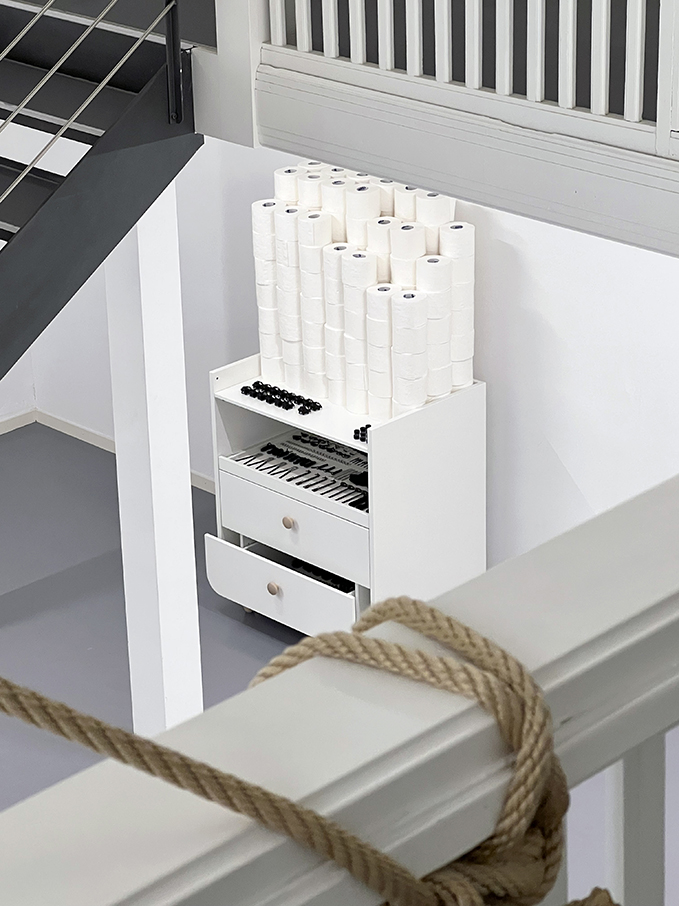
Title:Day Care Drill Artist: Anne de Vries Year: 2022 Dimensions: Variable Materials: Archive for ‘Special Weapons and Tactic tools’ in the bathroom cabinet, 150 rolls of toilet paper About: This art installation consists of a unique set of components to collect, install, and to be played with. Exhibition views from:Blue Velvet Projects, Zürich
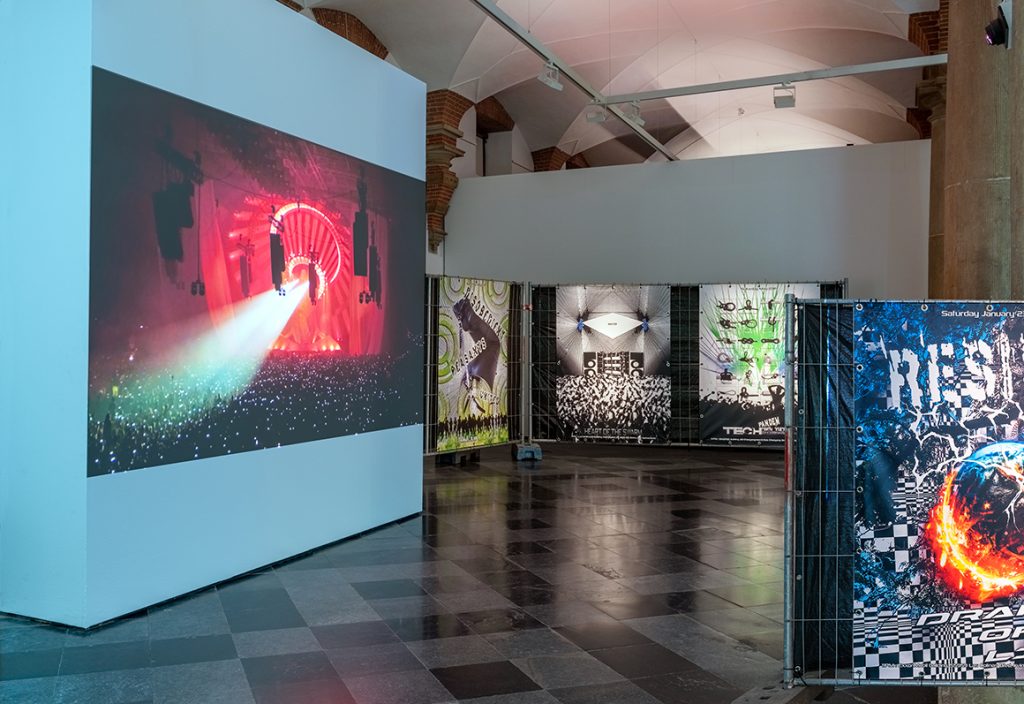
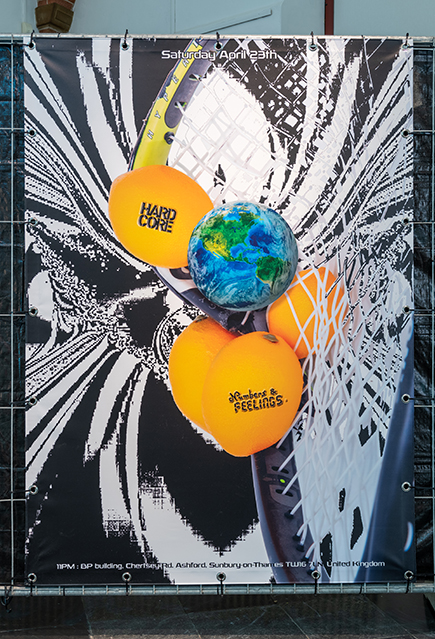
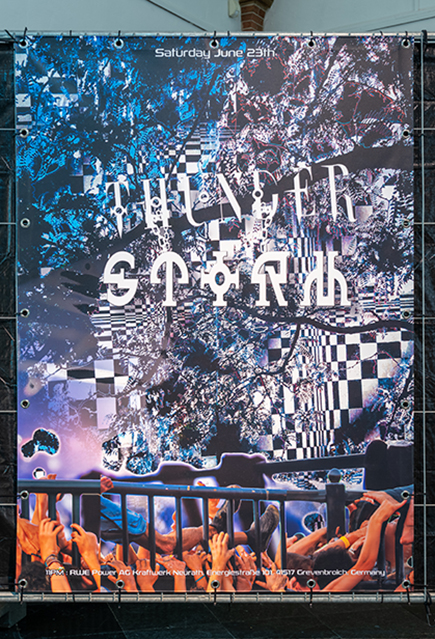
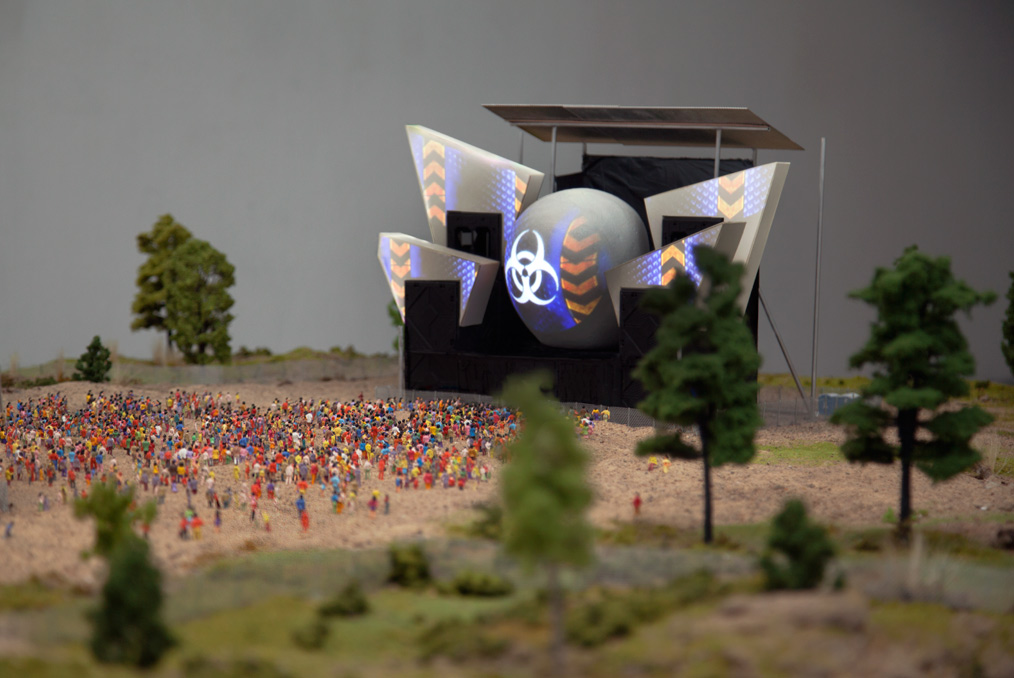
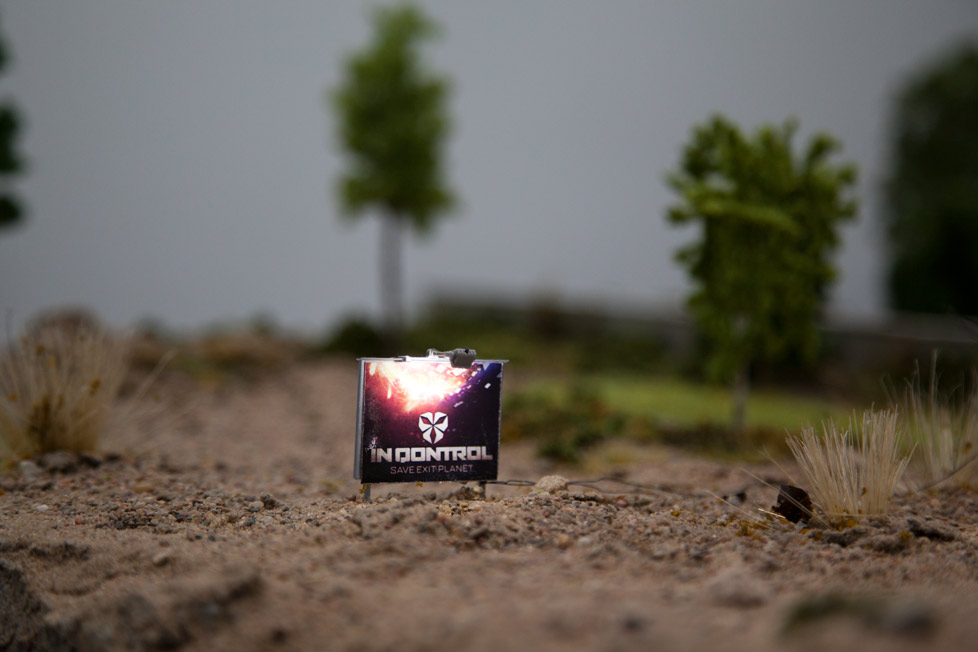
Title:In Control Artist: Anne de Vries Year: 2022 Dimensions: Variable Materials: Fencing, prints on PVC Description: Banners on the fencing advertise fictitious future events, featuring real locations and dates. It remains unclear whether these events signal a revolution or a party. The visuals, inspired by flyers for Tekno, Hardcore, and Bondage events, form a layered collage. Upon closer inspection, the locations reveal themselves as the headquarters of some of the world’s most environmentally destructive corporations.
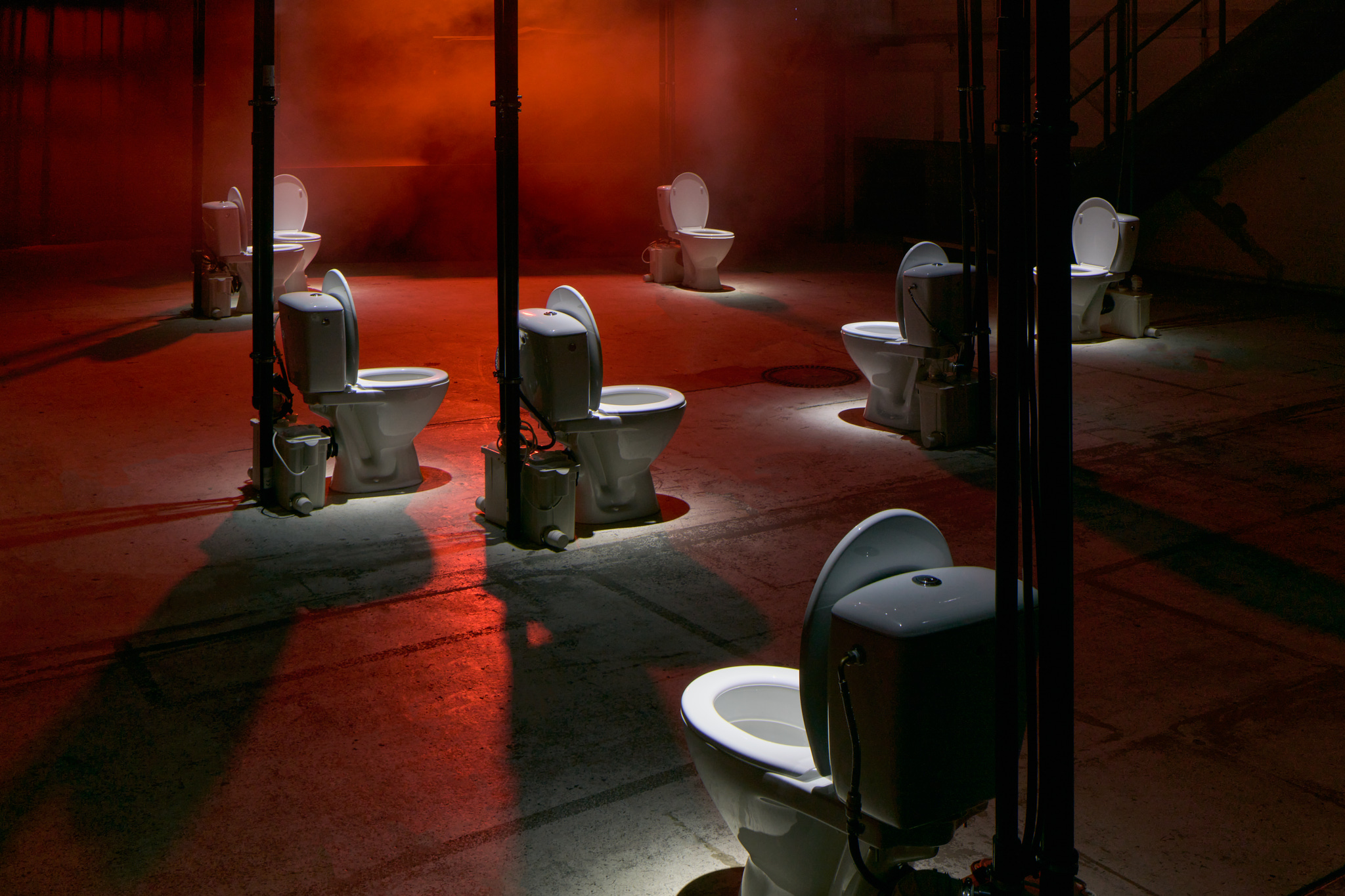
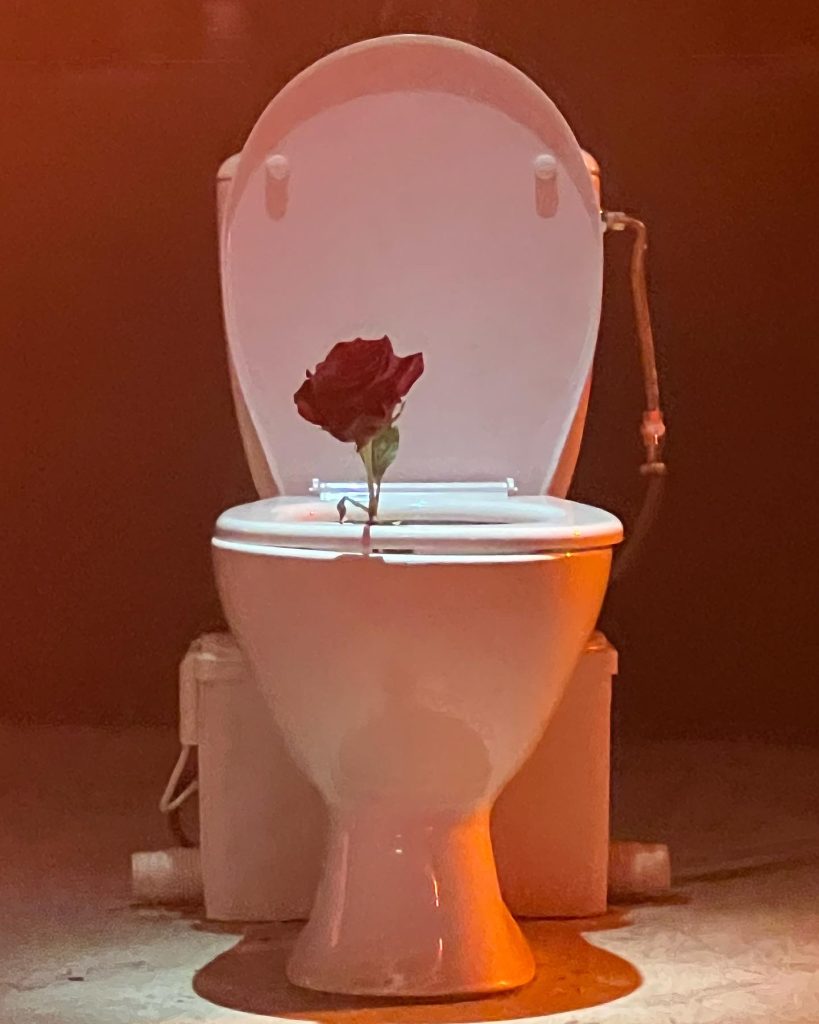
Title:TRAUMA UNCLOGGED Year: 2023 Artist: Anne de Vries
Dimensions: Variable Materials: 14 fully functioning toilets on a dance floor with a light and sound system
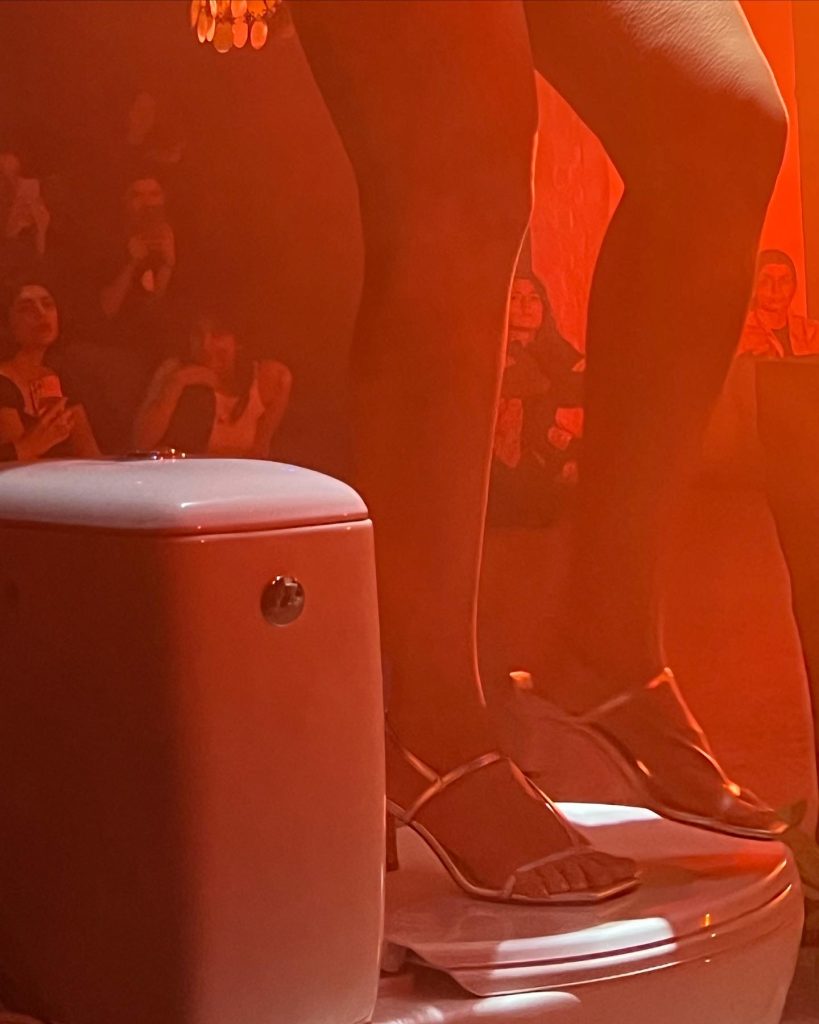
Description: This immersive installation features 14 fully functioning toilets on a dance floor, equipped with lights and a sound system. Serving as a stage, it hosted several performers, musicians, and the club night CLUB UNCLOG throughout a one-month exhibition period. This first incarnation has been hosted and produced by Trauma in Berlin.
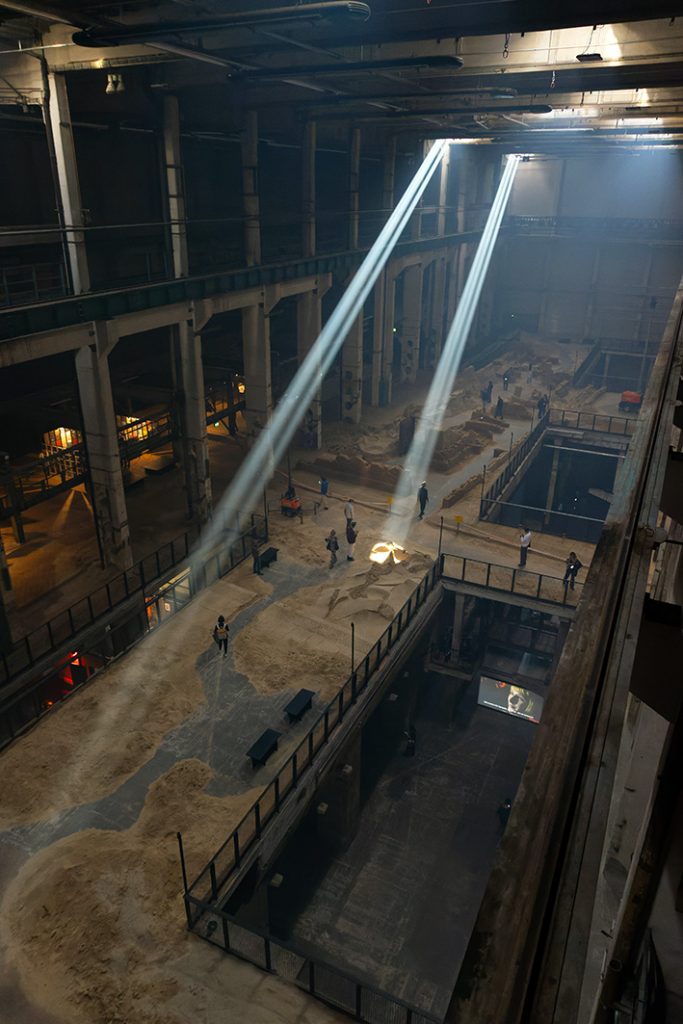
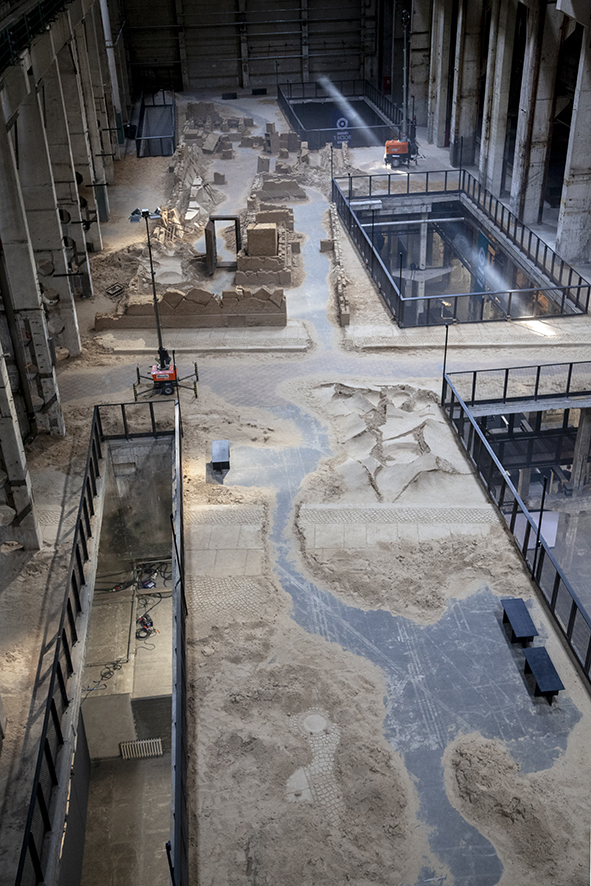
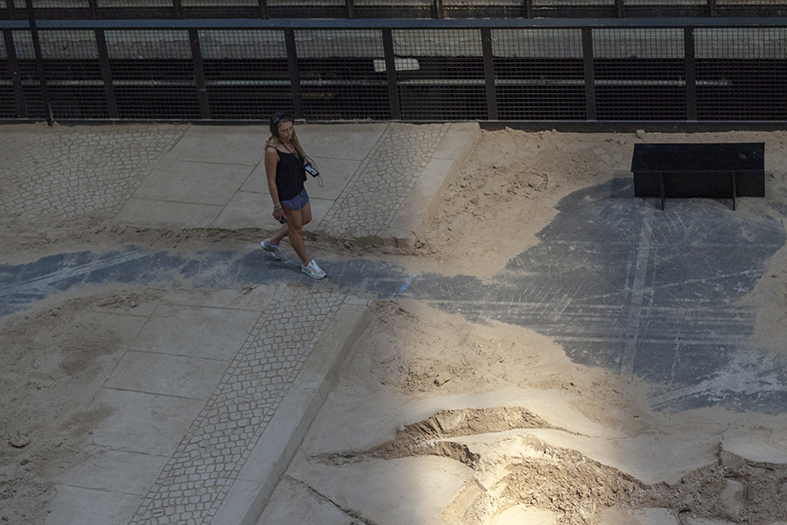
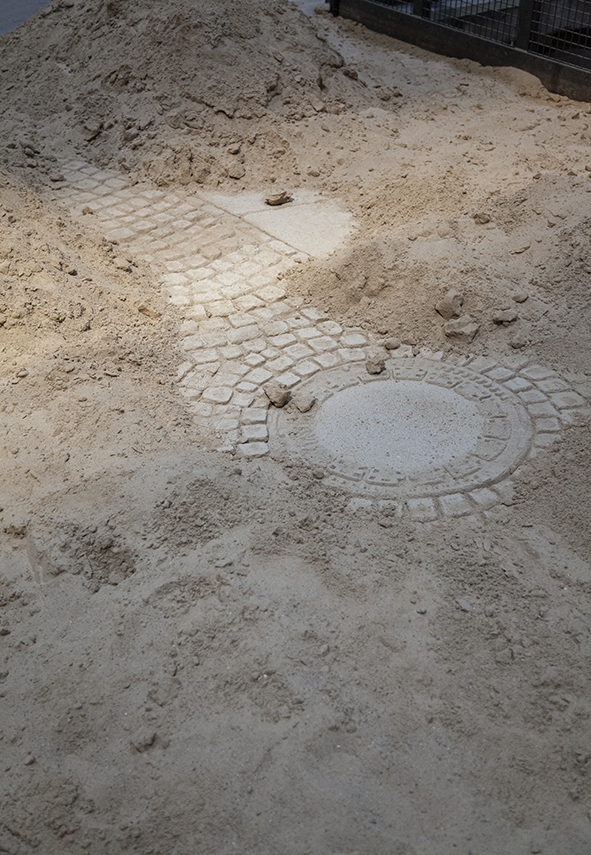
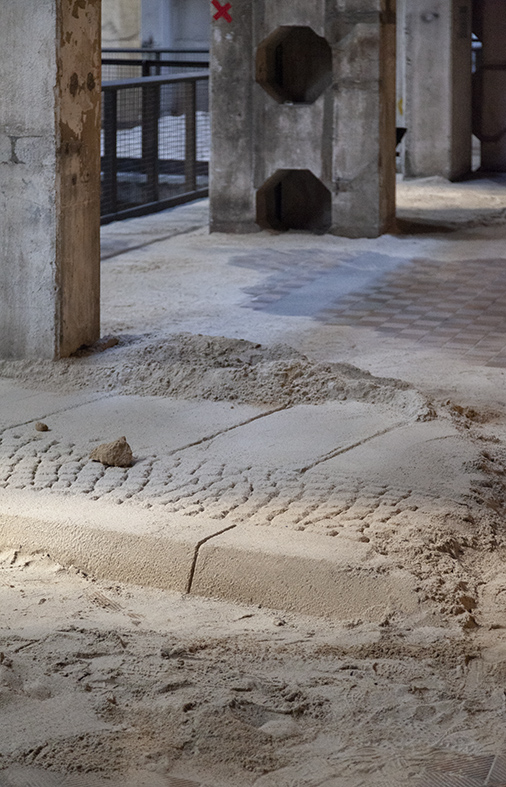
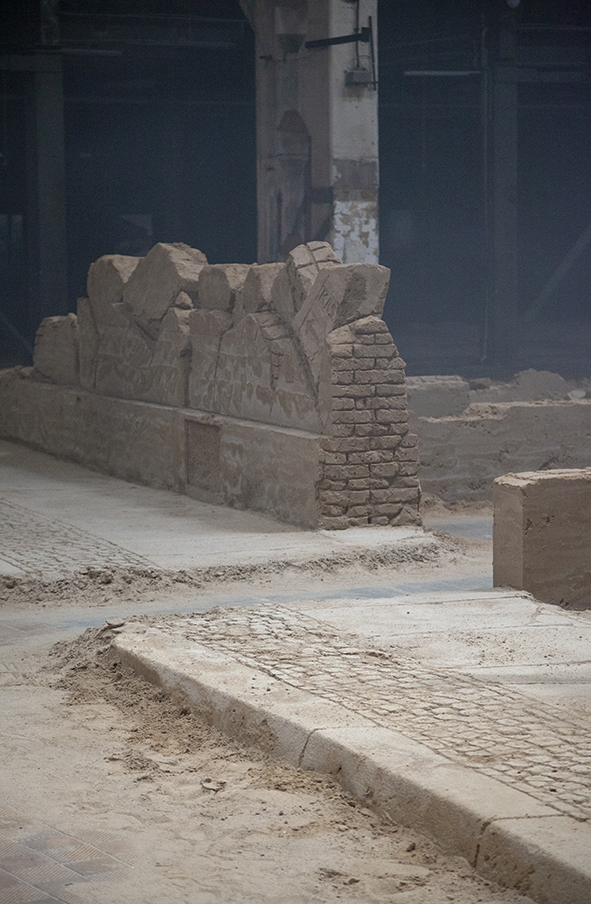
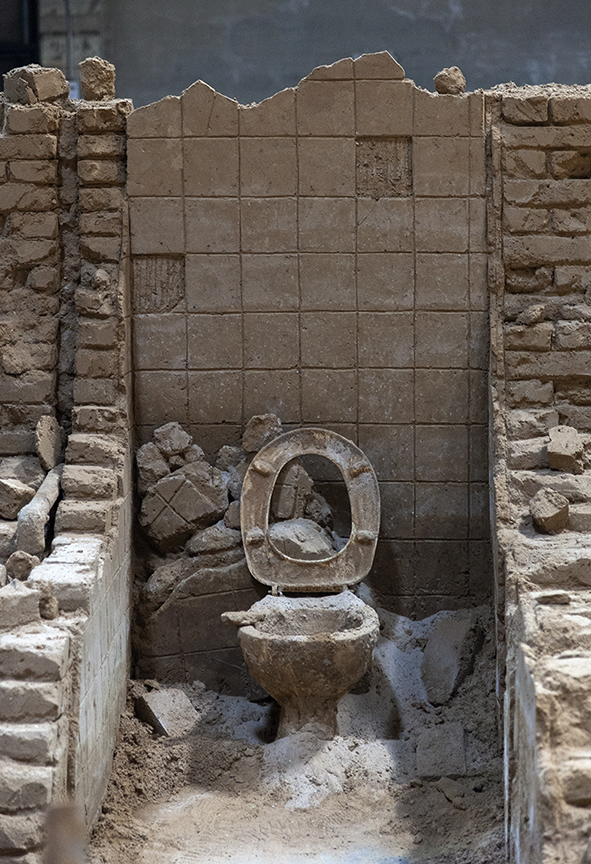
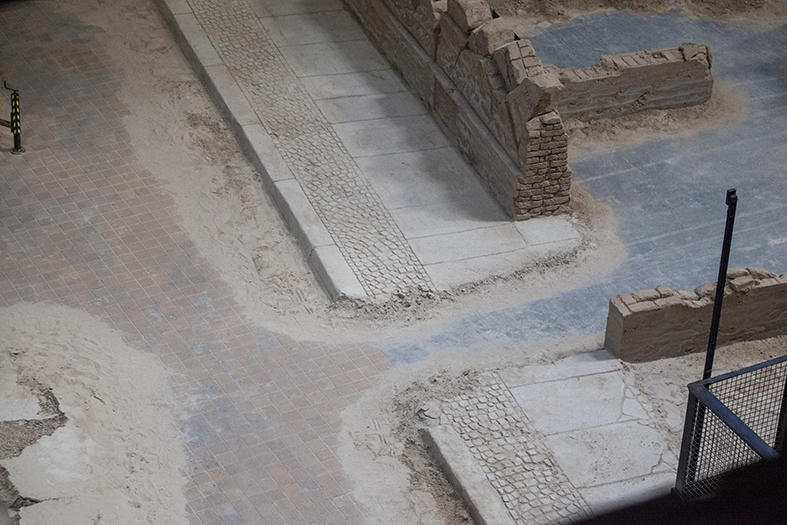
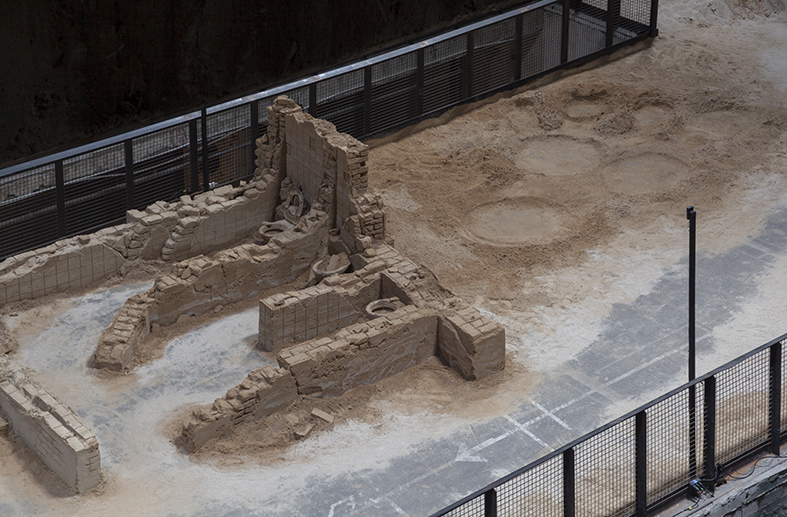
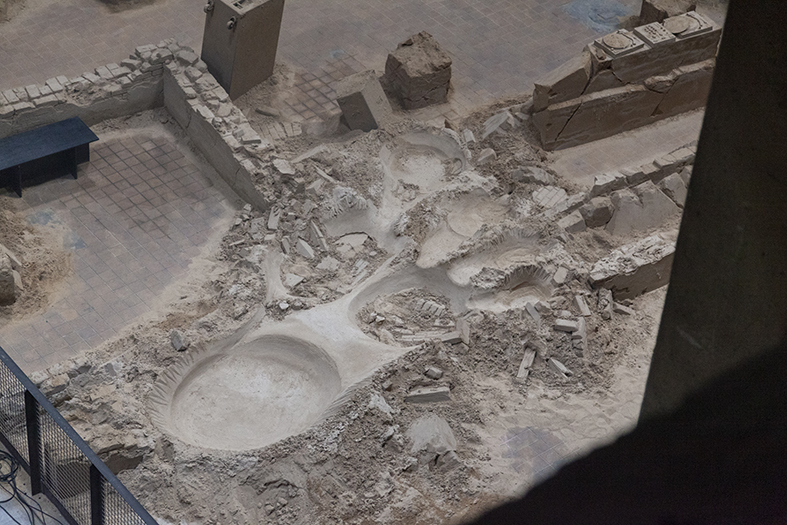
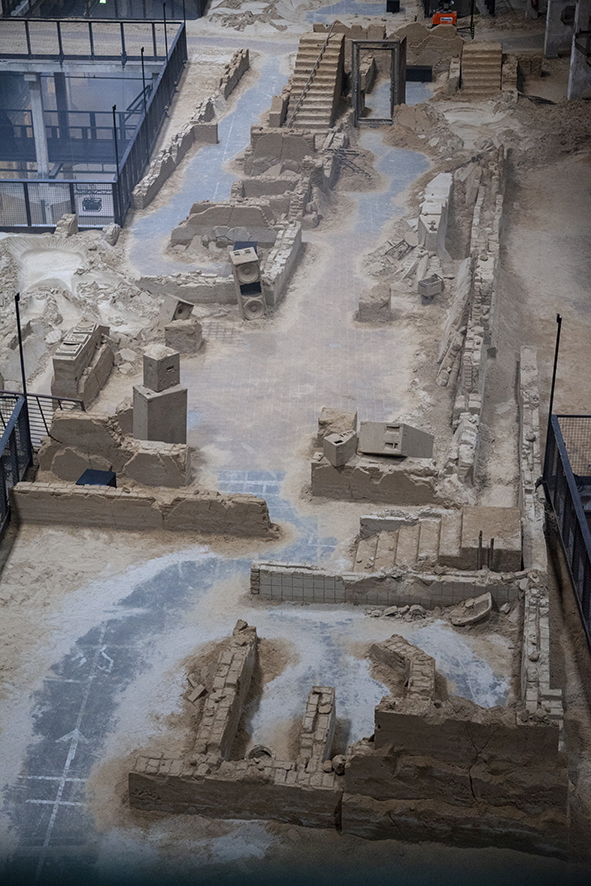
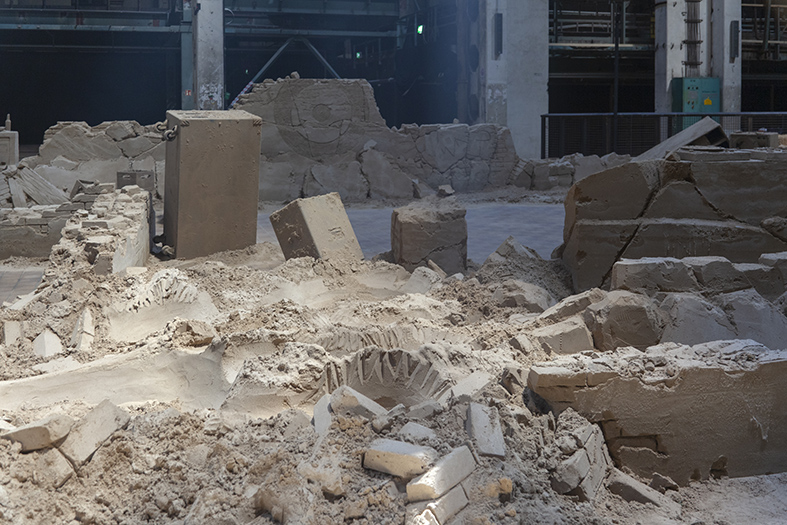
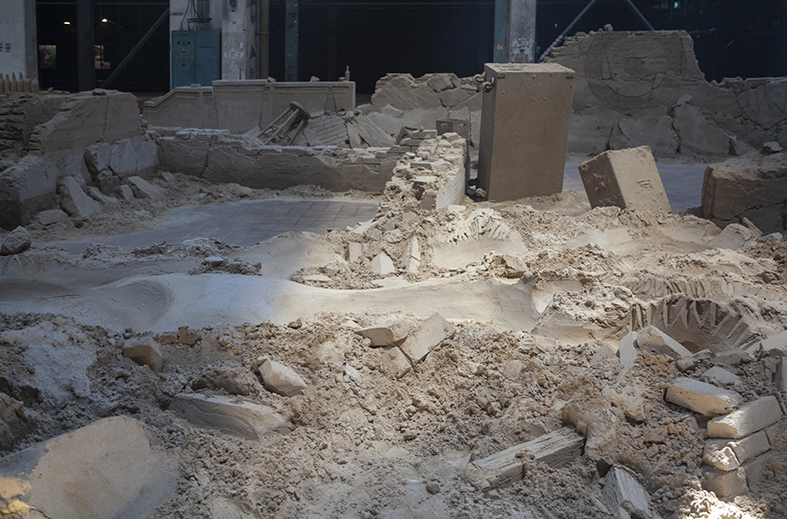
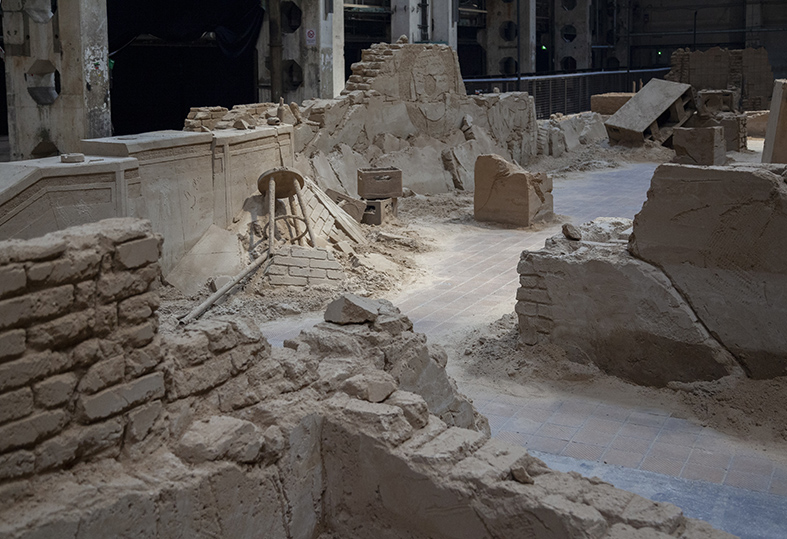
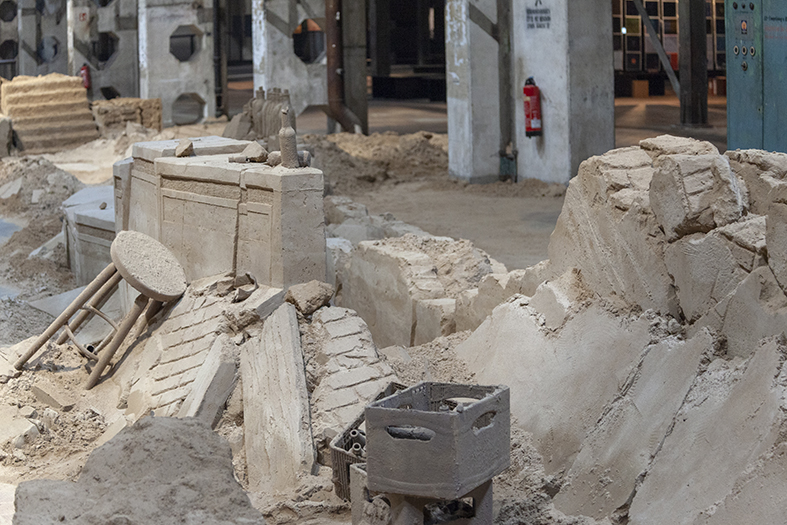
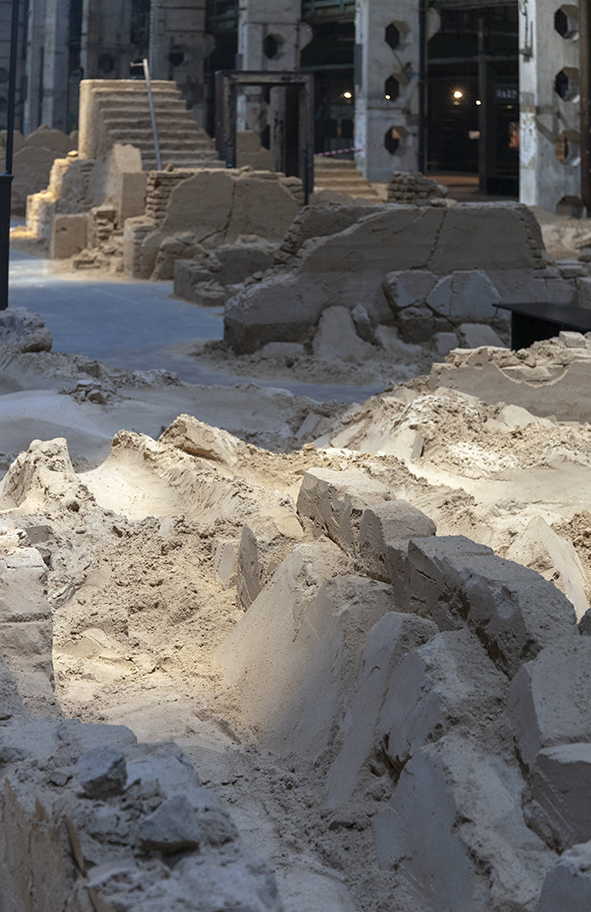
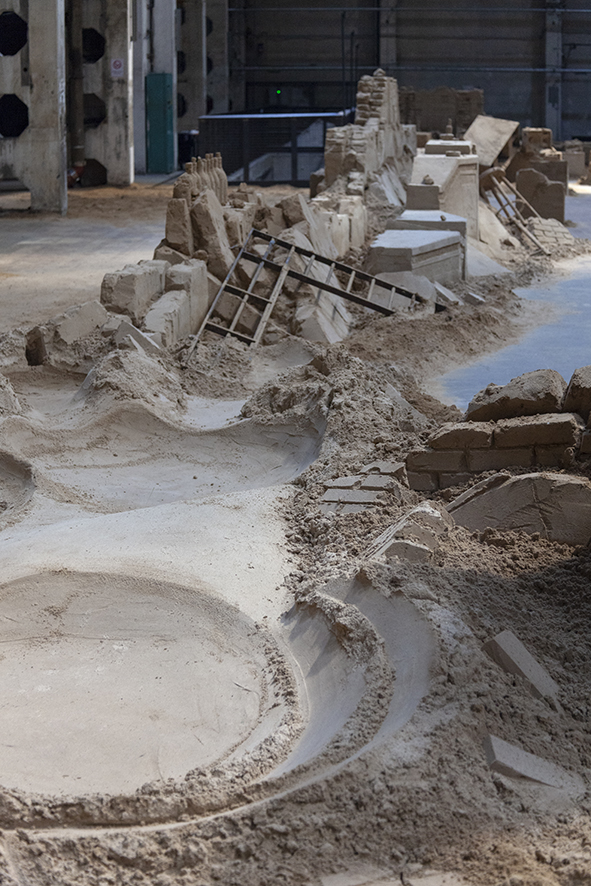
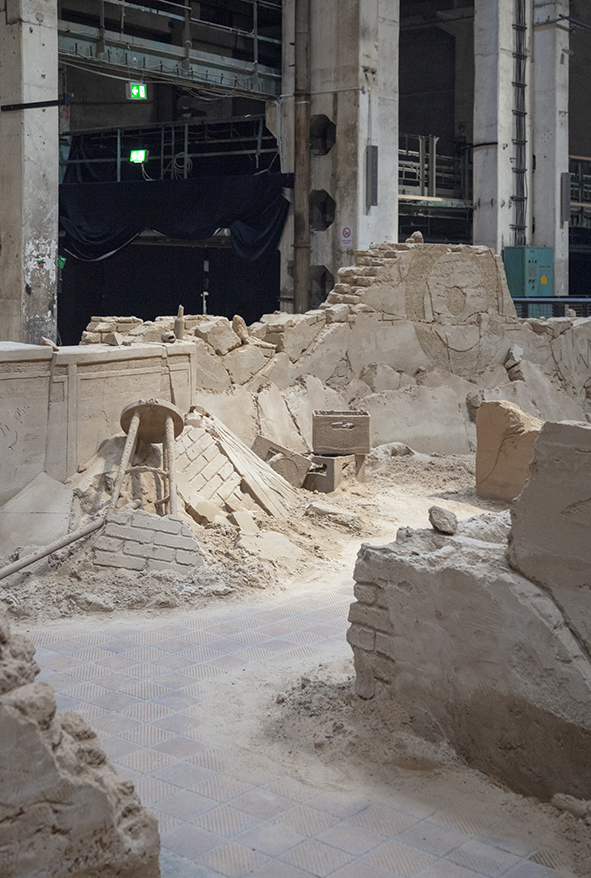
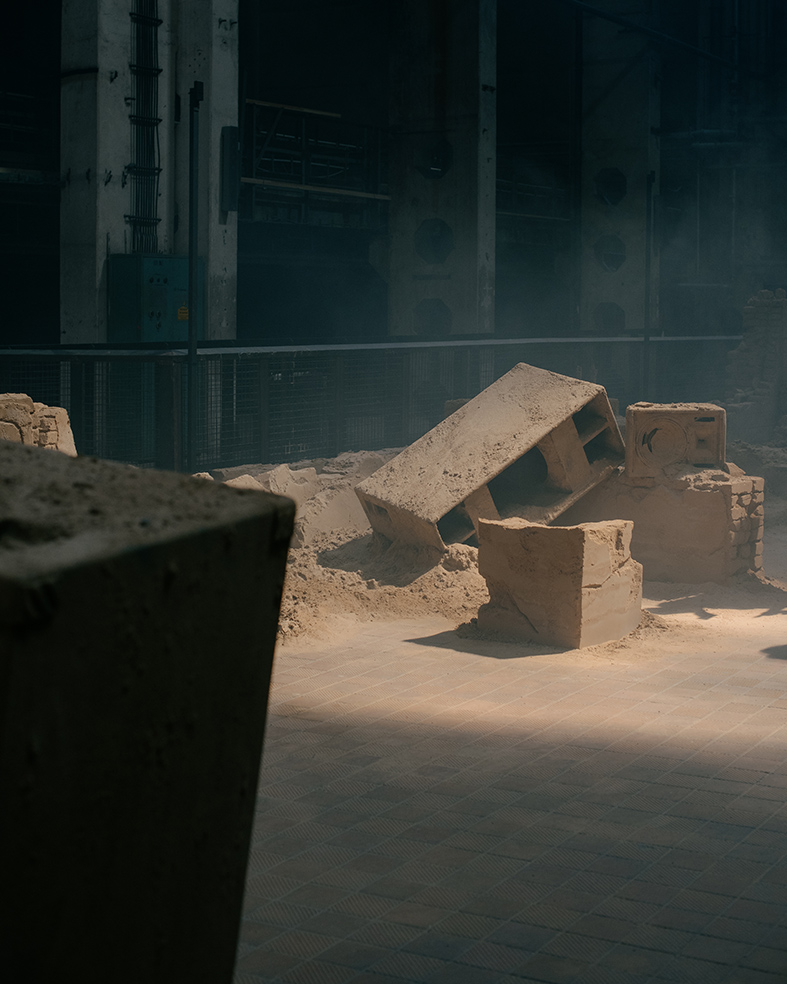
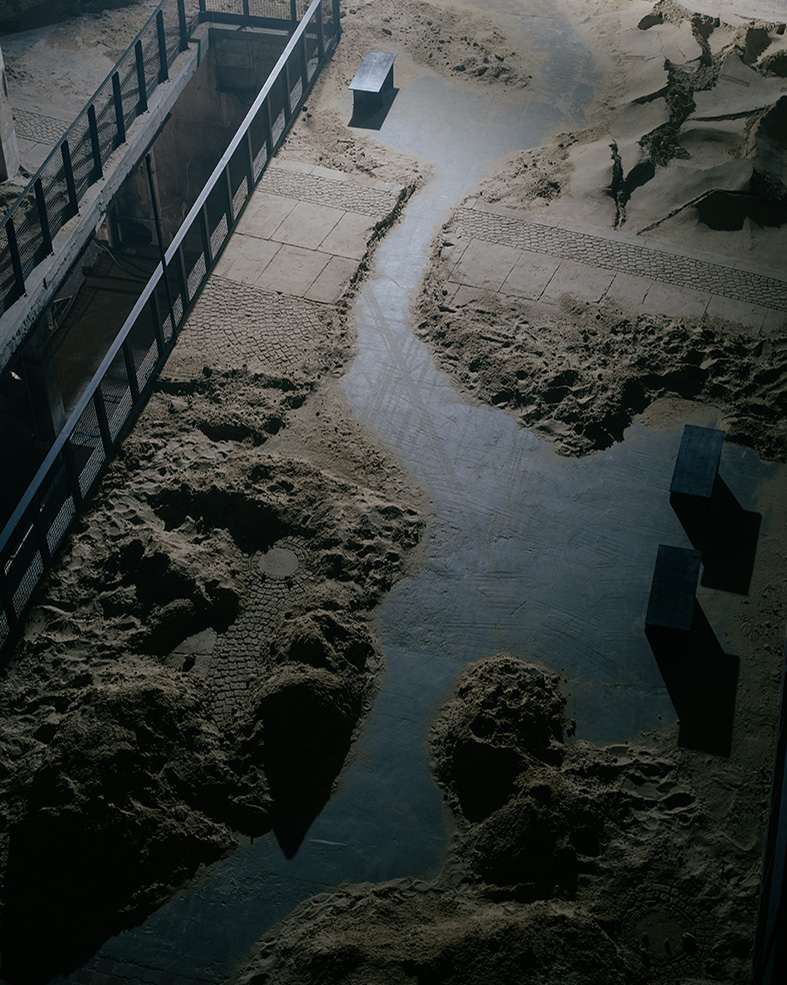
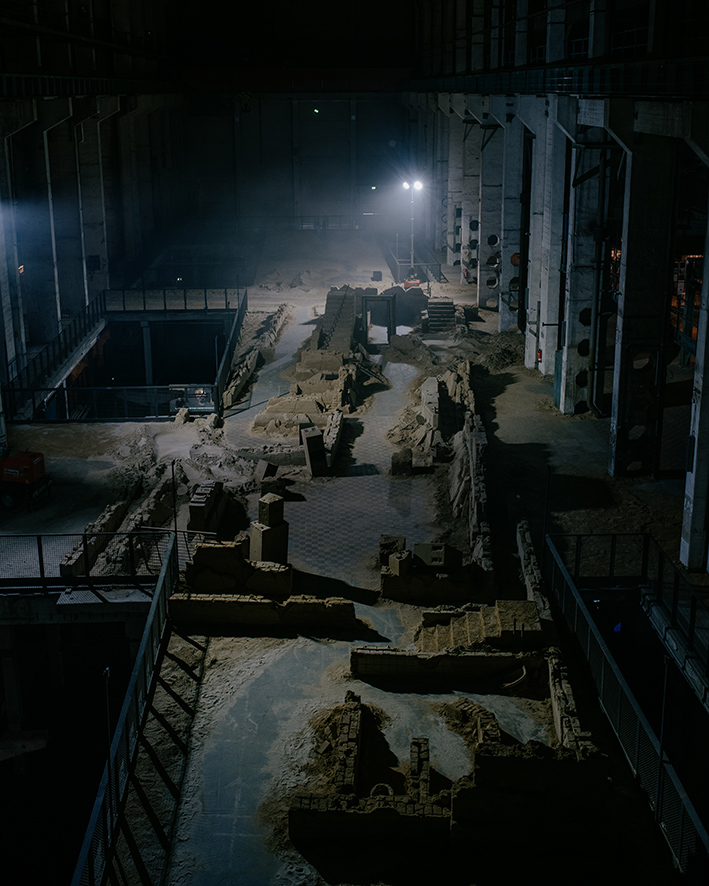
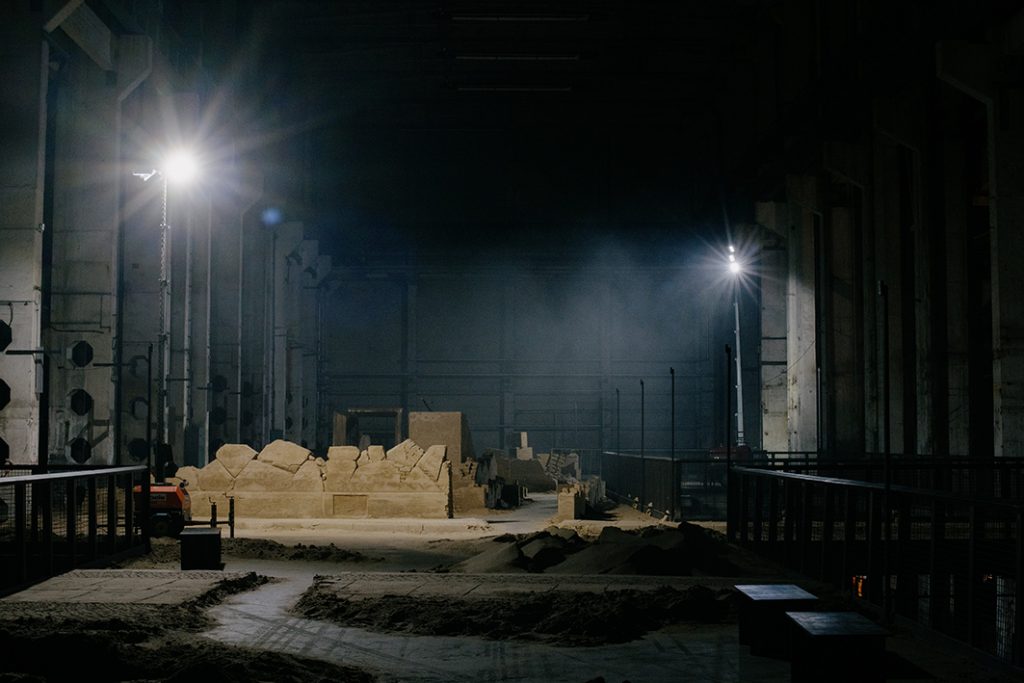
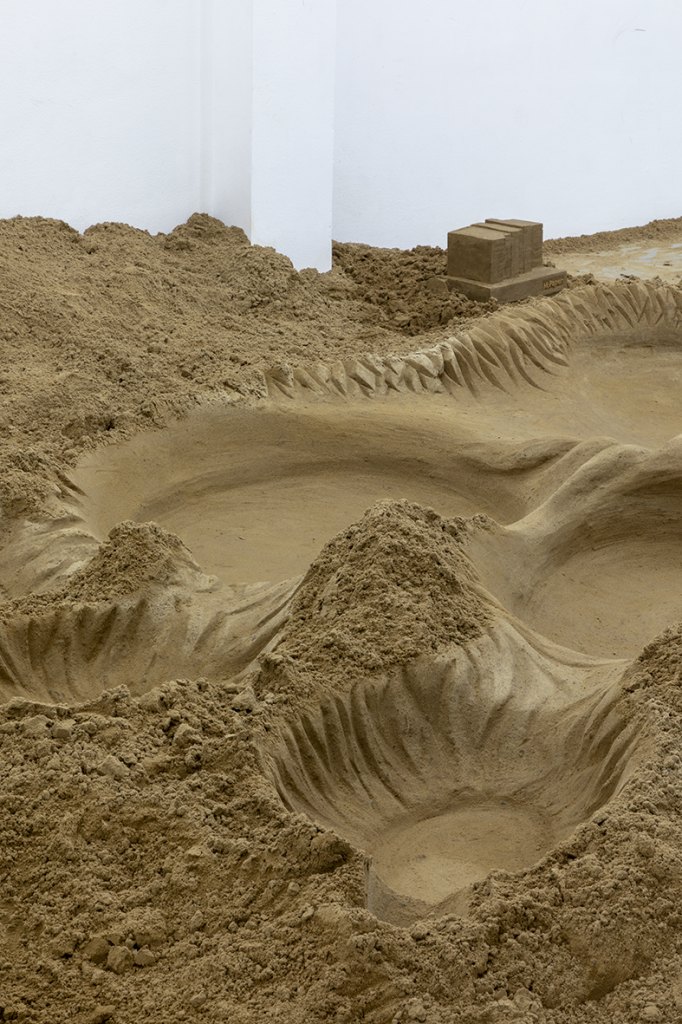
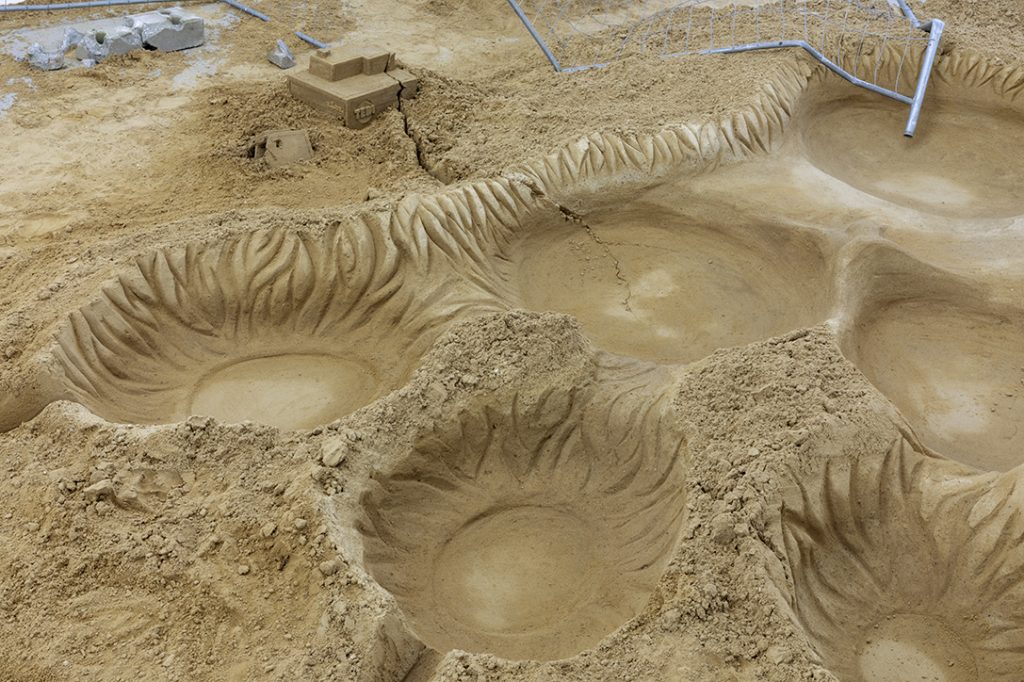
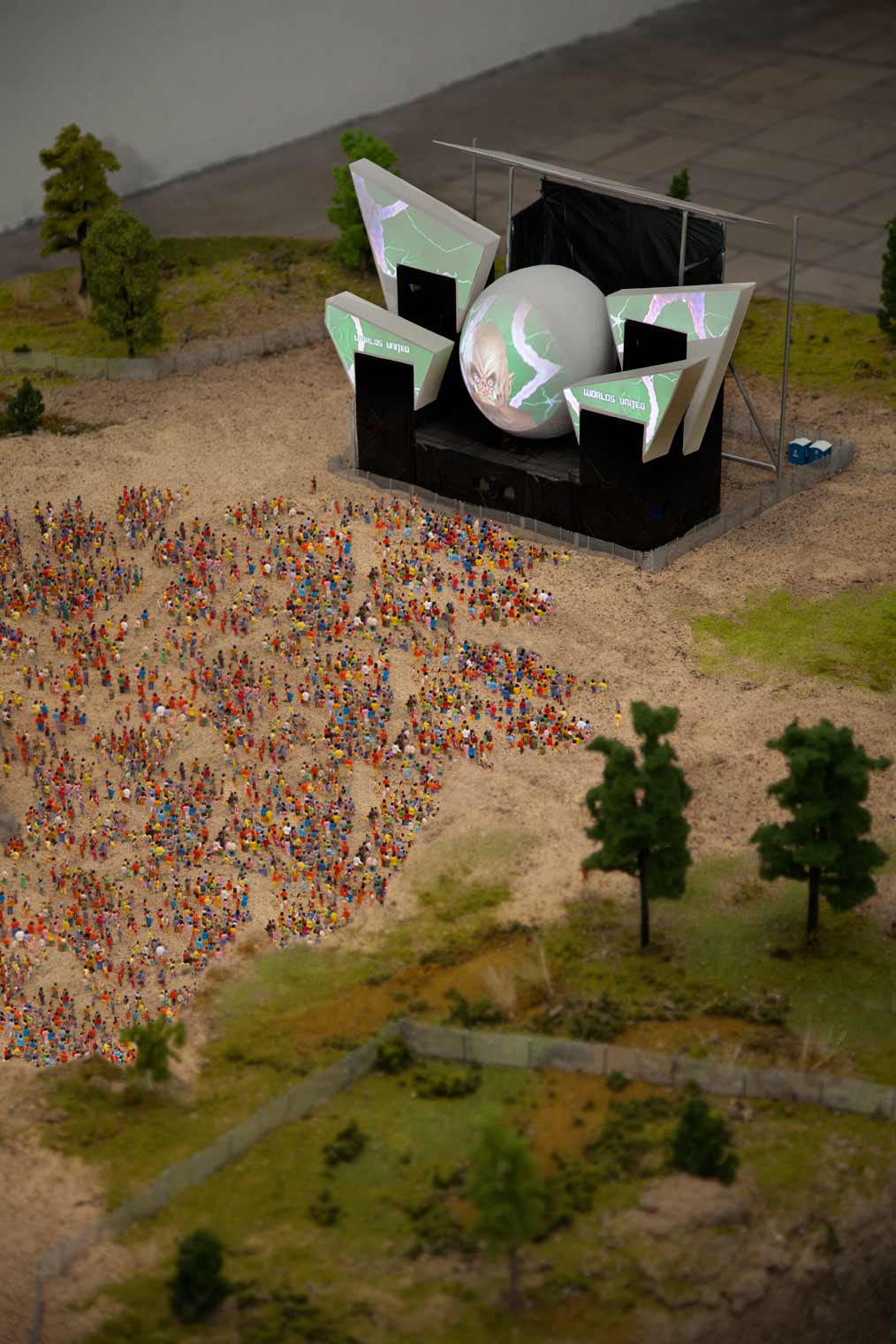
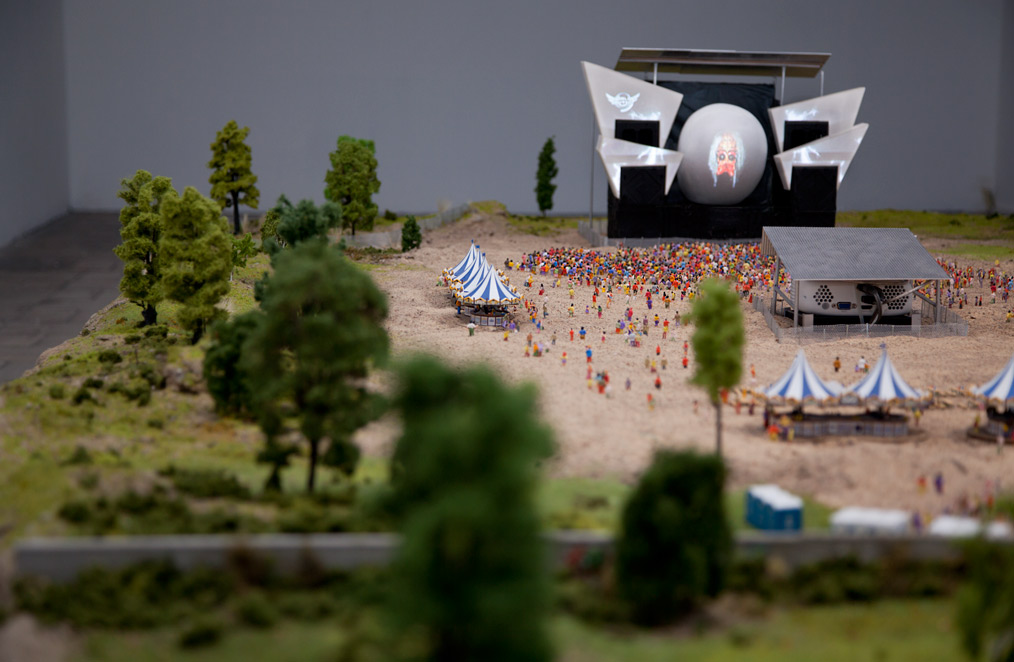
Title:STOMPING GROUNDS Year: 2022 Artist: Anne de Vries (in collaboration) Curators:Adriano Rosselli, Edessa Evelyn Malke Researcher: Sven von Thülen (der Klang der Familie) Sand Carvers:Bouke Atema, Jeroen Advocaat, Bob van der Wal Sound Designers: Rowan Ben Jackson, Odysseas Constantinous 4D Sound Programming:Usomo Location:Kraftwerk Berlin About: The art installation Stomping Grounds is a 1:1 replica made from sand of the giant gold vault underneath the Wertheim building, which after a turbulent history and the fall of the Berlin Wall in 1989 became the cradle of techno music from Detroit, Chicago, the UK, and Germany, known as Tresor.
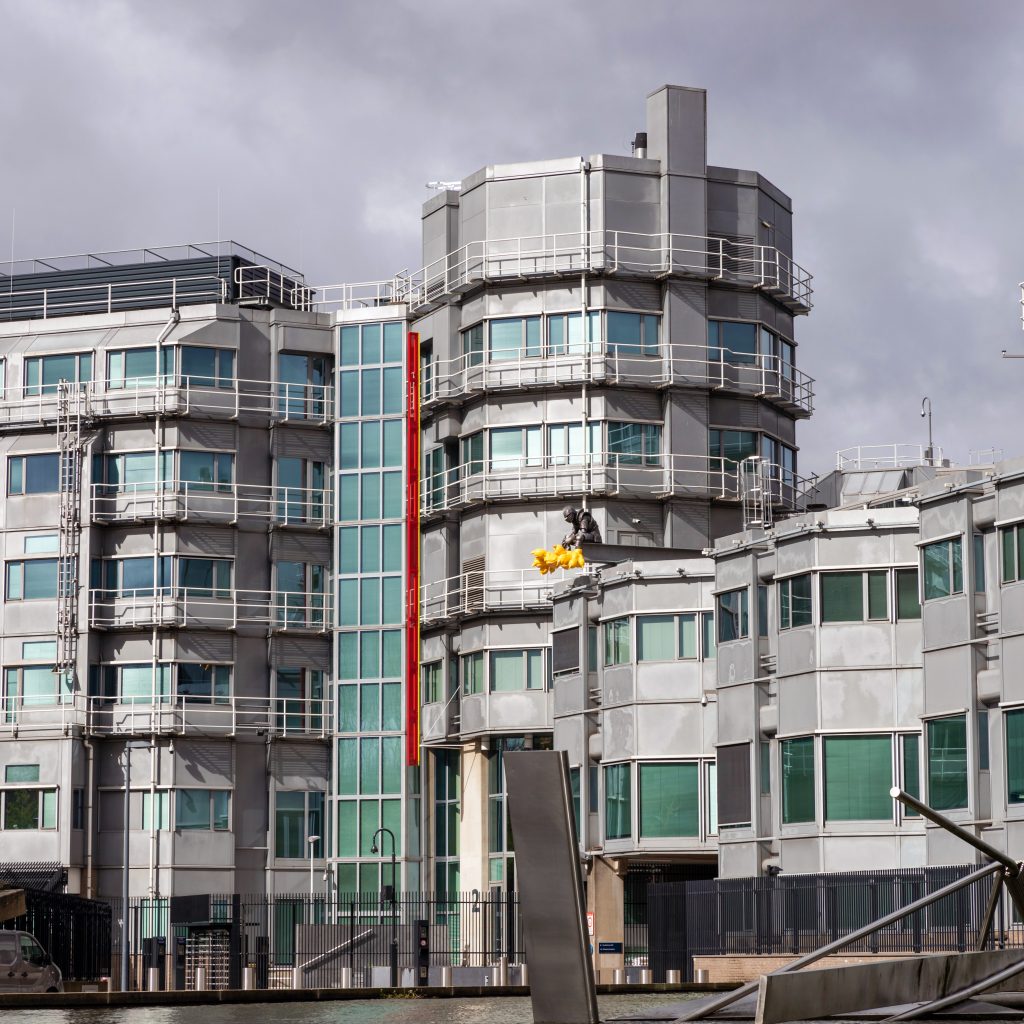
Title:De Wachter Artist: Anne de Vries Year: 2022 Materials: Aluminium, lacquer, and wax Dimensions: 200 × 200 × 180 cm Description:‘De Wachter’ is a commissioned sculpture situated on top of the building that serves as the headquarters of the Dutch Secret Service, located in Zoetermeer. Curator: Melchior Jaspers
Title:HEAVY LOAD Artist: Anne de Vries Year: 2021 Dimensions: Variable Materials: Sand, fences, prints on PVC About: Historically, the right to bear arms was hereditary — a sexually-transmitted inheritance from parent to child, like the color of your eyes or the deed to a home. Heraldry developed out of this, a state-regulated economy of signs demonstrating that the bearer, or his ancestor, was legally entitled to wield a weapon. Like a mise en abyme, this visual system involved layers of meaning. Mere possession of a family crest demonstrated a certain social standing, but its specific form also carried weight. For instance, the so-called “king of beasts,” a lion, implied strength, nobility, or courage in the battlefield. But over time, these direct semantic connections weakened, between the animal and its depiction, as well as between a coat of arms and knighthood. Heraldic designs eventually came to signify simply the product of a birthright: generational wealth, which is to say, power. Sand itself doesn’t signify power, but it makes it work. A vast and obscure extractive industry turns shorelines into the glass skyscrapers that compose the skylines of Alpha global cities. Sand is both a major resource within the contemporary global economy and the origins of its symbolic representation. That is, like the relationship between the living lion to its stylized double on a heraldic crest, the shifting reality of sand haunts the visual embodiment of finance capitalism as architectural form. For HEAVY LOAD, an exhibition at Fragile in Berlin, Anne de Vries has filled the space with 15 tons of sand. Impressed in its surface are the chopped and screwed traces of corporate logos, neighboring buildings, and the pawprints of a knight cannibalized by its own herald, put on podophilic display. Text by: Nicholas Korody Sand carving: In collaboration with sand sculpture: Bouke Atema Curator:Jonas Wendelin Exhibition views from:FRAGILE Berlin
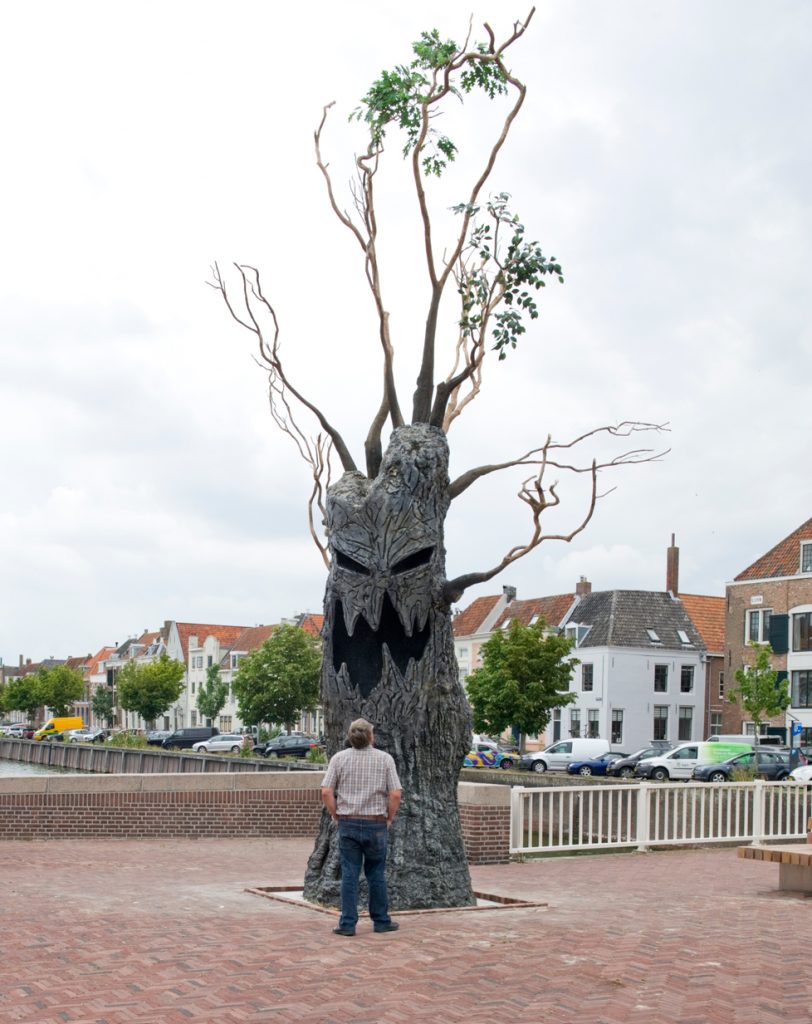
Title:FACE YOUR FREEDOM / SAVE THE WORLD Artist: Anne de Vries Year: 2017 – 2025 Dimensions: 800 cm tall Exhibition views from: FAÇADE 2017 — Middelburg, The Netherlands; Open Air, Art Rotterdam – Rotterdam, The Netherlands; MOMENTUM 10 – Nordic Biennale 2019 — Norway; Centraal Museum Utrecht 2020–21 — The Netherlands
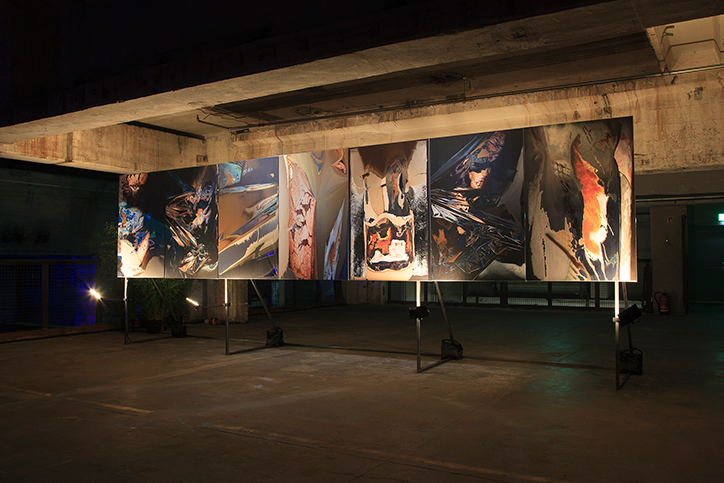
Title: Lost in Time, Tech and Space Artist: Anne de Vries Year: 2020 Dimensions: 480 x 160 x 145 cm Materials: Hard foam, metal, aluminum, coating, high-duty robe.
Title: Lost in Time, Tech and Space Artist: Anne de Vries Year: 2018 Material: steel, polyethylene, coating. Dimensions: 598 x 134 x 125 cm Documentation from:‘Hybrids‘ curated by Chris Driessen & David Jablonowski at Lustwarande in Tilburg, The Netherlands
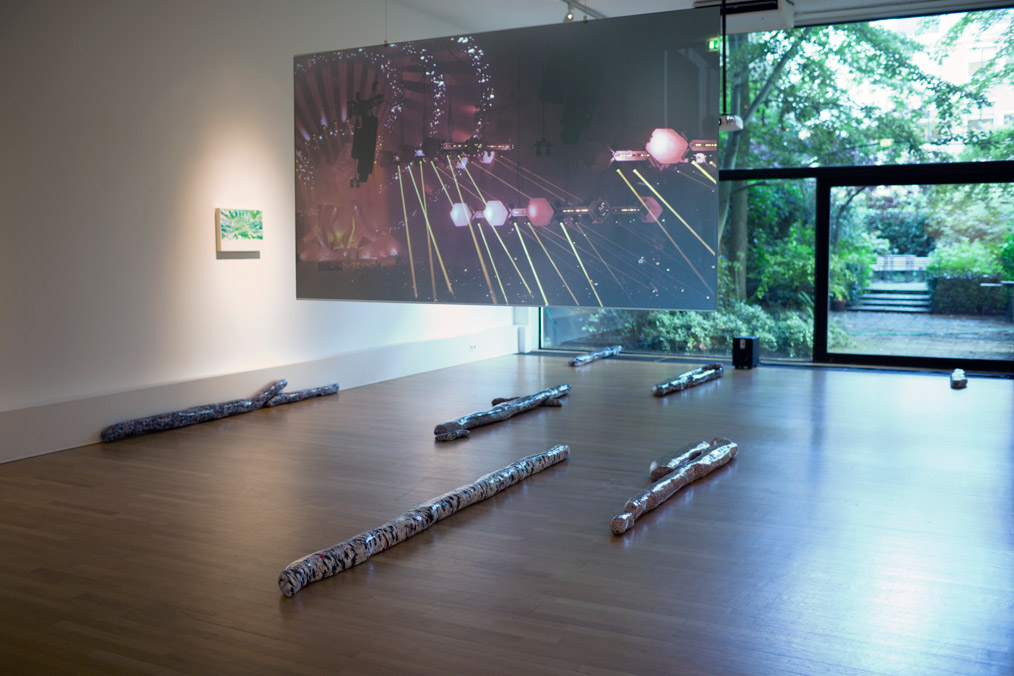
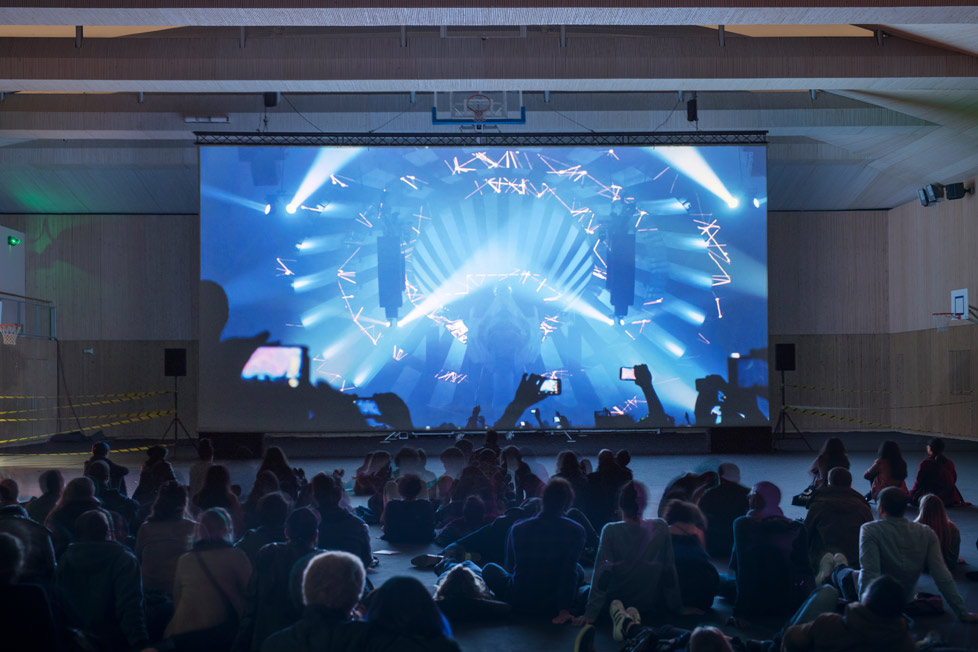
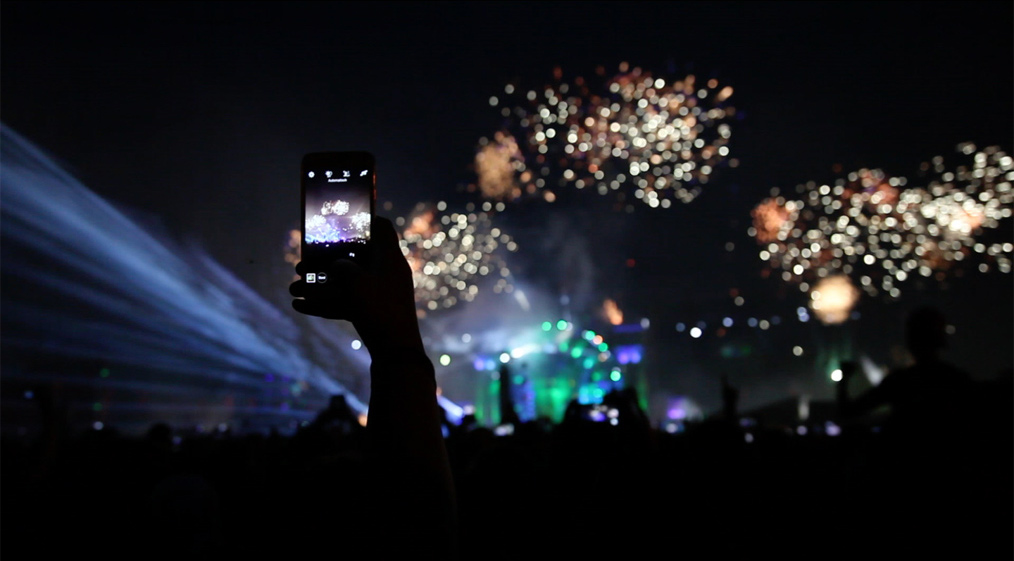
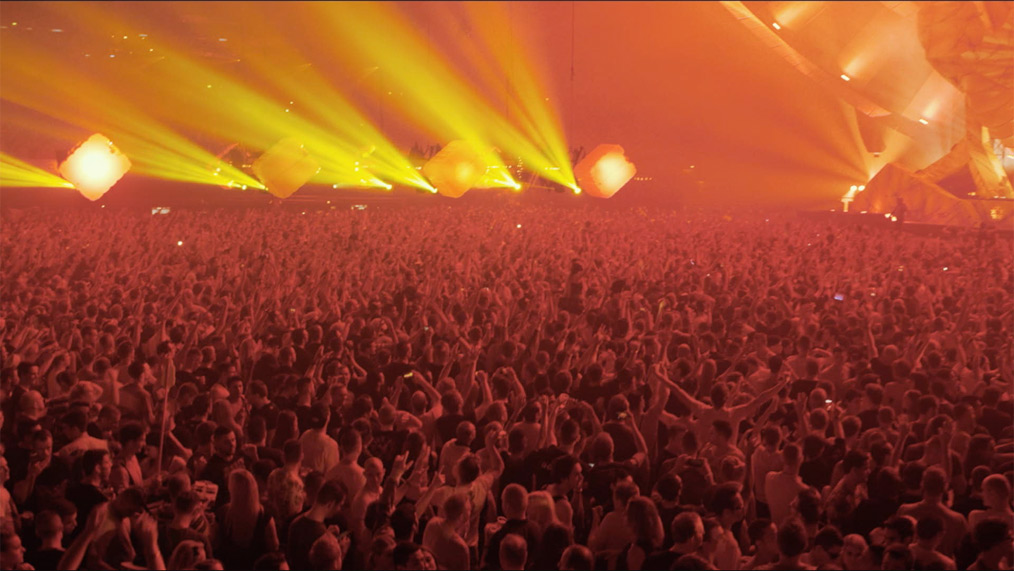
Title:Critical Mass: Pure Immanence Artist: Anne de Vries Year: 2015 Materials: Full HD video with stereo sound Dimensions: 300 × 135 cm (screen) Length: 11-minute loop
Credits: Camera, video editing, lyrics, and music arrangement by Anne de Vries and Q-dance, including Aqua Dome, LPIN-AX, Phill Niblock, Thomas Ankersmit, and others.
Title:Salsa Artists: Anne de Vries and Alberto De Michele Year: 1999 Dimensions: Variable Materials: Dancefloor with a sound sequence, and 5,000 packages of Mustard, Duck, and Soy Sauce placed on the floor to walk and dance on.
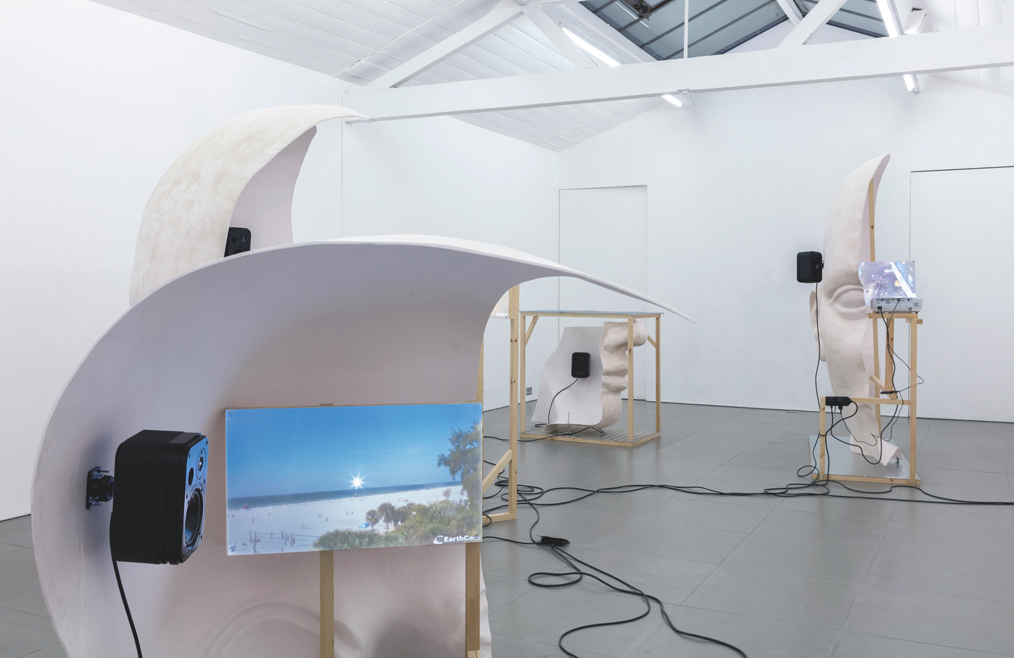
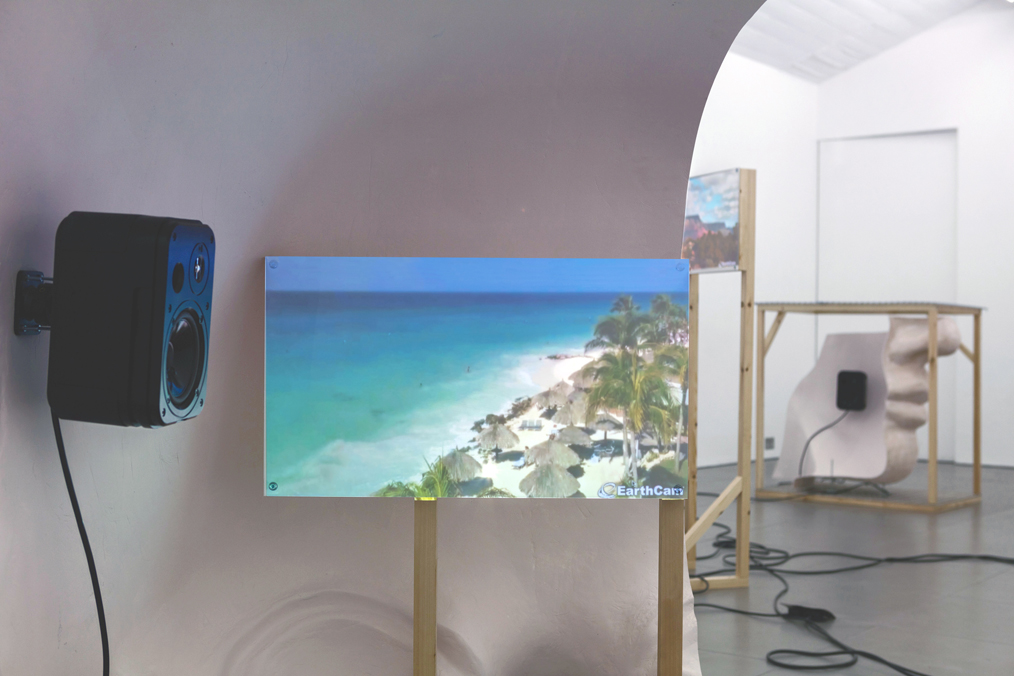
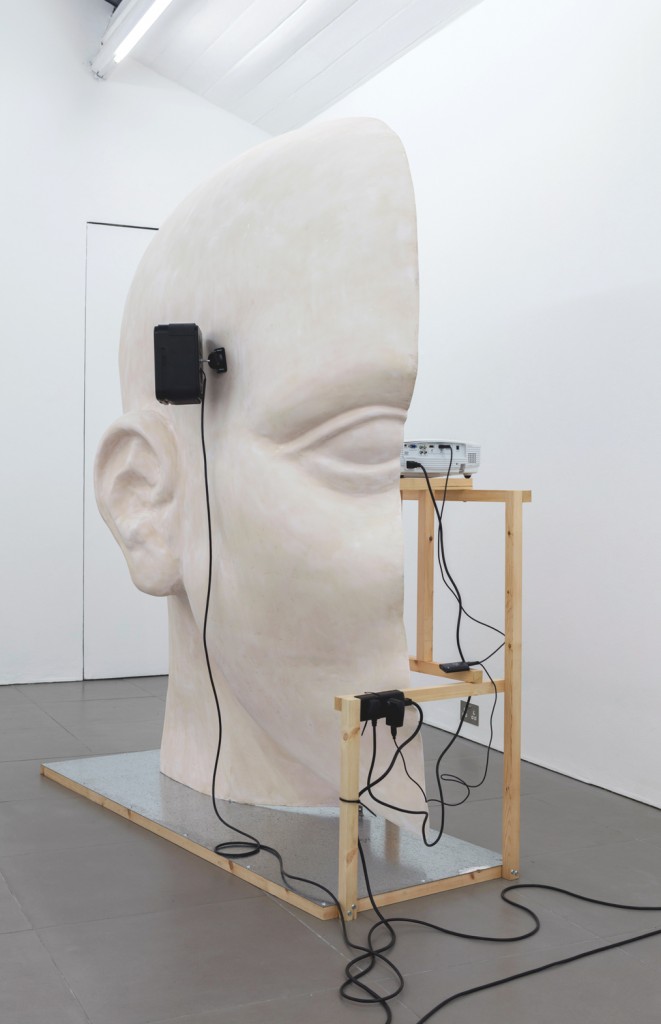
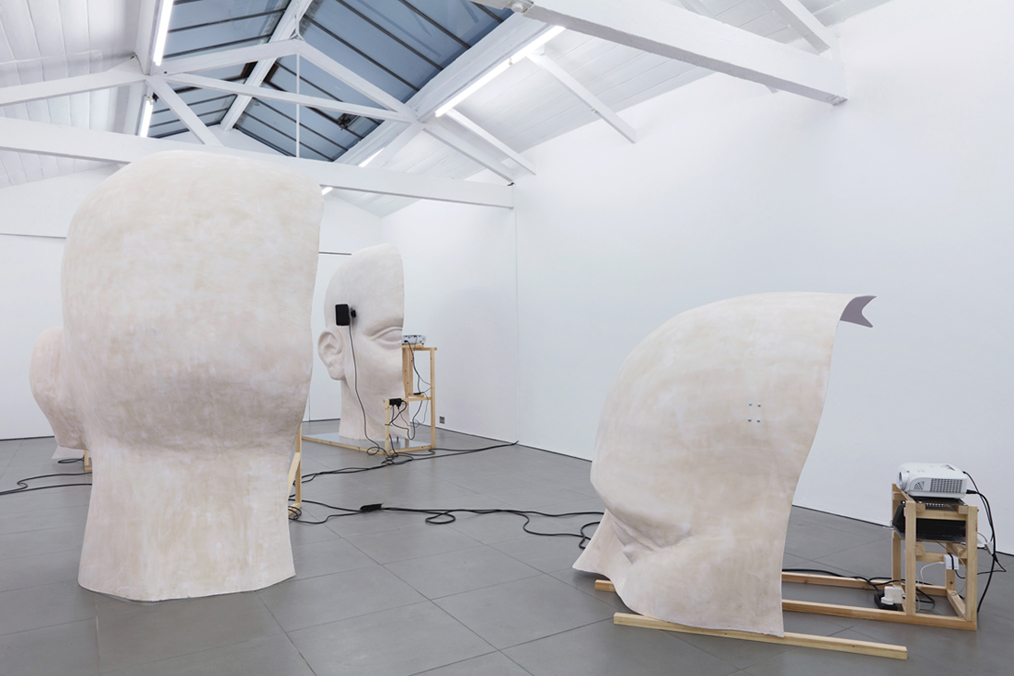
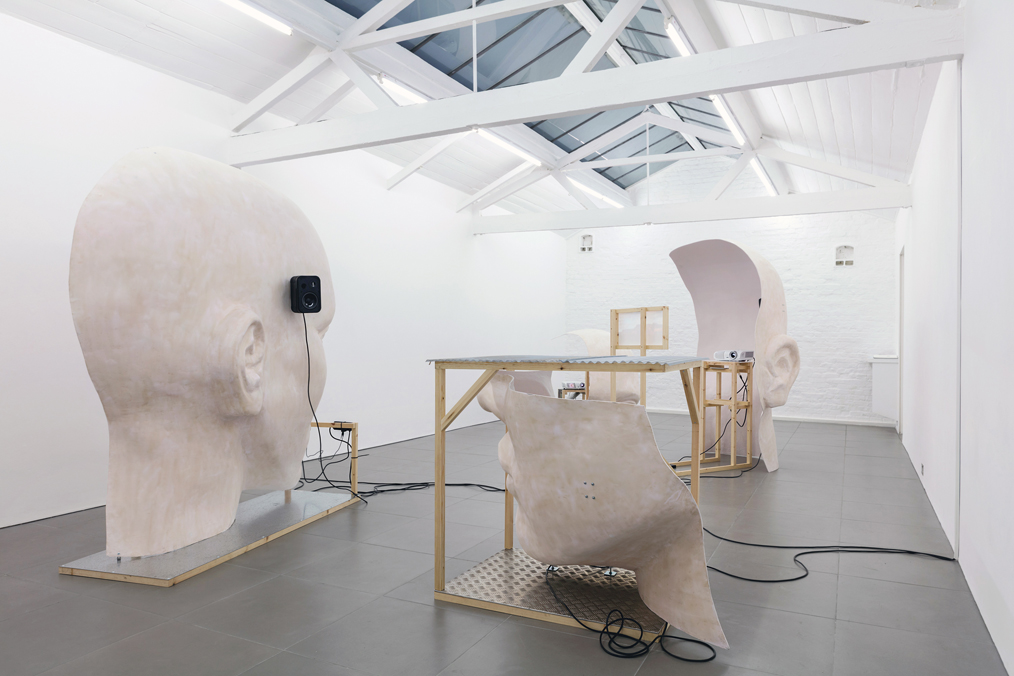
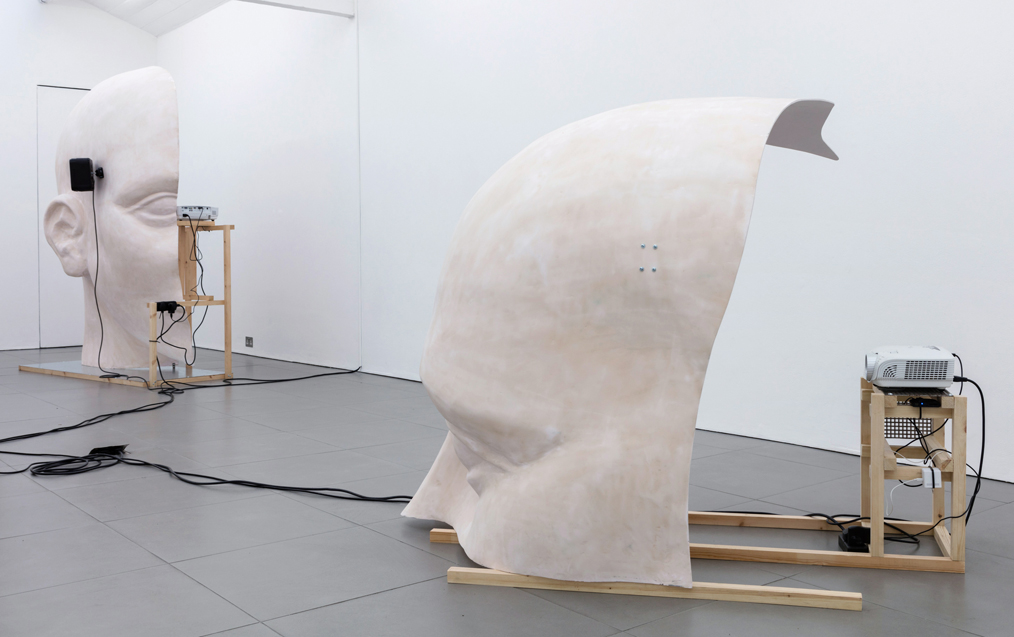
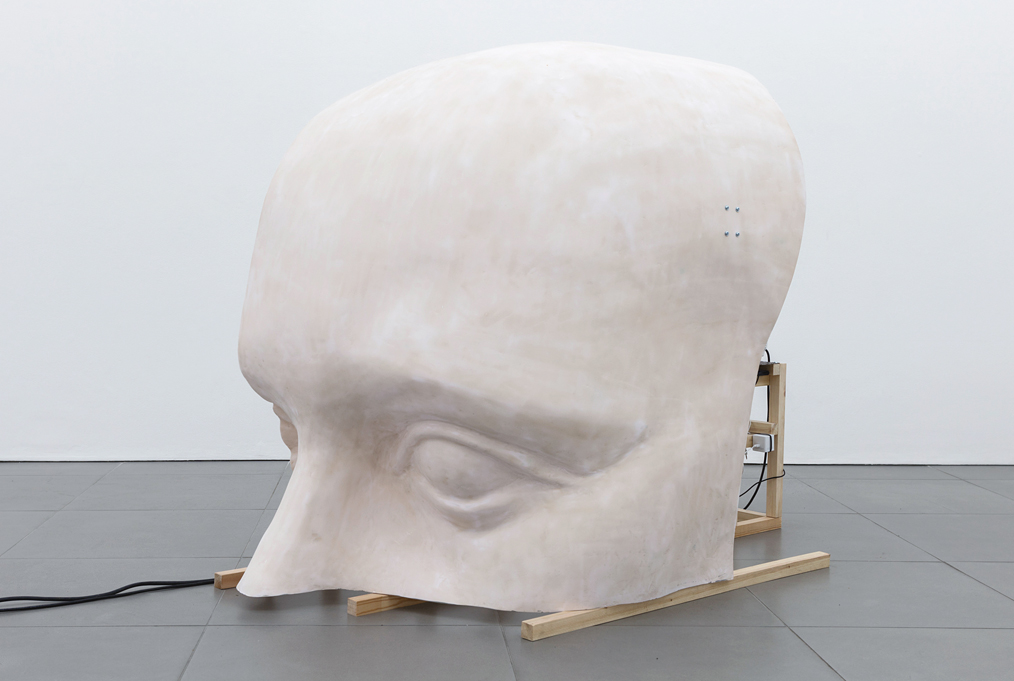
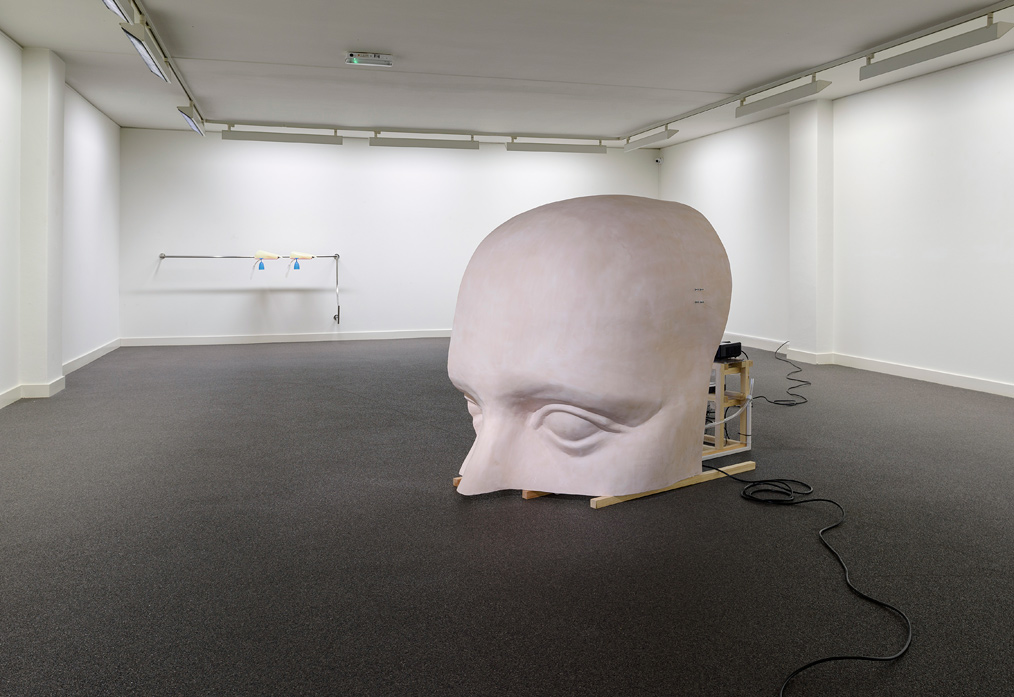
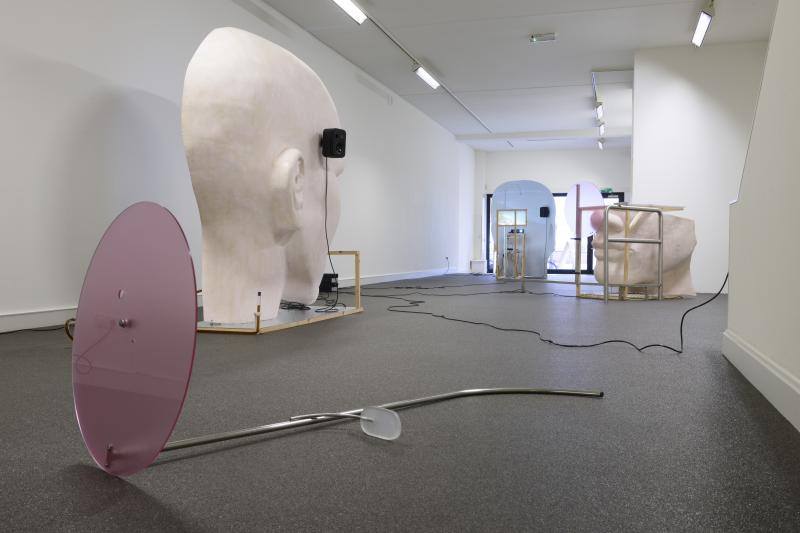
Title:Submission Artist: Anne de Vries Year: 2015 Dimensions: Variable Materials: 4-track audio, video live streams, fiberglass, wood
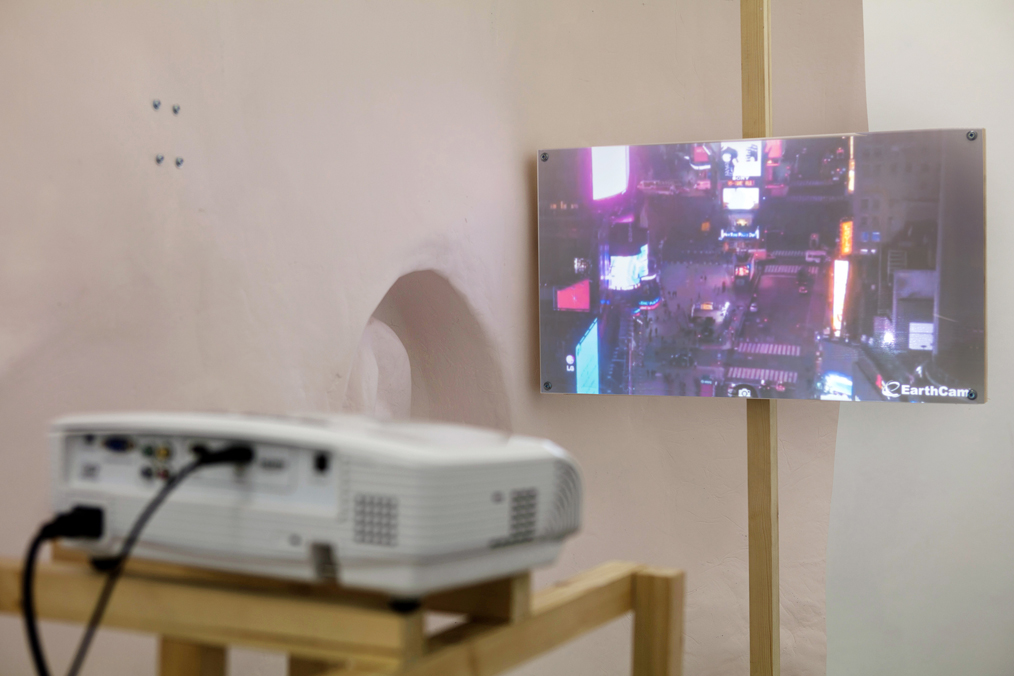
About: Inside the first gallery, Submission pulls together threads of the human psyche by exploding the concept of a head into a variety of architectural structures and symbolic representations—paired with the very technologies we use to stimulate thought and communication. Live-streamed screens of global locations transport viewers from the bustling streets of Times Square, New York City to the tranquil stillness of a South American birdwatching site. Time zones shift to accommodate the viewer’s perception of presence.
Each makeshift architectural shelter contains conversations between a mediator—commissioned by the artist—and representatives from a range of disparate global institutions: monasteries, shelters, detention centers, swingers clubs, and meditation retreats. Through interviews that explore each institution’s philosophy and mission, a layered soundscape emerges. The resulting audio simulates overlapping codes, rituals, and beliefs that begin to blend into one unified sonic texture.
Technology assumes an anthropomorphic form, and the dialogue reveals the merging of psychological, institutional, and technological environments. Language fragments into AI-like loops, suggesting the human mind as both subject and extension of the automated tools it creates.
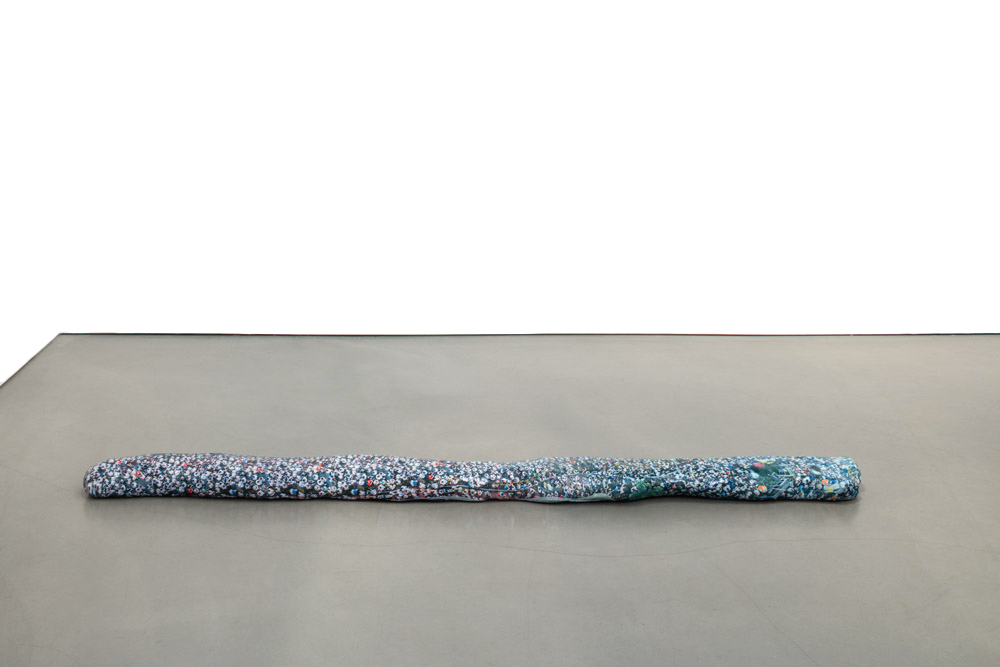
Title:Boids Artist: Anne de Vries Year: 2015 Dimensions: Various Materials: Polystyrene with UV print on vinyl wrap
Subject Matter: Composed of photographic imagery from a range of social, political, and religious gatherings, including:
Hong Kong Protest, 2015
Hajj in Mecca, September 2014
Tunisian Protest, January 2011
Je Suis Charlie March, Place de la République, Paris, January 2015
Martin Luther King Jr.’s speech, Washington D.C., August 1963
Guatemala Rises Up, May 2015
…and others
Conceptual Background: Before feathers enabled flight, they first evolved in dinosaurs for terrestrial functions—such as thermal regulation, camouflage, or signaling. Over geological timescales, these structures were co-opted into entirely new uses, eventually granting birds the power of flight. In evolutionary biology, this phenomenon is known as exaptation: a trait originally evolved for one purpose that is later repurposed for another.
Recent computational models of E. coli suggest that many traits begin as exaptations. This concept counters deterministic views of biology, emphasizing instead contingency and transformation. If forms and functions in nature can be radically retooled—enabling creatures to fly over mountains or swim through oceans—it is because matter itself is inherently open, mutable, and devoid of fixed essence.
The world is constantly reconfiguring itself. Structures we see today may serve vastly different purposes tomorrow. Each moment offers a new configuration—dependent, impermanent, and full of latent potential. The artworks in Boids engage with this idea: that form, function, and meaning are fluid, and that the universe, like the self, is continually becoming.
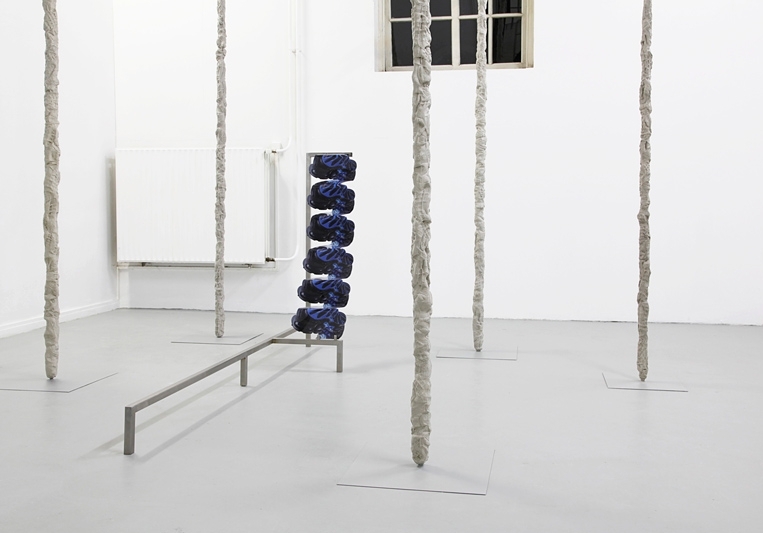
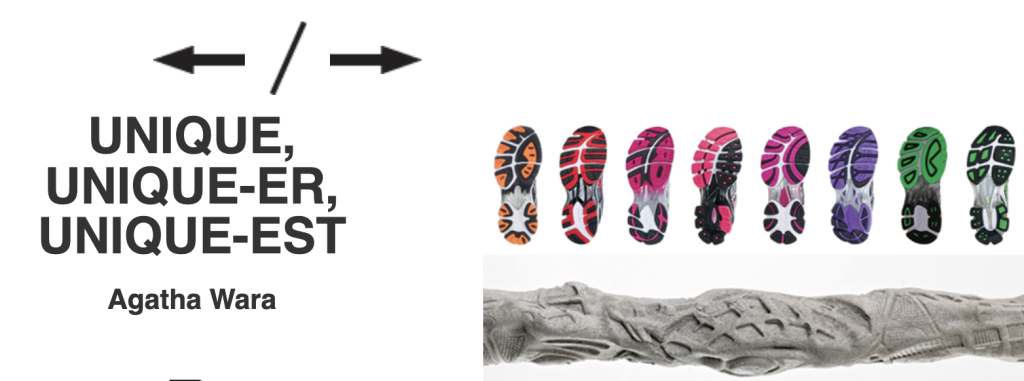
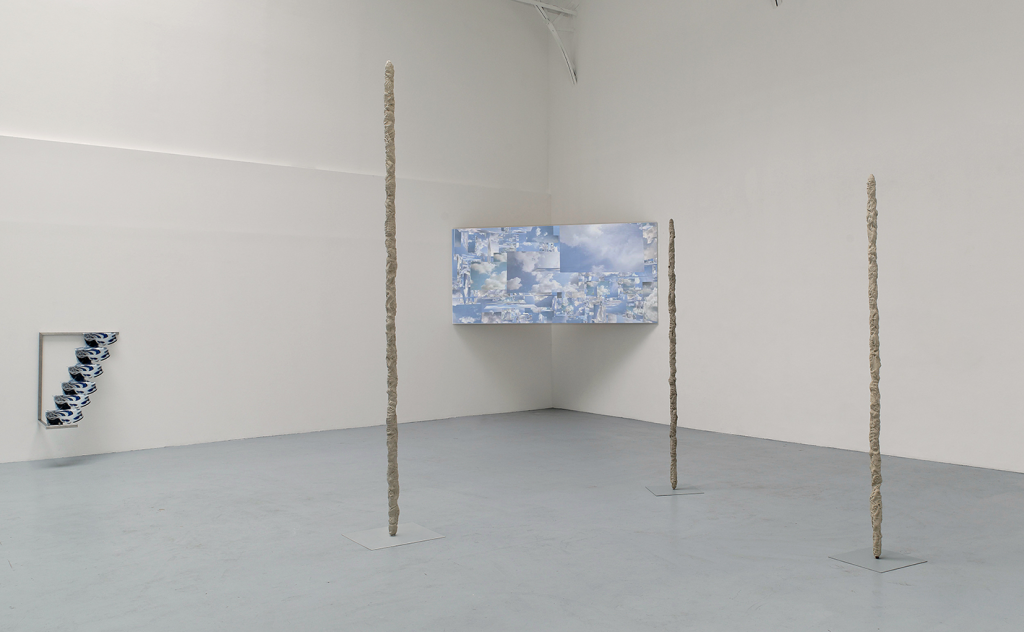
Title:Trails Rising Artist: Anne de Vries Year: 2011 Dimensions: Variable, from 223 cm up to 12 meters high Materials: Plastic, sand, metal
About: The sculpted totem poles Trails Rising are composed of sand mixed with epoxy clay, marked by the tread patterns of various sneakers. These imprints—shaped by ergonomic footwear designed to enhance bodily performance—form a record of movement that merges into collective patterns across a mutable surface. The work evokes a sense of shared motion, as if solitary runners converge in a symbolic and physical ascent. Referencing Constantin Brancusi’s Infinite Column—a WWI memorial in Târgu Jiu symbolizing ascension—the installation reinterprets monumentality through a layered, process-driven lens, challenging essentialist ideas of transcendence and enhancement.
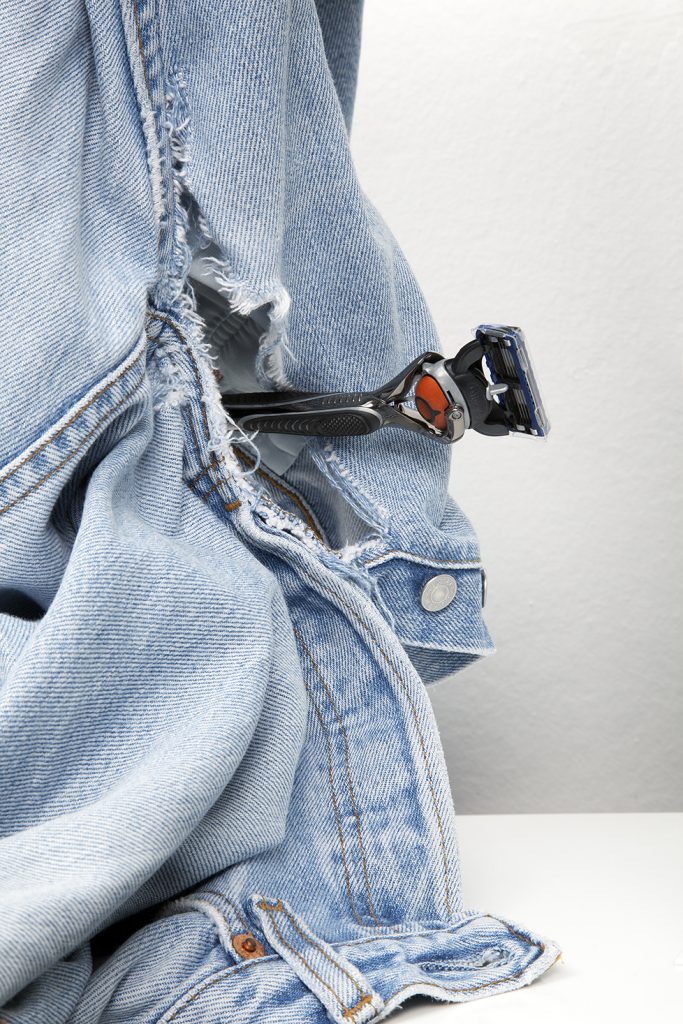
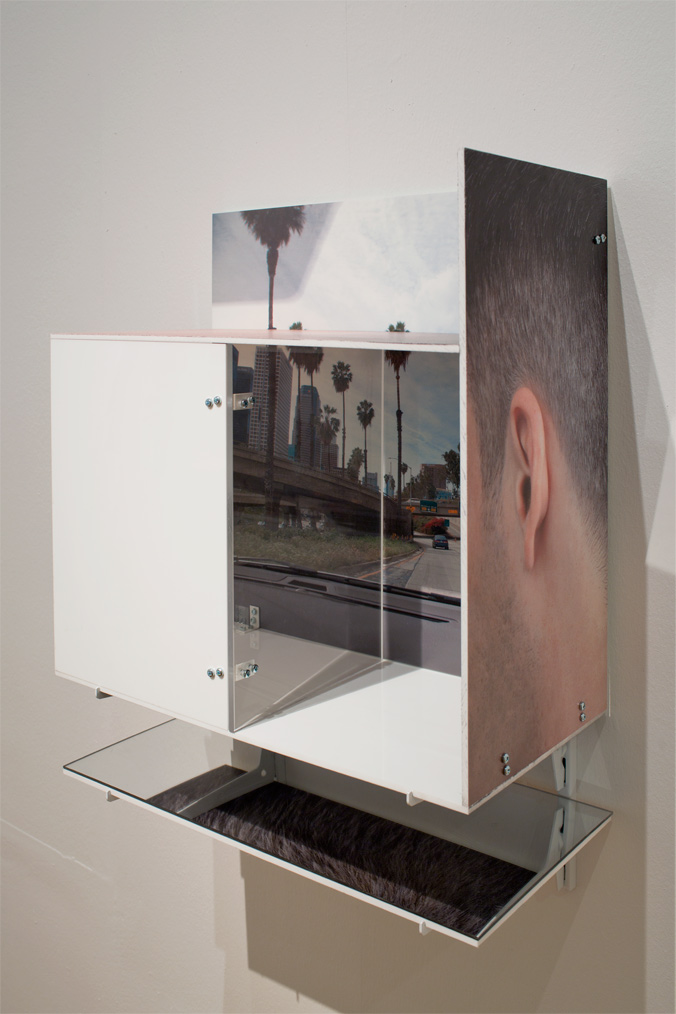
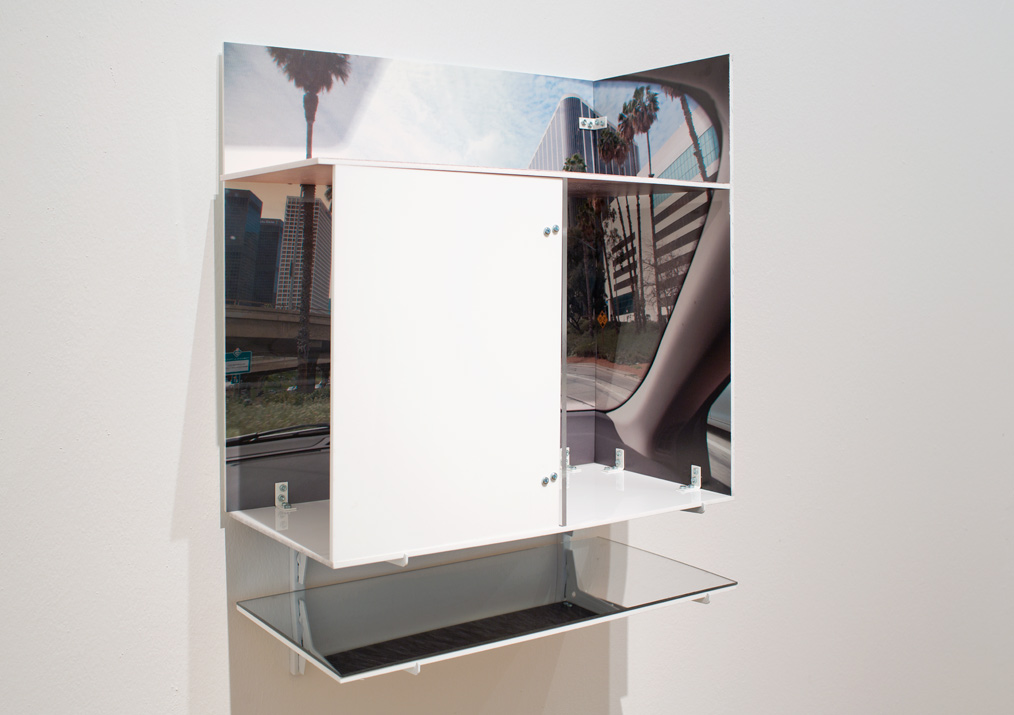
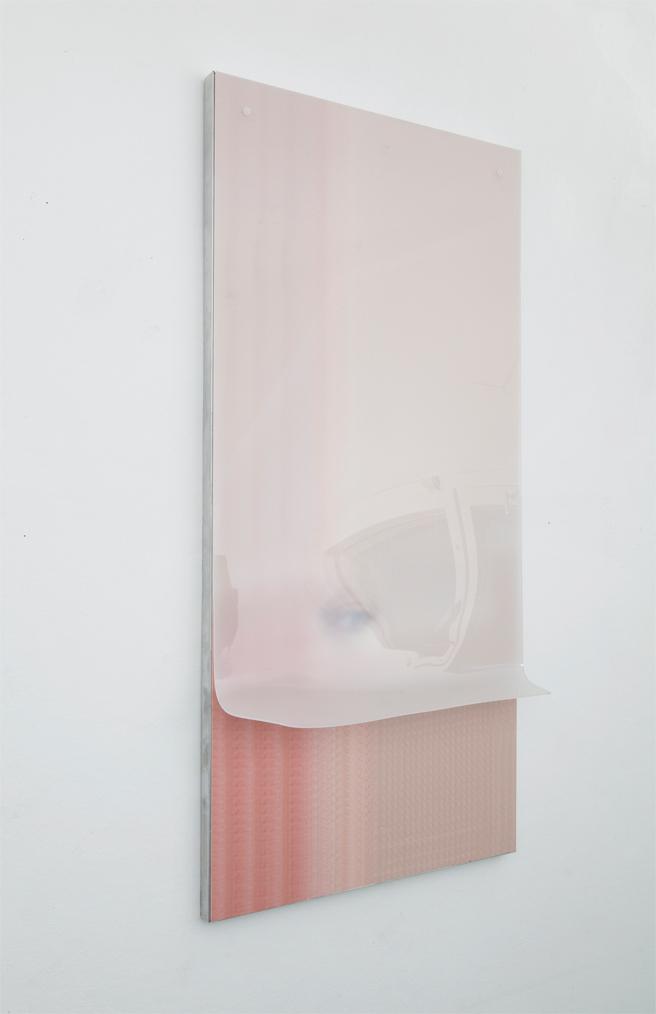
Title:GILLETTE’S VISION Artist: Anne de Vries Year: 2014 Dimensions: Various Materials: Double-sided UV prints on Photo Forex, PVC, mirror, coated metal hanging system, screws, Gillette razors, clothing. Documentation: E_MERGE solo exhibition at Foam Amsterdam
Conceptual Background: This body of work engages The Dream of King Camp Gillette and his radical vision of a future urban society. Long before he became known for inventing the safety razor and founding a major industrial enterprise, King Camp Gillette (1855–1932) published books and pamphlets proposing a new economic and social order.
In The Human Drift, his first major tract, Gillette introduced the idea of “Metropolis,” a single, technologically advanced megacity designed to accommodate the entire population apart from agricultural and rural labor. He conceived this city as a centralized and fully integrated system, constructed through modern materials and governed by “The United Company,” an all-encompassing organization responsible for producing and distributing the necessities of life.
While often associated with utopian literature such as Edward Bellamy’s Looking Backward, Gillette’s proposal exceeds literary speculation. It advances a sincere and highly idiosyncratic model of urban and social engineering. “Metropolis” thus emerges as a verbal prototype for an industrial future defined by total organization, efficiency, and control.
Artistic Approach: The work draws on photographs of Gillette shaving products, transforming them into sculptural forms and layered visual structures. In doing so, it connects Gillette’s utopian urban vision to the sleek industrial design language of his shaving systems.
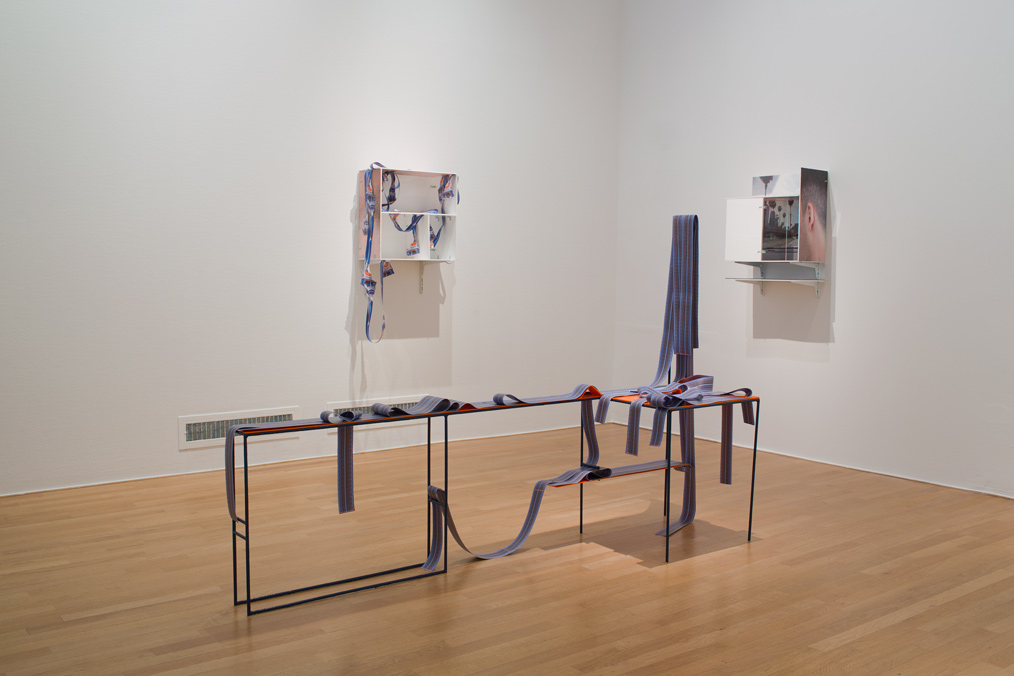
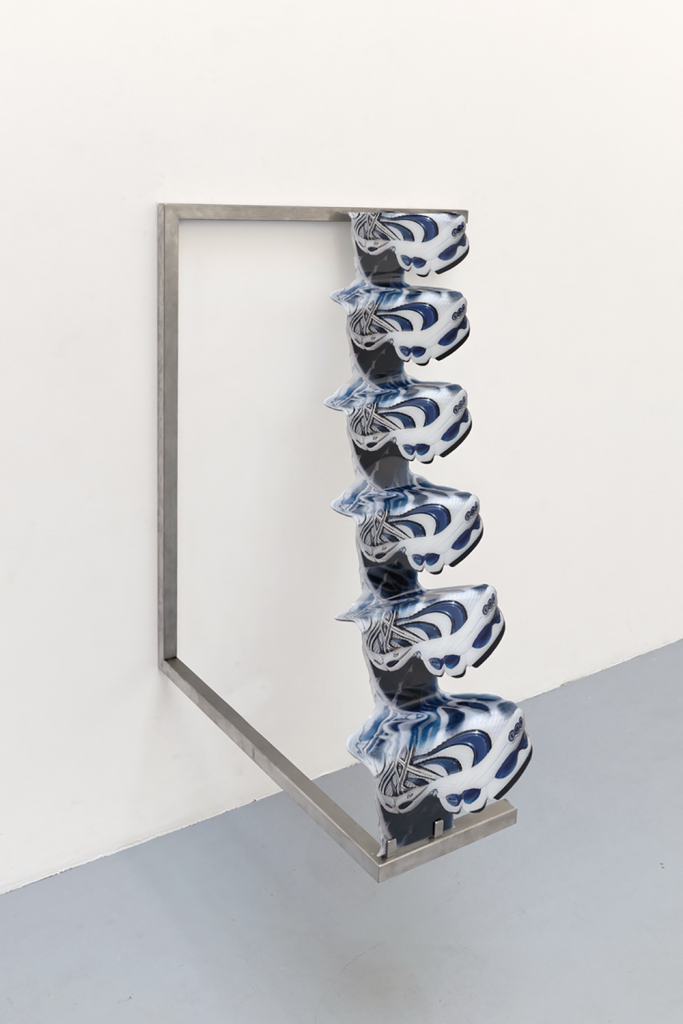
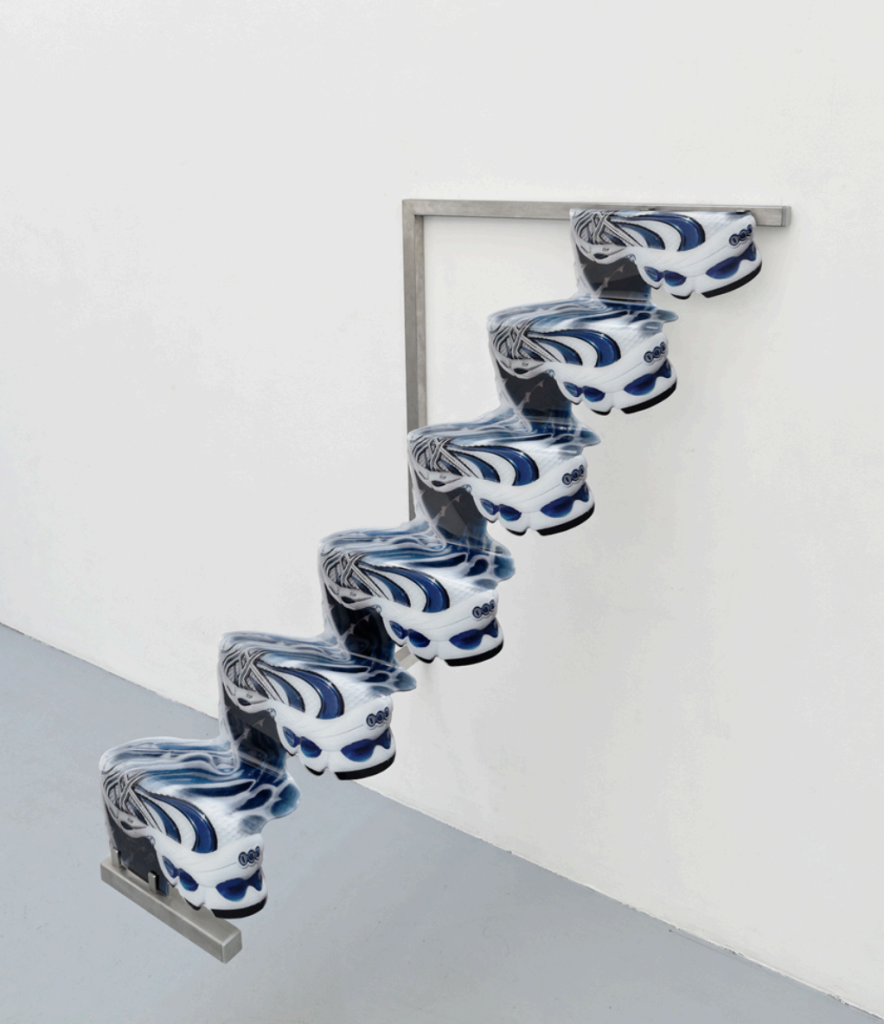
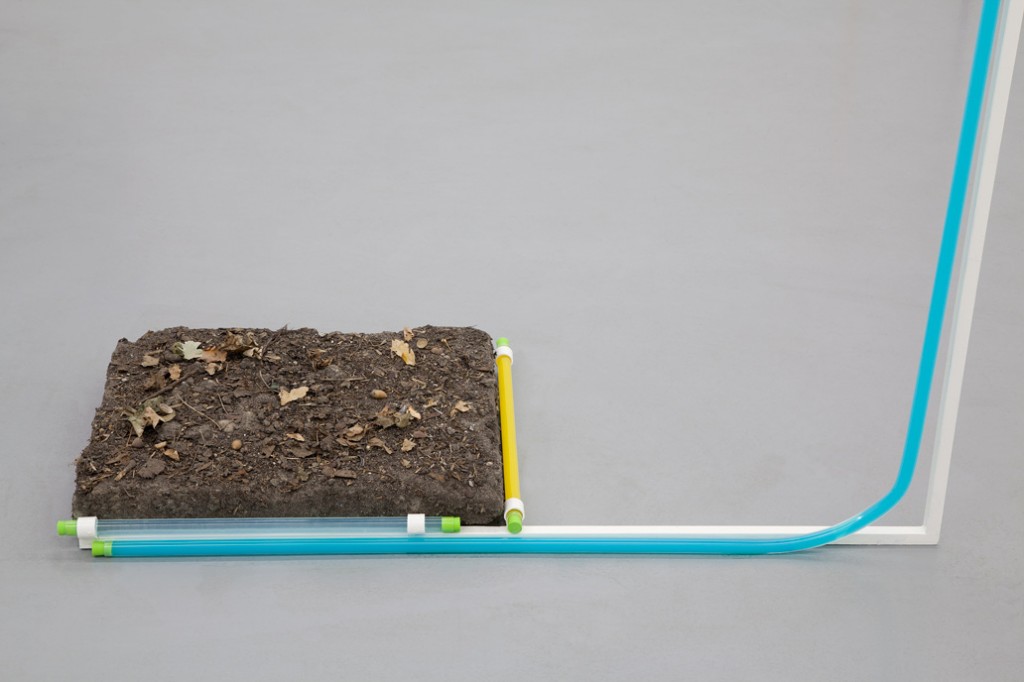
Title:Steps of Recursion on rail – ICG Artist: Anne de Vries Year: 2012 Dimensions: 135 × 110 × 75 cm Materials: Steel frame, UV print, plastic Documentation:Hussenot Gallery Paris, Fluxia Gallery Milan, and Martin van Zomeren, Amsterdam
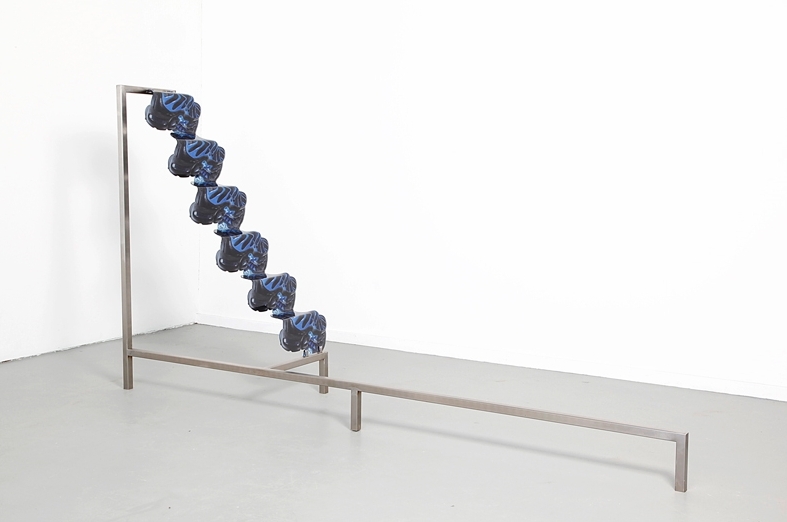
Title:Steps of Recursion – Tuned Artist: Anne de Vries Year: 2012 Dimensions: 220 × 150 × 65 cm Materials: Stainless steel construction with photographic prints on plastic
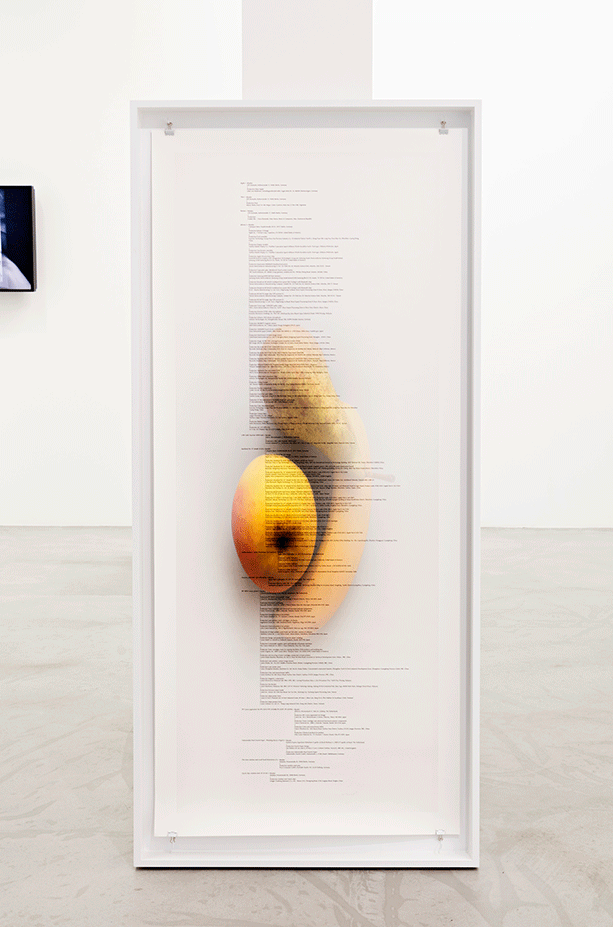
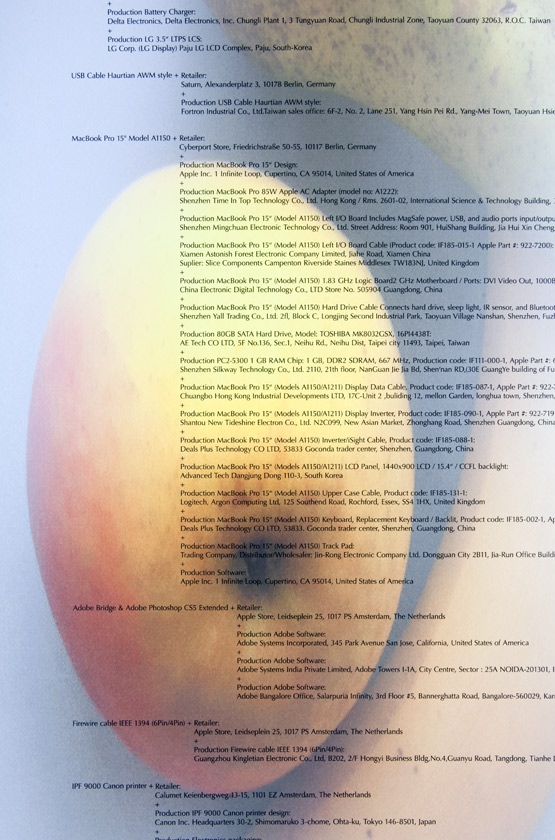
Title: Image Transfers – Apple, Pear and Banana Image Transfers – Apple, Avocado and Lemon Artist: Anne de Vries Year: 2012 Dimensions: 160 × 70 cm Materials: Digital print on photo paper
About: These two digital prints deconstruct their own production process. Beginning as still-life photographs of supermarket fruit, the image journeys through the digital pipeline—lens, sensor, wiring, computer components, software—until it materializes as ink on paper, hung on the wall with hooks and clips.
The deceptively simple arrangement is layered with an informational panorama that reveals the production chain’s circumstances and locations, positioning the fruit as the final eventuation of this global process. Superimposed in small type over the still-life are inscriptions including the retailer’s name and address and the primary production companies involved, tracing the artwork’s roots in today’s global economy.
Title:CAVE2CAVE2CAVE Artist: Anne de Vries Year: 2019 Dimensions: Overall width 700 cm, comprising 150 × 100 × 3.5 cm stretchers Materials: UV-RGB-W print on mirror-coated PVC; aluminum P35 stretchers with aluminum artist frames
Two artworks, Interface – Easy Jet and Interface – Musashi, were installed in the exhibition RUIS, curated and acquired by Melanie Bühler at the Frans Hals Museum, Haarlem.
Title:Interface – Downstairs Artist: Anne de Vries Year: 2014 Dimensions: 164 × 124 cm Materials: Two digital prints on Photo Forex sheets with CNC cut-outs; painted wooden frame About: Interface explores the relationship between observation and thought, and considers how the exchange between the two might be visualized. Developed in relation to early discussions around artificial intelligence, the work reflects on attempts to model and clarify the often complex processes through which reality is perceived and understood.
The project also engages with the history of photography and its claim to document reality. By using photography to suggest perception as fragmented, layered, and non-linear, the work challenges ideas of photographic clarity and objectivity, proposing instead an experience of the world that is subjective, composite, and constructed.
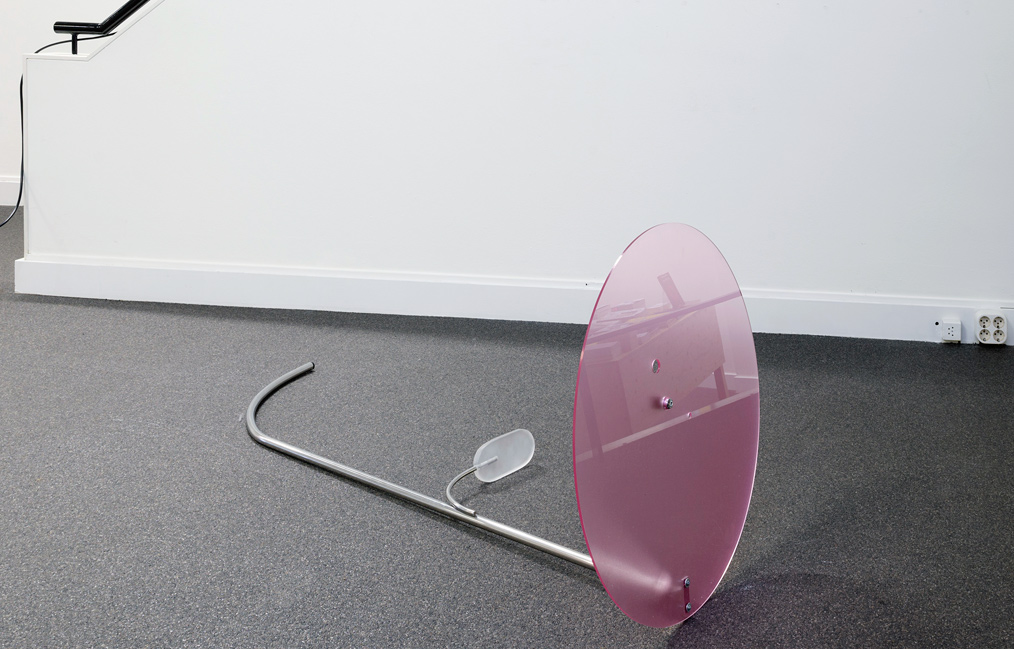
Title:Mind Manager Artist: Anne de Vries Year: 2013 Dimensions: 200 × 65 × 175 cm Materials: Stainless steel, digital monochrome print on milled plexiglass.
Title:Places to See Artist: Anne de Vries Year: 2013 Dimensions: 260 × 65 × 160 cm Materials: Stainless steel, digital monochrome print on milled plexiglass Edition: Unique
Title:Login, for two Artist: Anne de Vries Year: 2013 Dimensions: 260 × 65 × 160 cm Materials: Stainless steel, digital monochrome print on polished and milled plexiglass
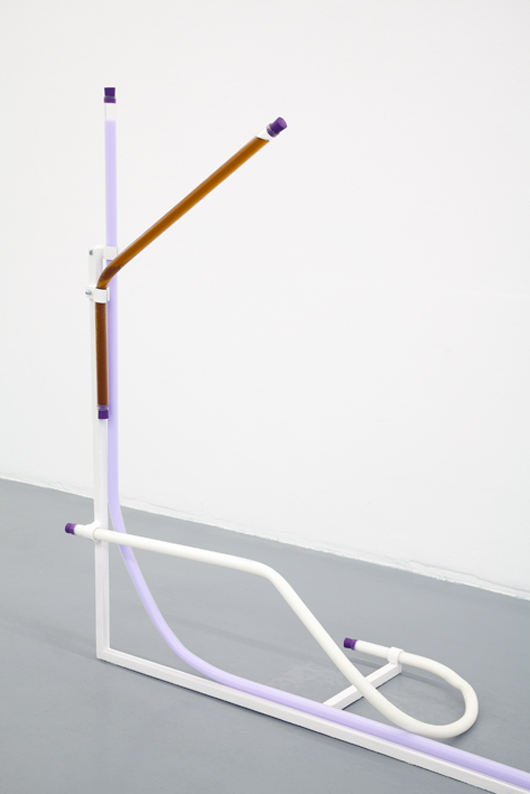
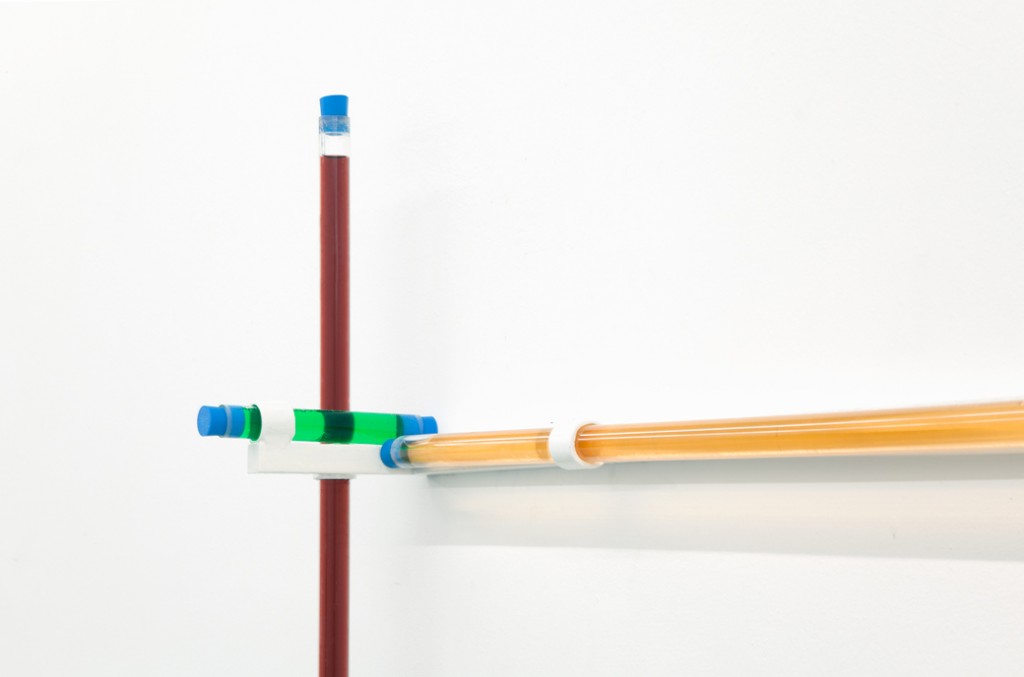
Title:Viewfinder Artist: Anne de Vries Year: 2013 Dimensions: 45 × 65 × 175 cm Materials: Stainless steel, digital monochrome print on plexiglass, key, medical rubber tubes, colored solution.
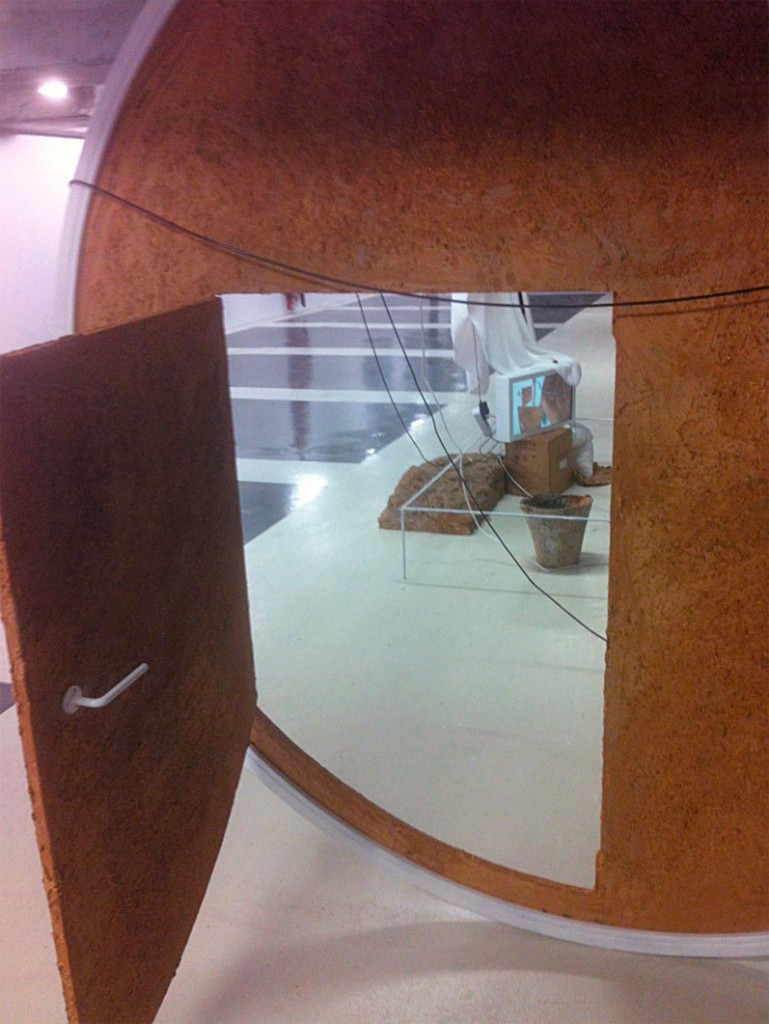
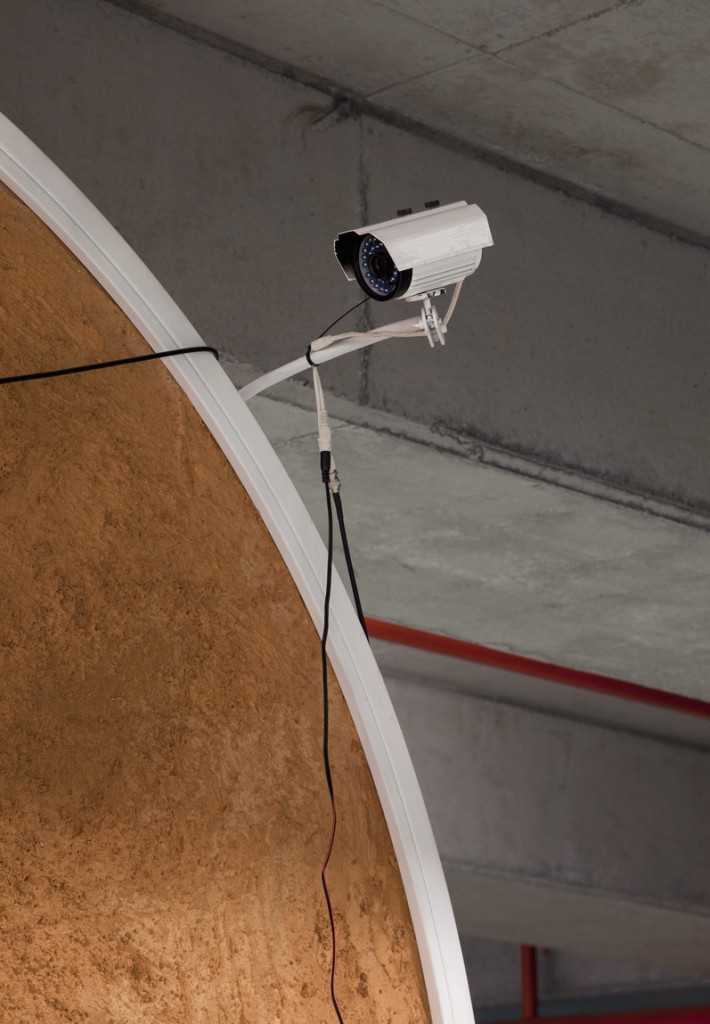
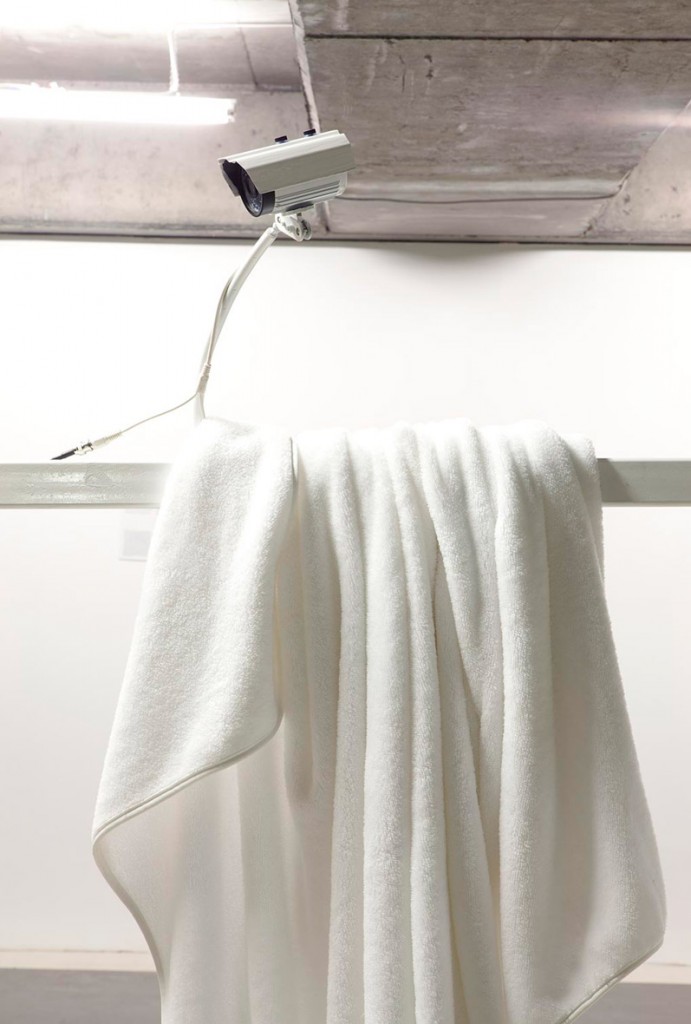
Title:Nightwatch at the Parking Lot Artist: Anne de Vries Year: 2014 Dimensions: Variable, large-scale installation Materials: Metal eyeglasses, walls, furniture, surveillance camera systems, LCD screens, fabrics, and other props Documentation:The Moving Museum, Şişhane Autopark, Istanbul
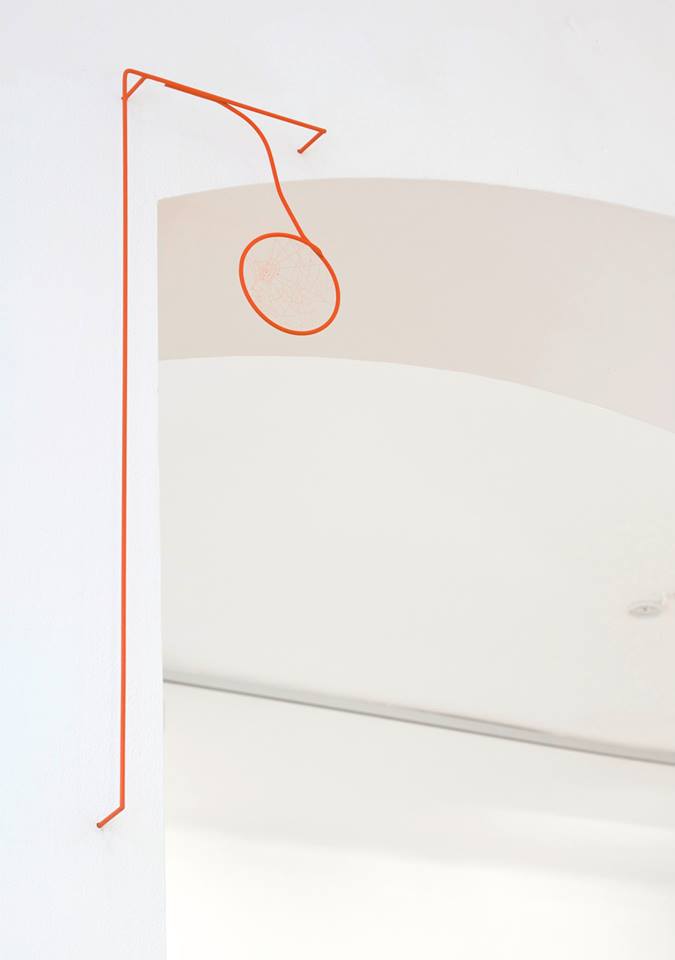
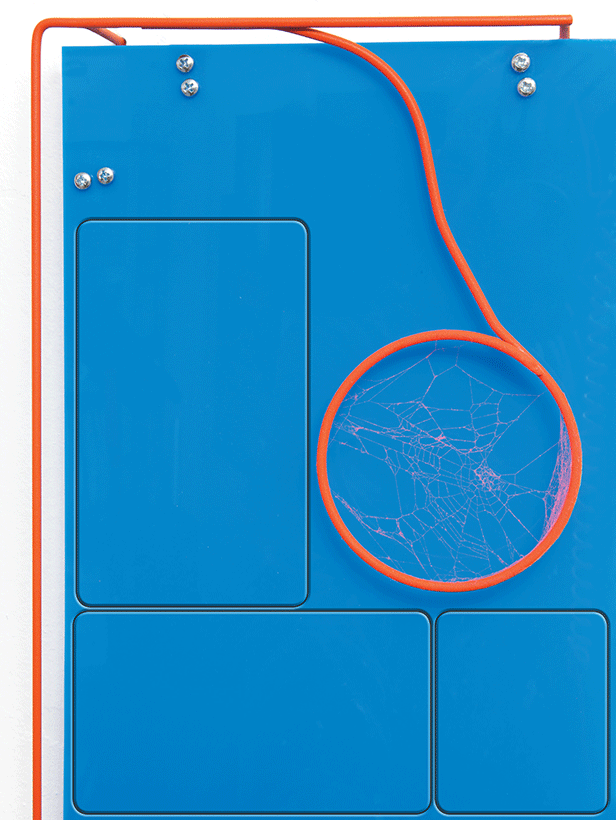
Title:Eye Catcher 03 Artist: Anne de Vries Dimensions: Various Materials: Coated steel; polished Plexiglass; real spiderwebs Documentation: On view at Twenty Thousand Years of Yarn, curated by Rubén Grilo, Future Gallery Berlin
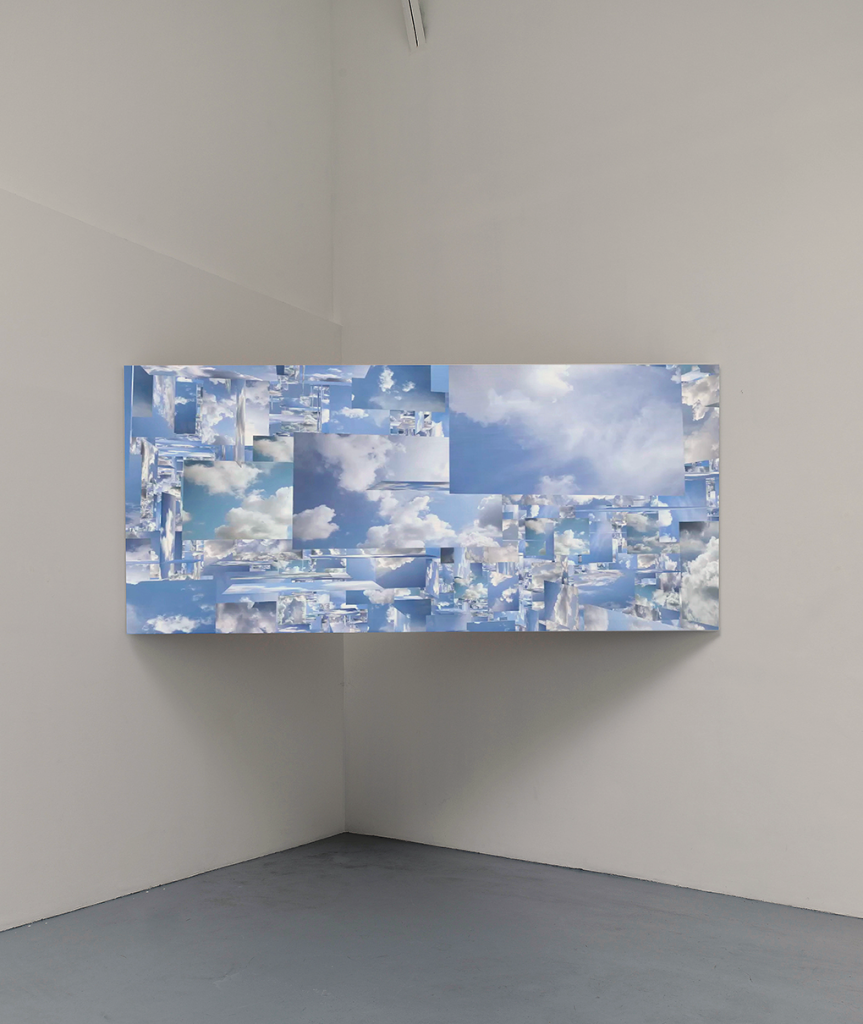
Title:Forecast Artist: Anne de Vries Year: 2011-2026 Materials: Video combining theory, photography and CGI Resolution: 3840×2160 (4K) at 50 fps Duration: 5-minute loop Sound: James Whipple (aka Hesaitix) Text: Excerpts from Bertrand Russell’s A.B.C. of Relativity: Philosophical Consequences Subtitles: Optional
About: Forecast is a computer-generated video featuring a camera panning through photographs of a blue sky with clouds over Amsterdam. A slow voice guides the viewer through selected passages from Bertrand Russell’s A.B.C. of Relativity, explaining distinctions between actuality and perception and addressing relativity theory and concepts of space-time. Midway through the work, the spoken text transitions into music, leading the viewer into a more associative and hypnotic experience.
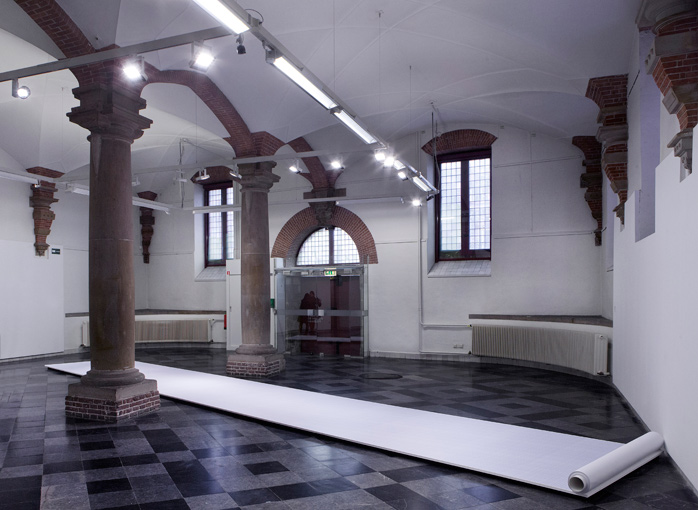
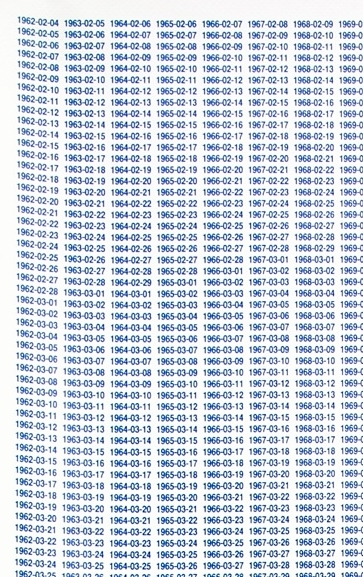
Title:All Days of Aquarius Artist: Anne de Vries Year: 2011 Dimensions: 188 cm × 42 meters (74.02 × 1653.54 inches) Material: Solvent print on vinyl
About: This calendar presents every single day of a 2150-year time period, beginning on February 4, 1962, and continuing through the year 4114. With a total length of 42 meters, it can be displayed in various ways—rolled, or unrolled to fit the exhibition space.
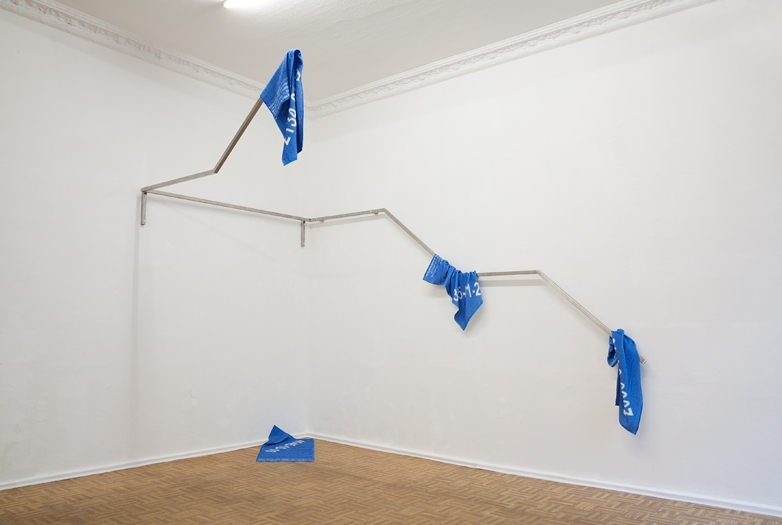
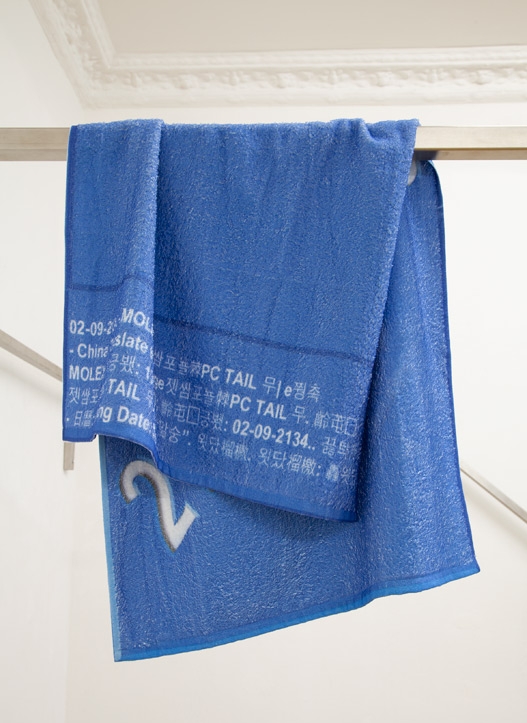
Title:Hold On, Auto Future Artist: Anne de Vries Year: 2013 Dimensions: 250 × 450 × 300 cm Materials: Stainless steel; solvent-printed bath towels with data
About: Towels hang from the handrail like remnants of physical activity. Printed on these towels are computer-generated texts containing data about events scheduled from 100 to several thousand years into the future. These texts are the result of random web-based searches, revealing an auto-generated vision of the future.
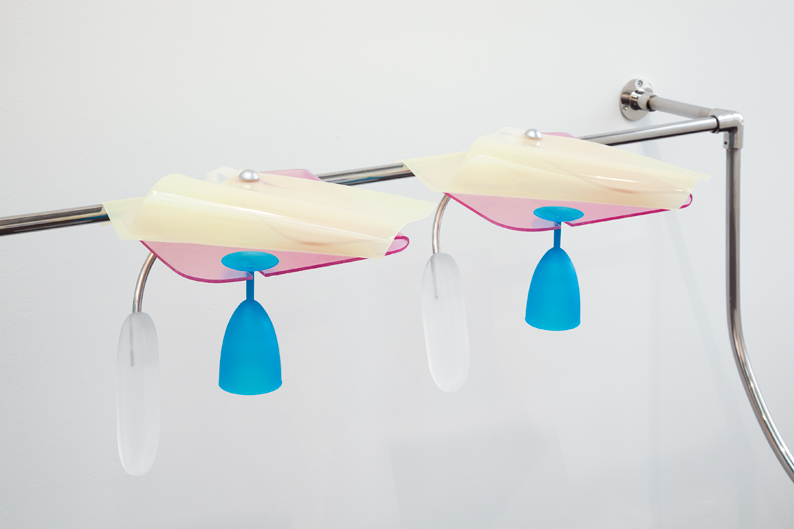
Title:Air Gap Hold On Artist: Anne de Vries Year: 2012 Dimensions: 117 × 60 × 8 cm Materials: Stainless steel; digital print on towel; digital print on plastic
About: The title refers to the concept of an air gap in both plumbing and networking contexts. In plumbing, an air gap is the unobstructed vertical space between a water outlet and the flood level of a fixture, preventing contaminated water from flowing back into the potable water system. In networking, an air gap is a security measure that physically isolates secure computer networks from insecure ones—such as the public internet—to prevent unauthorized data flow. The work reflects on ideas of separation, protection, and control.
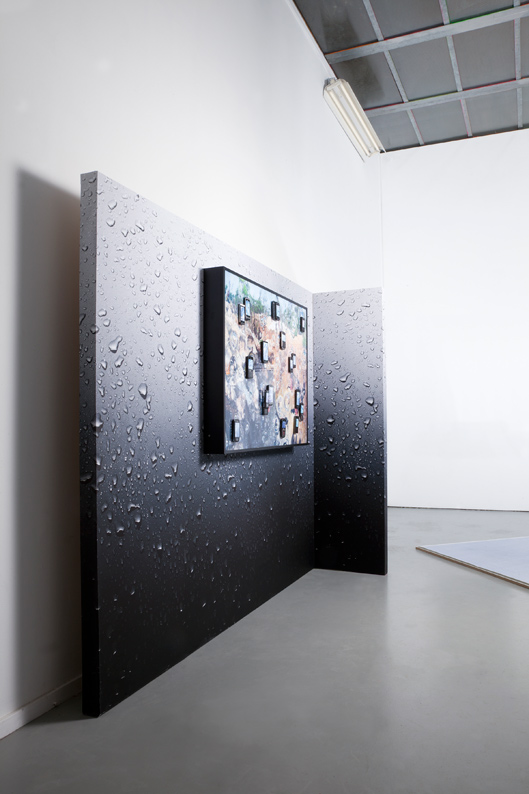
Title:Katanga Bub Artist: Anne de Vries Year: 2011 Dimensions: 90 × 144 cm Materials: Mobile devices mounted on a lightbox displaying a press image of the Katanga mines in the Congo, rephotographed underwater
About: Katanga Bub brings together the extremes of the mobile device industry. It is based on a press image depicting the landscape and workers of Katanga in the Democratic Republic of Congo—an area mined for minerals such as tungsten and coltan, essential for mobile device production. The press image has been rephotographed underwater and presented within a freestanding display unit. As water ripples and bubbles distort the scene beneath, the screens of multiple mobile devices display clearer details of the same Katanga mine view. This fusion of the earthy origins of mining and the liquefied luxury of global technology commodities explores the relationship between material extraction and digital information. The work highlights the dual narrative: while mobile devices disseminate knowledge and raise global awareness with the promise of a better world, the rare earth economy also supports problematic social and political infrastructures in Congo. It reveals the recursive links between matter and information, tracing the path from raw material to data generation.
Documentation: Exhibition views from Trails Rising, Sandy Brown Gallery, Berlin; The Composing Rooms, London; and Treijac Project, France
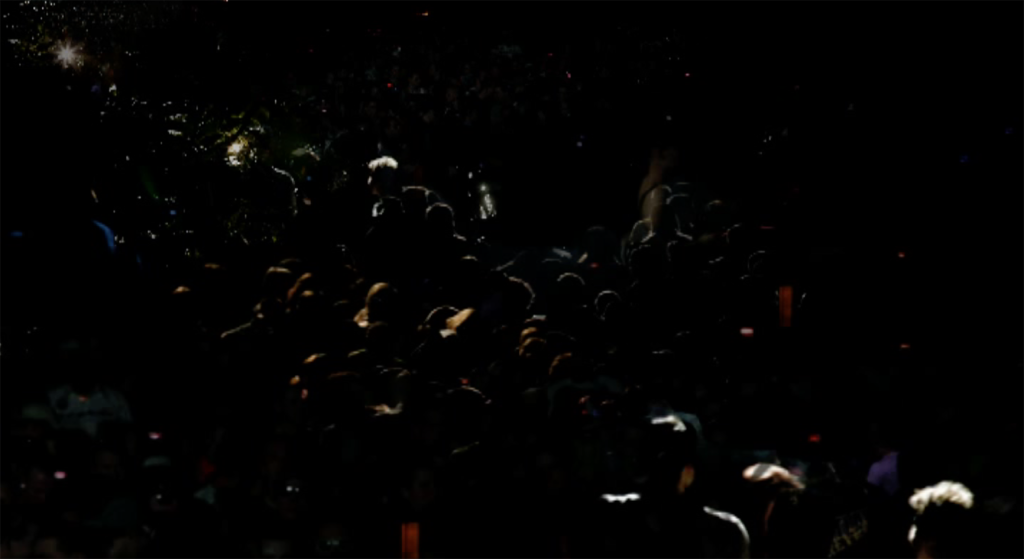
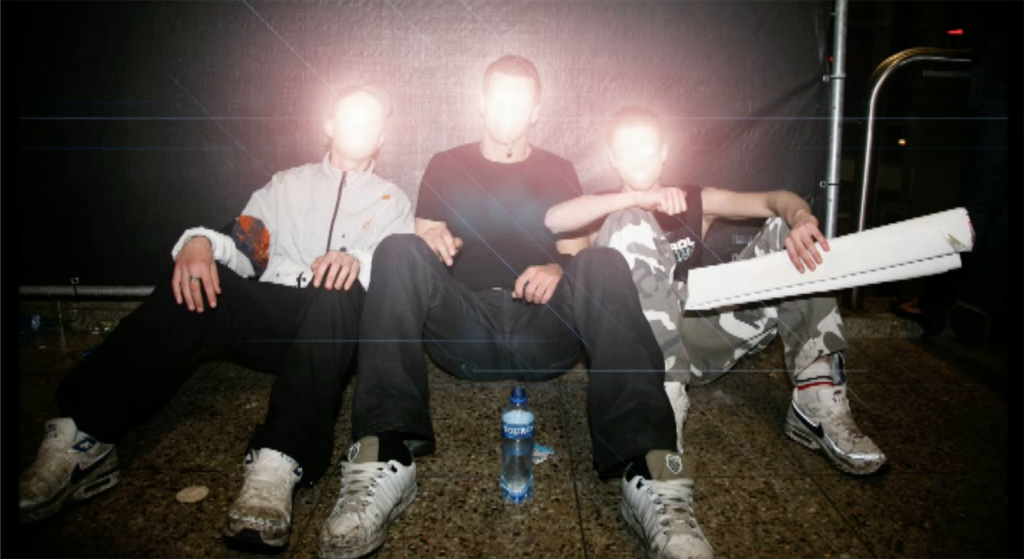
Title:The Chosen Few Artist:Anne de Vries & Harm van der Dorpel Year: 2009 Materials: HD video Length: 4-minute 26-second loop Sound: Stereo About: The Chosen Few is a computer-generated video in which the camera pans through a large batch of photographs capturing the shape-shifting crowds at Hardcore parties organized by ID&T in the Netherlands.
Title:Listening, 01, 02, 03 Artist: Anne de Vries and Olga Balema Year: 2015 Dimensions: Variable Materials: Mixed media; vinyl with UV print; stones coated in silicone; Polyurethane foam coated in silicone; steel; Kneed pox; acrylic hair About: Duo exhibition by Anne de Vries and Olga Balema at Michael Thibault gallery Los Angeles
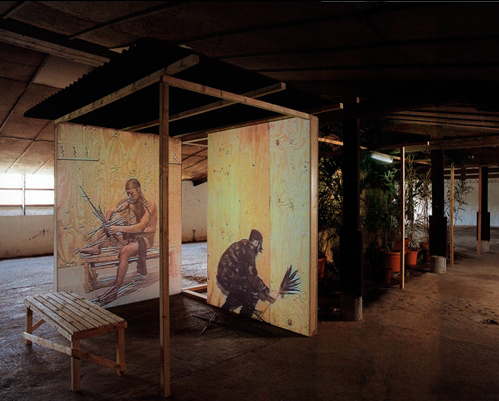
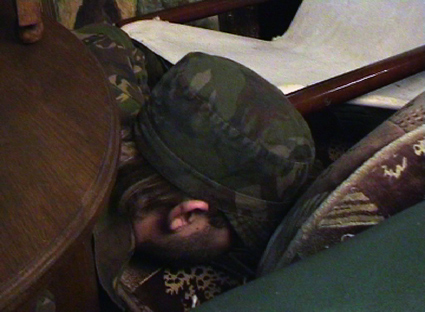
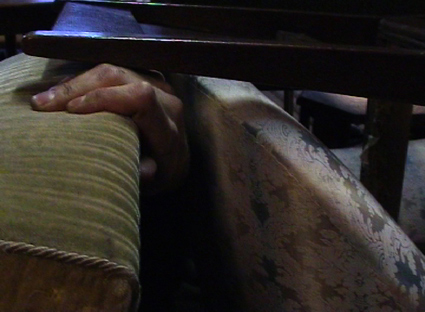
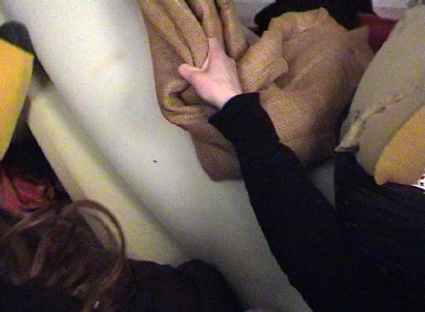
Title:Stick and Plant Artist: Anne de Vries Year: 2003 Dimensions: 2.5 × 3 × 14 m Materials: 2-channel video installation; wood; kentia plants; roofing; clothing hangers; clothing; bench. About: Stick and Plant is a 2-channel video installation that reconstructs a rehabilitation center. Various treatments unfold inside and outside the video projections, which are integrated into the physical installation. Viewers witness participants changing in and out of camouflage suits and hiding within the kentia plant jungle behind the wooden wall.
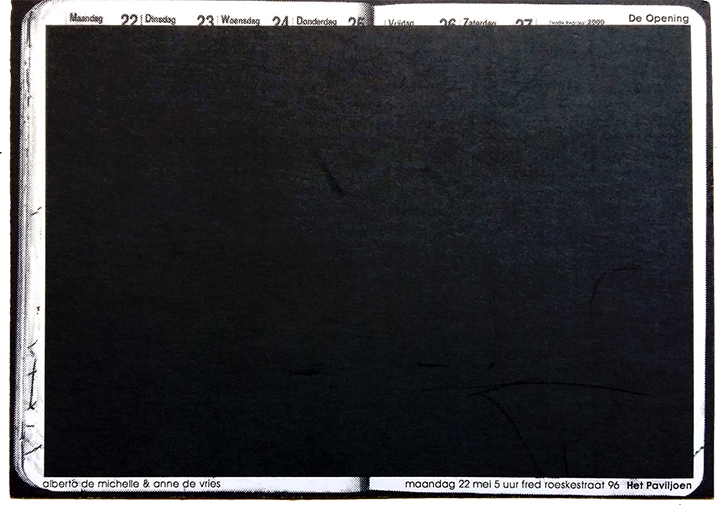
Title:The Opening Artists: Anne de Vries, Alberto De Michele Date: May 22–27, 2000 About: The Opening was an art performance, installation, and event held over the course of one workweek at the Gerrit Rietveld Pavilion in Amsterdam. During this time, the two artists confined themselves inside a black cube furnished with only essential amenities: a bed, food, a toilet, and a single small pocket camera whose flash served as their sole source of light.