Interface – Musashi

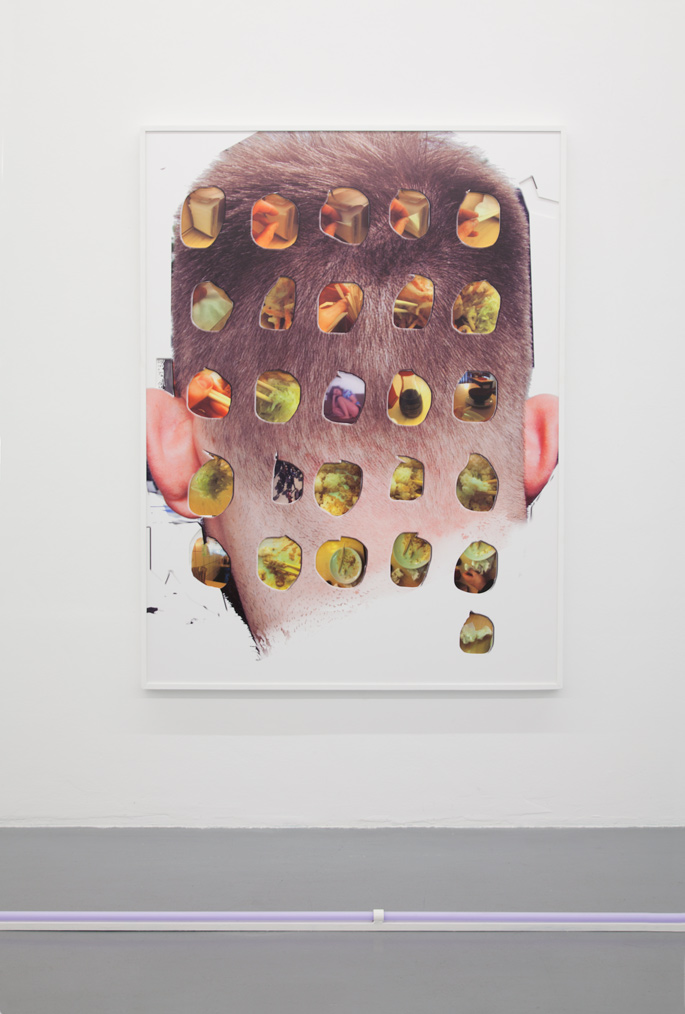
Title: Interface – Musashi
Artist: Anne de Vries
Year: 2014
Dimensions: 164 × 124 cm
Materials: Two digital prints on Photo Forex sheets with CNC cut-outs; painted wooden frame
About:
The Interface project is informed by processes of tracking thought and observation, and by an interest in how the constant exchange between the two might be visualized. This inquiry was shaped by broader technological preoccupations of the time, particularly in the early days of A.I., when there was a growing attempt within the tech world to model and make legible the often messy cognitive processes through which we perceive and understand reality. The work also engages with the history of photography and its longstanding investment in the documentation of “reality.” By using photography to visualize perception as fragmented, layered, and non-linear, the project questions ideas of photographic clarity and objectivity, suggesting instead that our experience of the world may be closer to painting – subjective, composite, and constructed – than we might like to admit.


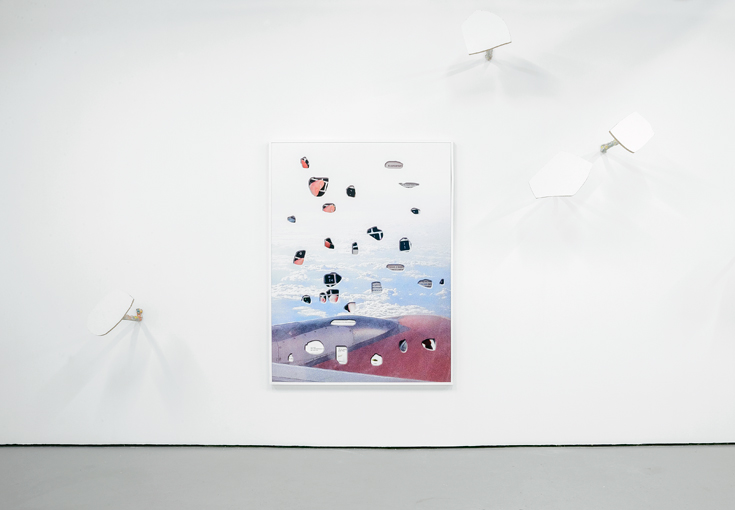
Interface – Easy Jet

Title: Interface – Easy Jet
Artist: Anne de Vries
Year: 2014
Dimensions: 164 × 124 cm
Materials: Two digital prints on Photo Forex sheets with CNC cut-outs; painted wooden frame
About:
The Interface project is informed by processes of tracking thought and observation, and by an interest in how the constant exchange between the two might be visualized. This inquiry was shaped by broader technological preoccupations of the time, particularly in the early days of A.I., when there was a growing attempt within the tech world to model and make legible the often messy cognitive processes through which we perceive and understand reality. The work also engages with the history of photography and its longstanding investment in the documentation of “reality.” By using photography to visualize perception as fragmented, layered, and non-linear, the project questions ideas of photographic clarity and objectivity, suggesting instead that our experience of the world may be closer to painting – subjective, composite, and constructed – than we might like to admit.